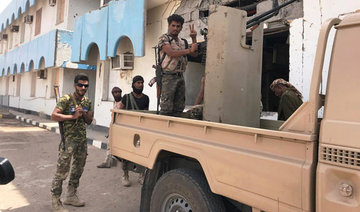
DUBAI: Yemeni forces have taken control of new areas in Saada province following fierce clashes with Iranian-backed Houthi militants, Saudi state-news channel Al-Ekhbariya reported.
“The army liberated the areas of Azhour and Al-Hajjla and the village of Bani Meen and Hanaka other areas on outskirts of the Razih directorate, located to the north-west of Saada,” commander of the seventh brigade border guards, Col. Hamoud Hisham, said in a statement on the national army’s official website “26 September.”
The military official also said more than 30 militants were killed over the past two days following Arab coalition airstrikes targeting Houthi headquarters and weapons’ caches in Razih.

Yemeni army forces control five new areas in Saada province
Iran says students have right to protest but must know ‘red lines’
Tehran: University students have the right to protest but everyone must “understand the red lines,” the Iranian government’s spokeswoman said Tuesday, in the first official reaction to renewed rallies on campuses since the weekend.
“Sacred things and the flag are two examples of these red lines that we must protect and not cross or deviate from, even at the height of anger,” Fatemeh MoHajjerani said.
She said Iran’s students “have wounds in their hearts and have seen scenes that may upset and anger them; this anger is understandable.”
University students in Iran started a new semester Saturday with pro- and anti-government rallies, according to local media, reviving slogans from nationwide demonstrations that peaked in January and led to thousands of deaths.
Protests first began in December sparked by economic woes in the sanctions-hit country, but grew into nationwide demonstrations on January 8 and 9.
The US-based Human Rights Activists News Agency (HRANA) has recorded more than 7,000 deaths, while warning the full toll is likely far higher.
Iranian officials acknowledge more than 3,000 deaths, but say the violence was caused by “terrorist acts” fueled by the United States and Israel.
MoHajjerani on Tuesday said a fact-finding mission is investigating “the causes and factors” of the protests and will provide reports.
“Sacred things and the flag are two examples of these red lines that we must protect and not cross or deviate from, even at the height of anger,” Fatemeh MoHajjerani said.
She said Iran’s students “have wounds in their hearts and have seen scenes that may upset and anger them; this anger is understandable.”
University students in Iran started a new semester Saturday with pro- and anti-government rallies, according to local media, reviving slogans from nationwide demonstrations that peaked in January and led to thousands of deaths.
Protests first began in December sparked by economic woes in the sanctions-hit country, but grew into nationwide demonstrations on January 8 and 9.
The US-based Human Rights Activists News Agency (HRANA) has recorded more than 7,000 deaths, while warning the full toll is likely far higher.
Iranian officials acknowledge more than 3,000 deaths, but say the violence was caused by “terrorist acts” fueled by the United States and Israel.
MoHajjerani on Tuesday said a fact-finding mission is investigating “the causes and factors” of the protests and will provide reports.
© 2026 SAUDI RESEARCH & PUBLISHING COMPANY, All Rights Reserved And subject to Terms of Use Agreement.