ADEN: Like most Yemeni women, Hafsah bint Raweh used to stay at home and rely on her husband to provide for the family.
But since early 2016, when a stroke left her husband partially paralyzed and unable to work, Raweh has been forced to go out to work.
Every day, the mother of five wakes early in the morning to buy zucchinis and leeks from the market in Taiz, before going house to house to resell her goods.
“In the beginning, it was difficult to work selling vegetables, but it was my only choice as I faced the difficulties of trying to eke out a living for my family,” she told Arab News.
The dire economic situation and hardship caused by the four-year conflict in Yemen has added to the burden faced by many women — and brought a dramatic shift in gender roles. Women such as Raweh have had to break taboos in their conservative society by going out to work in order to support their families.
Before the war, which has killed more than 10,000 people and sparked a vast humanitarian crisis, it was rare for women in many areas to leave their homes and interact with men in public places.
“We have a difficult choice: Either work or see our families starve to death — so many women, including myself, decided to work,” Raweh said.
“I have been selling vegetables since 2016, so now I have my regular customers and I have adapted to the work.”
Her husband, Mohammed Moqbel, worked as a deliveryman in the Taiz markets before his injury. Now, however, he lies immobile in their small house while Raweh goes out to work. She wants to help him, but his treatment costs too much.
“I took my husband to many public hospitals in Taiz city, but doctors confirmed that they cannot help, telling me to take my husband to Aden or abroad,” said Raweh, who is in her 40s.
“I am a poor woman and cannot pay for his treatment, so I brought my husband to the house and Allah will help us.”
Raweh decided to start working after she saw other women selling vegetables, perfumes, bread and other items.
Naef Nouraddin, a social worker in the education office in Taiz, said the war has forced many women to venture out in order to make a living.
“Food is the most important thing for people, so when women lose their breadwinners and they don’t find someone to help, immediately they choose to work,” he told Arab News.
“Either they work or they see their family starve. So they usually choose work.”
Amani Abdullah, in her 20s, had no choice but to work when her father died in Taiz in 2016, after a lengthy battle with liver cancer. As the eldest child in her family, she needed to look after her four siblings.
“My father used to work in a car workshop together with my younger brother, but after my father’s death, I decided to give my younger brother a chance to complete his studies,” she said.
Abdullah graduated from the National Institute in the Al Turba area in Taiz. When she needed work, she decided to set up a small stationery stand near the institute.
“A philanthropist helped me with some money, so early in 2017, I opened this small stationery stall and now I can take care of my family,” she said, showing off her goods.
Before starting the stall, she worried how people would react to her, a single woman, working outside. But she soon realized that people felt sympathy and did not judge her for working.
Bilal Al-Sharafi, a pupil at the National Institute, said that many fellow students buy their stationery from Abdullah because they want to help her open a bigger shop in future.
“It’s true that I did not see a girl working in a stationery stand before this, but I support this idea and hope to see more girls working in such settings,” Al-Sharafi said.


![]()
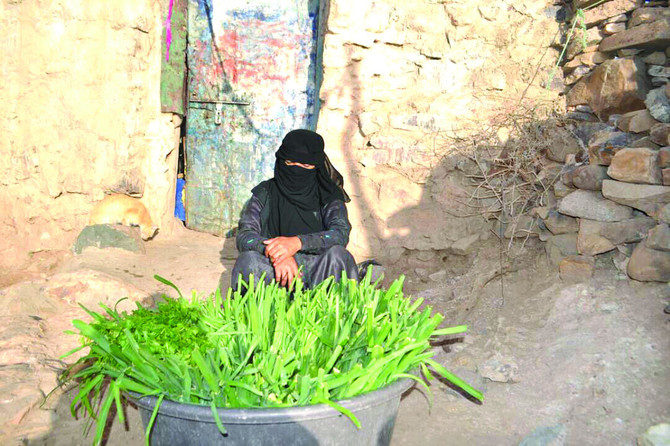
Poor economy and war forcing Yemeni women to break with tradition and become breadwinners
Poor economy and war forcing Yemeni women to break with tradition and become breadwinners


Latest updates


© 2026 SAUDI RESEARCH & PUBLISHING COMPANY, All Rights Reserved And subject to Terms of Use Agreement.