LONDON: The Americans have a name for it — “Permania” — which they use to describe the frantic, even crazy, activity around the shale oil fields of West Texas.
In the past four years, the global energy market has been stood on its head by the boom in US crude production, to the point where the Americans are now producing more oil than Saudi Arabia and will soon overtake the world’s biggest producer, Russia.
The US’s 10 million barrels of oil per day account for roughly 10 percent of global output, and, as domestic demand for energy is saturated, they are being exported increasingly to the rest of the world.
That boom has unhinged the global oil market. The price collapse of 2014, the “Vienna Alliance” between OPEC countries and Russia, and the fiscal challenges of countries in the Gulf, are all down to the shale boom.
Sara Ortwein, president of Exxon Mobil’s shale business XTO Energy, told the CERAWeek by IHS Markit conference in Houston, Texas this week: “A decade ago, the idea of exporting US crude would have been seen as preposterous. Now, we have enough to satisfy US energy needs and sell it to the rest of the world.”
The Permian basin, west of Houston, Texas, and straddling New Mexico, is at the heart of the revolution. It produces 25 percent of American oil output, and has virtually changed the global oil equation on its own.
For traditional exporters like Saudi Arabia, it presents a big question: To join the party in Texas and other US shale fields, or to stick to pumping crude from the sands and seas of the Middle East?
“We have the golden goose, right before us,” said Tim Dove of Pioneer Natural Resources, one of the leading shale companies and among the first to exploit the Permian around the turn of the millennium. “We don’t drill dry holes, because we know the oil is there. Technology will only make it better. The sky is the limit,” he told the CERAWeek.
In a throwaway line, he seemed rather pleased about how he and other shale producers have caused confusion in the ranks of the traditional producers.
“I think that OPEC is impressed by what we’ve done, even if they are trying to get their arms about what it all means.”
He was speaking after a meeting with OPEC officials and traditional oil company executives in one of the many power-broking dinners around the CERAWeek venue.
It was the second year that OPEC had invited the shale barons to break bread in an attempt to end the undeclared hostilities between traditional oil producers and the Texans in place since the fall in prices in summer 2014.
Mohammed Barkindo, Opec general secretary, explains how the “peace” talks had come about. “We agreed last year to continue the dialogue with the Sahel industry. The last stage of the oil cycle has been the most injurious for all our members, and to everybody in the world. We all suffered. We had been operating in silos and we agreed to talk to the shale industry.”
Barkindo insisted that the meeting did not discuss oil prices or deals on limiting output, and Dove pointed out that US anti-cartel laws would make such agreements illegal.
“You cannot have these kind of talks in the US. We were invited and we went along. As far as I’m concerned, the dinner was congenial, and it may well become an annual event,” Dove said.
There has been speculation that some OPEC members might seek to do deals with shale producers as a way of balancing their portfolios and getting exposure to the upside in shale.
Amin Nasser, chief executive of Saudi Aramco, said that the company was always looking to get involved in growth areas, but he did not specify which ones.
But some in Houston questioned whether the shale industry had cured the “boom or bust” cycle of the past, when falling oil prices led to withdrawal of financial support from investors.
Others pointed out that shale still faced big problems in overcoming pipeline and shipping challenges, as well as opposition from the environmental lobby.
Mark Pappa, one of the pioneers of shale finance via his company EOG Resources, said that shale forecasts were too optimistic, and that the industry was exploiting cheap and easy assets that would quickly be exhausted.
“If shale does disappoint over the next four to five years, there are not a lot of safety valves in the system,” he said.
Dove dismissed these fears, pointing out that the shale industry’s cost breakeven price was only $19 per barrel. “There is no downturn price that would affect our profitability until it gets to below $40 a barrel,” he said.
Nonetheless, Papp’s skepticism was a wake-up call in Houston for an industry that was basking in its own considerable achievements.
But the convinced “Permaniacs” remained optimistic. Ortwein, who suggests the Permian could eventually be producing five million barrels of oil per day, half the total output of Saudi Arabia, said: “Permania is not a fad, it is permanent.”


![]()
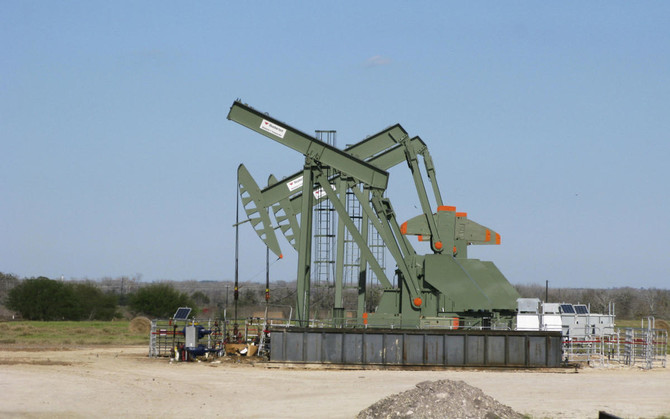

The big question for US shale: Is it permanent or just ‘permania?’
The big question for US shale: Is it permanent or just ‘permania?’


Middle East war economic impact to depend on duration, damage, energy costs, IMF official says
- Katz: Prolonged increase in energy prices could unanchor inflation expectations
- IMF: 2026 global GDP outlook was solid, too early to judge war’s impact on growth
WASHINGTON: The Middle East war’s impact on the global economy will depend on its duration and damage to infrastructure and industries in the region, particularly whether energy price increases are short-lived or persistent, the International Monetary Fund’s number two official said on Tuesday. IMF First Deputy Managing Director Dan Katz told the Milken Institute Future of Finance conference in Washington that if there is prolonged uncertainty from the conflict and a prolonged impact on energy prices, “I would expect central banks to be cautious and respond to the situation as it materializes.”
He said the conflict could be “very impactful on the global economy across a range of across a range of metrics, whether it’s inflation, growth and so on” but it was still early to have a firm conviction.
Prior to the US and Israeli air strikes on Iran and counterattacks across the region, the IMF had forecast solid global GDP growth of 3.3 percent in 2026, powering through tariff disruptions due in part to the continued AI investment boom and expectations of productivity gains.
Katz said that the economic impact from the Middle East conflict would be influenced by its duration and further geopolitical developments.
Earlier, the IMF said it was monitoring the conflict’s disruptions to trade and economic activity, surging energy prices and increased financial market volatility.
“The situation remains highly fluid and adds to an already uncertain global economic environment,” the Fund said in a statement issued from Washington. Katz said the IMF will look at the conflict’s direct impacts on the region, including damage to infrastructure, and disruptions to key sectors.
“Tourism is an important one. Air travel. Is there physical damage to infrastructure, production facilities, and the big industry in particular that everyone will be focused on is, of course, the energy industry,” he said.
Oil rose further on Tuesday as Iran vowed to attack ships passing through the Strait of Hormuz. Brent crude oil , the global benchmark, surged to $83 per barrel, up 15 percent from its level on Friday.
Katz said he expected central banks to “look through” a temporary rise in energy prices, given their focus on core inflation. But central banks could respond if a more persistent energy shock results in “a destabilizing of inflation expectations.”
He said the post-COVID inflation spike of 2022 was influenced by energy impacts from Russia’s invasion of Ukraine, with more pass-through from headline inflation to core inflation.
“And so I’m sure central banks, as they are thinking about how the geopolitical situation is translating into energy markets, will be looking at the lessons of the pandemic and seeing if they can apply any of those lessons in setting monetary policy,” Katz said.
He said the conflict could be “very impactful on the global economy across a range of across a range of metrics, whether it’s inflation, growth and so on” but it was still early to have a firm conviction.
Prior to the US and Israeli air strikes on Iran and counterattacks across the region, the IMF had forecast solid global GDP growth of 3.3 percent in 2026, powering through tariff disruptions due in part to the continued AI investment boom and expectations of productivity gains.
Katz said that the economic impact from the Middle East conflict would be influenced by its duration and further geopolitical developments.
Earlier, the IMF said it was monitoring the conflict’s disruptions to trade and economic activity, surging energy prices and increased financial market volatility.
“The situation remains highly fluid and adds to an already uncertain global economic environment,” the Fund said in a statement issued from Washington. Katz said the IMF will look at the conflict’s direct impacts on the region, including damage to infrastructure, and disruptions to key sectors.
“Tourism is an important one. Air travel. Is there physical damage to infrastructure, production facilities, and the big industry in particular that everyone will be focused on is, of course, the energy industry,” he said.
Oil rose further on Tuesday as Iran vowed to attack ships passing through the Strait of Hormuz. Brent crude oil , the global benchmark, surged to $83 per barrel, up 15 percent from its level on Friday.
Katz said he expected central banks to “look through” a temporary rise in energy prices, given their focus on core inflation. But central banks could respond if a more persistent energy shock results in “a destabilizing of inflation expectations.”
He said the post-COVID inflation spike of 2022 was influenced by energy impacts from Russia’s invasion of Ukraine, with more pass-through from headline inflation to core inflation.
“And so I’m sure central banks, as they are thinking about how the geopolitical situation is translating into energy markets, will be looking at the lessons of the pandemic and seeing if they can apply any of those lessons in setting monetary policy,” Katz said.
Latest updates


© 2026 SAUDI RESEARCH & PUBLISHING COMPANY, All Rights Reserved And subject to Terms of Use Agreement.