FATA AIDS program to set up three treatment centers in tribal areas

1 / 5
Johar Afridi, an HIV patient, shows a packet of tablets, which he says costs around 13000 rupees per month but he receives it for free from the AIDS Control Program. (Photo courtesy: AN photos)
2 / 5
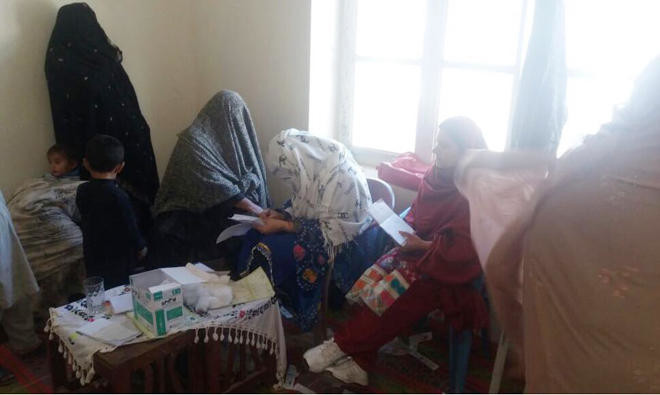
Female patients at an AIDS screening camp in Federally Administered Tribal Areas (FATA). (Photo courtesy: FATA AIDS Control Program)
3 / 5
Entrance to the AIDS treatment center at Hayatabad Medical Complex in Peshawar. (Photo courtesy: AN photos)
4 / 5
Patients at a free HIV screening camp under AIDS Control Program in FATA. (Photo courtesy: FATA AIDS Control Program)
5 / 5
A view of the Family Care Center where AIDS patients are treated in Peshawar. (Photo courtesy: AN photos)
Updated 07 March 2018
Follow

FATA AIDS program to set up three treatment centers in tribal areas

PESHAWAR: Federally Administered Tribal Areas (FATA), will have their own treatment centers under the Pakistan Government’s National AIDS Control Program from next month.
Patients from tribal areas have been going to Peshawar for screening and treatment until now, according to health officials.
FATA Aids Control Program Manager Dr. Durkhanay Wali told Arab News that initially three treatment centers are being set up in FATA.
“We will select those places in FATA which have maximum catchment area,” she said.
Wali added that the control program conducts annual screening camps in all tribal agencies and Frontier Regions (FRs).
“A screening camp in an agency is five-day long (exercise), while it is three days in an FR.”
There have been 547 registered HIV patients from FATA and the FRs from 2003 to date, according to Wali. The North Waziristan tribal region alone has 133 reported cases and would therefore have a dedicated treatment center of its own, she added.
The FATA AIDS Control Programme has registered 27 patients out of the 4,838 people screened since March 2017, across the seven tribal agencies and the FRs, she said.
Talking to Arab News, 52-year-old Johar Afridi at the AIDS treatment center in Peshawar said that he had been living with HIV for the past 23 years.
“The symptoms appeared in 1995 when I started suffering from fever and stomach disorders. However, I started HIV treatment in 2004 after I was diagnosed with it,” said Afridi, who comes from Khyber Agency.
He said he did not feel stigmatized at all and that, just like other diseases, HIV requires attention and treatment.
“I have spent half of my life with HIV and feel normal with the use of medication,” he said. The AIDS Control Program provides free medicines, which otherwise would cost him around Rs 13,000 ($118) a month, he said.
Akhtar Zaman, another HIV patient from Kakshal locality in Peshawar, said he had a fever for two months and was not getting well, which led him to take the test and discover that he was HIV positive.
“I don’t tell everyone about it. Only my in-laws and my immediate family know. I wish to keep it a secret because HIV is considered a taboo in our society,” he said.
AIDS is considered a stigma of shame in FATA but now there is much more awareness about the disease, which weakens the human immune system, said Dr. Niaz Ali, in charge of the Family Care Center for AIDS treatment at HMC.
“Patients cannot survive if they don’t take medication. However, if they take the medicines regularly, they can live a normal life,” he said.


At least 13 civilians killed in Pakistan strikes in Afghanistan, UN says

Updated 23 February 2026
Follow

At least 13 civilians killed in Pakistan strikes in Afghanistan, UN says

  • Pakistan said it launched the strikes after blaming recent suicide attacks on militants operating from Afghan territory
  • The reported toll adds to fears of a renewed cycle of retaliation between the neighbors, threatening a fragile ceasefire

ISLAMABAD/KABUL: At least 13 civilians ‌were killed and seven injured in Pakistani airstrikes in eastern Afghanistan, the United Nations said on Monday, as cross-border tensions escalated following a string ​of suicide bombings in Pakistan.

The reported toll adds to fears of a renewed cycle of retaliation between the neighbors, threatening a fragile ceasefire along their 2,600-km (1,600-mile) frontier and further straining ties as both sides trade blame over militant violence.

The United Nations Assistance Mission in Afghanistan (UNAMA) said it had received “credible reports” that overnight Pakistani airstrikes on February 21–22 killed at least 13 ‌civilians and injured ‌seven in the Behsud and Khogyani ​districts ‌of ⁠Nangarhar province.

Taliban ​spokesman Zabihullah ⁠Mujahid earlier reported dozens killed or wounded in the strikes, which also hit locations in Paktika province. Reuters could not independently verify the reported toll.

Pakistan said it launched the strikes after blaming recent suicide attacks, including during Ramadan, on militants operating from Afghan territory.

Pakistan’s information ministry in a post on X said ⁠the “intelligence-based” operation struck seven camps of the Pakistani Taliban ‌and Daesh (Islamic State) Khorasan Province ‌and that it had “conclusive evidence” the militant ​assaults on Pakistan were directed ‌by “Afghanistan-based leadership and handlers.”

Kabul has repeatedly denied allowing militants ‌to use Afghan territory to launch attacks in Pakistan.

The strikes took place days after Kabul released three Pakistani soldiers in a Saudi-mediated exchange aimed at easing months of tensions along the border.

Afghanistan’s defense ministry condemned ‌the strikes and called them a violation of sovereignty and international law, saying an “appropriate and measured ⁠response will ⁠be taken at a suitable time.” The Afghan foreign ministry said it had summoned Pakistan’s ambassador.

In a statement on the February 21-22 strikes, Afghanistan’s education ministry said eight school students; five boys and three girls, were killed in Behsud in Nangarhar province, and one madrasa student injured in Barmal in Paktika province, adding that dozens of other civilians were killed or wounded and educational centers destroyed. Reuters could not independently verify the information.

The latest strikes follow months of clashes and repeated border closures ​that have disrupted trade ​and movement along the rugged frontier.