DUBAI: Gulf stock markets were mixed at Sunday’s close, with Abu Dhabi and Dubai ending the day in a narrow range, while the Saudi stock market, the biggest in the region, dropped 0.57 percent, amid weakness in energy and financial stocks.
The Gulf market took little respite from a rise in oil prices and a rebound for Wall Street stocks on Friday and following US President Donald Trump announced plans to impose tariffs on steel and aluminum imports.
“The low liquidity is still affecting the United Arab Emirates stock market and there seems little interest to allocate funds that are sitting on the side,” said Tariq Qaqish, Managing Director Asset Management at Menacorp in Dubai.
“We do see stocks trading at attractive levels and close to book values yet weak investor confidence is keeping investors away,” he said.
The Abu Dhabi index was up 0.2 percent, with health care and utilities sectors providing it underlying support.
Abu Dhabi National Energy Co. rose 1.27 percent and Gulf Pharmaceutical Industries climbed 8.6 percent.
The Dubai index was up 0.1 percent.
In Dubai, Aramex was down 2.15 percent after its board met on Thursday and proposed a full year cash dividend of 156.3 percent of paid up capital
Saudi Arabia’s index fell 0.57 percent, hurt by a 2.03 percent drop in Saudi Arabian Mining Company, the majority owner of the world’s largest fully integrated aluminum facility, after Trump announced plans to impose a 10-percent tariff on aluminum imports.
He will make a final decision by April 11.
Banking stocks were also weak, with Al Rajhi Banking & Investment Corp. dropping 0.57 percent and Alinma Bank falling 1.8 percent. Saudi banks are reeling from news that the government has demanded additional Zakat payments from them going back as far as 2002.
NCB Capital, in a report on technicals, said the index had a bearish undertone based on its daily chart, but could find support at 7,250 and 7,150 points.
Kuwait’s stock index was down 0.59 percent, weighed by Gulf Bank , which was down 2.7 percent
Qatar’s market was closed for a bank holiday.
Oman’s benchmark was down 0.17 percent, while Bahrain’s market index was up 0.49 percent.
Egypt’s index recovered from early weakness to close 0.49 percent higher, fueled by energy and financial stocks.
EFG Hermes Holdings rose 2.3 percent after Friday’s announcement that RA Mena Holdings increased its stake in the company to 8.1 percent from 2.63 percent.


![]()
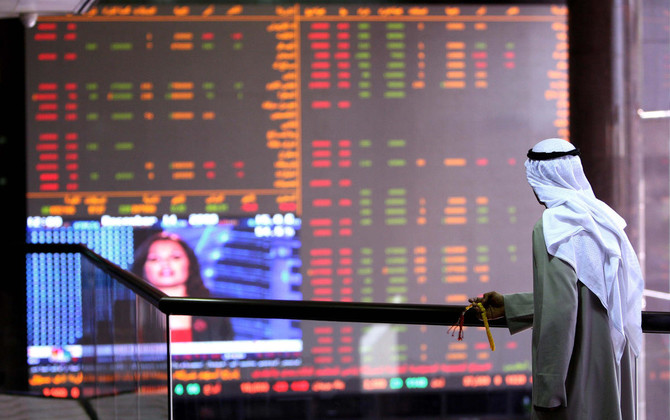
Gulf markets mixed, Saudi stocks slip on banks
Gulf markets mixed, Saudi stocks slip on banks


Latest updates


Recommended


© 2026 SAUDI RESEARCH & PUBLISHING COMPANY, All Rights Reserved And subject to Terms of Use Agreement.