ISLAMABAD: Pakistan’s Foreign Secretary Tehmina Janjua is expected to visit Washington for meetings with US officials next week, which is widely viewed as a sign of improvement in bilateral relations between the two nations – once strong allies – which drifted apart over conflicting interests and trust deficit, a US official confirmed to Arab News.
Her visit is a follow-up to a series of engagements and statements between the United States and Pakistan to patch relations.
Pakistan’s foreign office refrained from commenting when contacted by Arab News but reports suggest Janjua is likely to visit from March 6 to 8.
On Friday, US Acting Assistant Secretary for South and Central Asia, Alice Wells, in an interview to VOA radio after the conclusion of the second Kabul Process meeting, assured that the US will not cut ties with Pakistan.
“On the contrary, we are backing Pakistan against all militant groups,” she said.
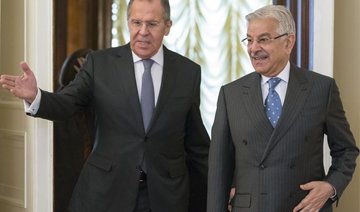
Pakistan’s Foreign Minister Khawaja Asif, speaking to reporters in Islamabad, said that Afghan President Ashraf Ghani’s “latest offer of peace talks” with the Taliban backed by the US is a “wholeheartedly” supported “move toward restoring peace in Afghanistan.”
Bilateral relations between Pakistan and the US had been on a rocky patch ever since the pronouncement of the US policy statement for Afghanistan and South Asia by President Donald Trump. Despite the US officials visiting Pakistan, the convergence of the two countries’ interests in the region had been a major issue.
Analyst Qamar Cheema said that talks with Taliban have been a long-term desire of Pakistan, which believes they are “the success of its narrative.”
He told Arab News that Janjua’s visit is essential to pass Pakistan’s perspective to Washington in order to make amends to counterproductive policies that affect the region.
Earlier in the week, Deputy Assistant to the President and the US National Security Council’s Senior Director for South and Central Asia Lisa Curtis visited Islamabad to convey Washington’s desire to “move toward a new relationship with Pakistan.”
The US State Department, at a press briefing in Washington on Tuesday, urged India and Pakistan to reconcile differences in the midst of an alarming escalation in border skirmishes between the south Asian nuclear-armed neighbors, in an effort to restore stability in the region.
Rahimullah Yousafzai, a senior journalist and expert on militancy and Afghanistan, told Arab News that he sees a connection to the regional changing dynamics and its stakeholders which realize “India-Pakistan rivalry, particularly their proxy war in Afghanistan, has become a major hurdle in ending the long Afghan conflict.”
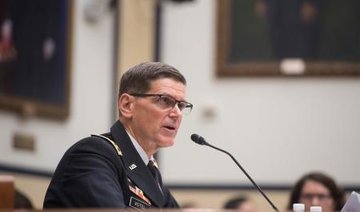
America’s top brass told a congressional panel that Pakistan is vital for its new strategy and without it, “achieving long-term stability in Afghanistan and defeating the insurgency will be difficult.” Though not completely satisfied, General Joseph Votel said there are some “positive indicators” in Pakistan’s responsiveness toward militants allegedly operating from its soil.
As Pakistan shows flexibility in heeding the US policy contours in the region, Yousafzai laid down the issues which Islamabad wants ironed out.
He said “the right conditions for India and Pakistan” to start talks are required, for which the US and China can play a pivotal role.
“The commencement of work on the Turkmenistan-Afghanistan-Pakistan-India (TAPI) gas pipeline in Feb. 2018 is another positive development and its completion by the end of 2019 would bind India and Pakistan, as well as Afghanistan, in an economic and regional connectivity project that would be a win-win situation for all,” said Yousafzai.


![]()

Pakistan’s foreign secretary expected in Washington next week to improve rocky ties
Pakistan’s foreign secretary expected in Washington next week to improve rocky ties
Latest updates


© 2026 SAUDI RESEARCH & PUBLISHING COMPANY, All Rights Reserved And subject to Terms of Use Agreement.