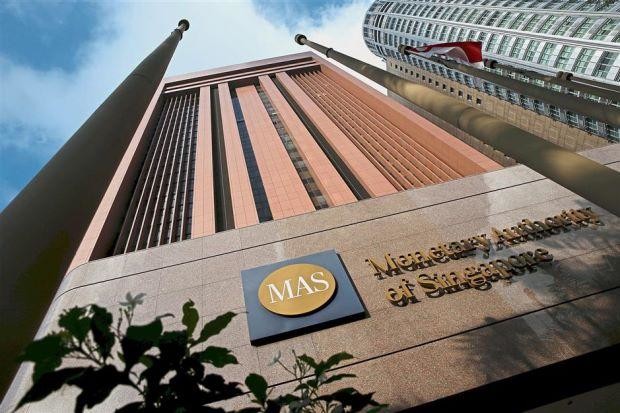
SINGAPORE: Singapore’s central bank is assessing whether additional regulations are required to protect investors in cryptocurrencies, an official said in a speech released on Thursday.
The city-state — which is aiming to be a hub for financial technology and so-called initial coin offerings in Asia — does not regulate virtual currencies and last year called for the public to exercise “extreme caution” over investment in cryptocurrencies.
Its central bank does regulate activities involving virtual currencies if they pose specific risks. For example, it imposes anti-money laundering requirements on intermediaries providing virtual currency services.
“We are assessing if additional regulations are required for investor protection,” Ong Chong Tee, deputy managing director (Financial Supervision), Monetary Authority of Singapore said.
Other countries such as South Korea, where trading in cryptocurrencies is more popular, are looking at ways to regulate that activity.

Singapore explores rules to protect cryptocurrency investors
Islamic finance in Oman poised for 25% growth: Fitch
RIYADH: Oman’s Islamic finance sector is on track to reach $45 billion this year, rising from $36 billion at the end of 2025, supported by a favorable macroeconomic environment, according to a report by Fitch Ratings.
The rating agency said the anticipated 25 percent year-on-year growth will be underpinned by increasing demand for sukuk as both a funding mechanism and a public policy tool, alongside government-led initiatives and growing grassroots demand for Shariah-compliant financial products.
Sukuk accounted for around 60 percent of US dollar-denominated debt issuance in 2025, a sharp decline from 94.3 percent previously, with the remaining share comprising conventional bonds. Despite this progress, Fitch highlighted ongoing structural challenges, including the absence of Islamic treasury bills and derivatives, an underdeveloped Omani rial sukuk and bond market, and the limited role of Islamic non-bank financial institutions.
The performance of Oman’s banking sector continues to reflect steady advancement toward Vision 2040, the country’s long-term development strategy focused on economic diversification, private sector expansion, and enhanced financial resilience.
Operating conditions remain supportive for both Islamic and conventional banks in Oman, buoyed by elevated, though gradually moderating, oil prices, the report noted.
Expanding credit flows — particularly to non-financial corporates and households — are helping drive the growth of small and medium-sized enterprises and boost domestic investment. These trends are reinforcing Oman’s efforts to reduce dependence on hydrocarbons and build a more diversified economic base.
Fitch projects loan growth of 6 to 7 percent in 2026, fueled by rising demand across both retail and corporate segments. In addition, the proposed 5 percent personal income tax, scheduled for implementation from 2028, is expected to have only a limited overall impact on banks, according to the agency.
Islamic banking in Oman was introduced following the Central Bank of Oman’s preliminary licensing guidelines issued in May 2011, which allowed the establishment of full-fledged Islamic banks and Islamic banking windows operating alongside conventional institutions.
This regulatory framework was formally entrenched in December 2012 through a royal decree amending the Banking Law, requiring the creation of Shariah supervisory boards and granting the central bank authority to establish a High Shariah Supervisory Authority.