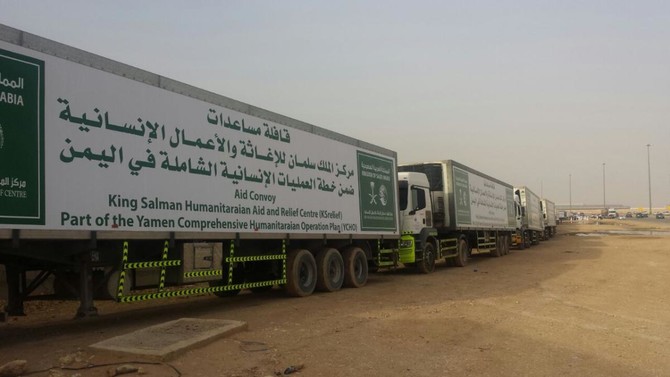
RIYADH: The King Salman Humanitarian Aid and Relief Center (KSRelief) on Tuesday dispatched 926 tons of aid to displaced Yemenis.
Dr. Abdullah Al-Rabeeah, KSRelief supervisor and Royal Court adviser, flagged off the convoy of 50 trucks from Riyadh to Yemen.
Other KSRelief senior officials were present at the event, as was Abdulraqeeb Fateh, Yemen’s minister of local administration and chairman of the Higher Relief Committee.
Al-Rabeeah said the supply of humanitarian aid to Yemen comes under King Salman’s directives to look after the needs of the country’s people.
An official from KSRelief’s media department said the convoy includes 208 tons of dates and 126 tons of medical supplies.
The aid is “to benefit some 204,000 people in the governorates of Sanaa, Aden, Marib, Al-Jouf, Al-Baidah and Al-Mahra,” he told Arab News.
Humanitarian assistance has been provided to all parts of Yemen without discrimination, he added.
Saudi Ambassador Mohammed Al-Jabir said the Kingdom has been supplying food, medicine and clothes to distressed Yemenis. The Iran-backed Houthi rebels have destroyed peace in Yemen, he added.
The Kingdom has funded Yemen’s Central Bank with $2 billion to boost the economy, Al-Jabir said.
Another $1.5 billion have been given to UN organizations to help distressed Yemenis, he added.
Last week, KSRelief signed six agreements worth $3 million with various organizations in Riyadh to help Yemenis displaced and injured by the Houthis.


![]()
![]()

KSRelief sends 962 tons of aid to Yemen
KSRelief sends 962 tons of aid to Yemen


Latest updates


© 2026 SAUDI RESEARCH & PUBLISHING COMPANY, All Rights Reserved And subject to Terms of Use Agreement.