SYDNEY: BNP Paribas calls it “the year of the yen.” Morgan Stanley proclaims it’s the “land of the rising yen.” While, Citi has turned into a dollar bear with its latest report “we continue to holler — sell the dollar.”
Though most speculators have still to heed them, analysts are lining up to call a higher yen, expecting its traditional safe harbor status to draw investors made nervous by ballooning US deficits and heightened financial market volatility.
A stronger yen, making imports cheaper, would undermine the Bank of Japan’s primary goal of increasing price growth to wrench the economy out of a long deflationary phase.
But analysts reckon the central bank may have run out of policy ammunition to resist the upward pull on the yen exerted by Japan’s improved economic growth and huge current account surplus.
“The Japanese yen can easily be the top performer among the G-10 currencies,” said Momtchil Pojarliev, deputy head of currencies at BNP Paribas Asset Management, referring to the Group of Ten advanced countries.
“The Bank of Japan (BoJ) remains dovish for now, but this means that the next policy shift can only be hawkish,” he added. “Second, the Japanese yen is one of the cheapest currencies in the world. Third, the return of financial market uncertainty is supportive for the Japanese yen.”
Yet currency speculators appear deaf to all the hollering, having built huge short positions in yen futures even as the currency rallied to ¥105.5 per dollar in February from ¥114.5 in late-2017.
Yen short positions remain about 40 percent larger than the past one-year average, and near levels seen in mid-2017.
The numbers are even larger if short yen positions held by Japanese retail investors — colloquially known as Mrs. Watanabe — are taken into account.
Latest monthly data from the Financial Futures Association of Japan (FFAJ) showed that at the end of January, long positions in the dollar-yen trade held by retail currency traders were at ¥3.009 trillion.
That was the highest since January 2015 and more than three times the short positions at ¥922 billion.
If the analysts are right, it sets the scene for a massive shakeout that could see the yen test ¥100 per dollar or even higher.
This one-sided positioning has become a major risk for the greenback as a sustained rise in the yen would force investors to close out loss-making positions by buying yet more yen.
A similar unraveling happened in early 2016 when positions in the yen swung sharply from short to long, and the dollar followed by sinking from ¥120 to as low as ¥99.
The current short position in the yen is also much larger than back in 2016, even though more analysts are turning bullish toward the Japanese currency.
“This dissonance will eventually be resolved,” said Morgan Stanley analyst Hans Redekar who expects the dollar to ultimately succumb to twin deficit disease.
“We have to go back to the mid-1960s to find a similar situation, with the US pursuing fiscal expansion despite labor market tightness, strong private sector investment, and widening foreign imbalances,” says Redekar.
“The result was the breakdown of Bretton Woods. Absent a fixed exchange rate regime, it should instead now lead to USD weakness.”
Many analysts, including National Australia Bank, are predicting USD/JPY around ¥100- ¥105 over the coming months. That could be a setback for Japan’s export-driven economy, and a downside risk for inflation.
It would also be a major challenge for the Bank of Japan with inflation still well short of its 2 percent target.
Governor Haruhiko Kuroda has gone out of his way to assure investors that policy will remain easy, a commitment underpinned by the government’s nomination of two dovish deputies.
History, however, shows the impact of BOJ policies on the currency market has become smaller with every new iteration.
For example, the yen fell for eight consecutive months on expectations of a radical easing in monetary policy when Shinzo Abe was elected prime minister in late 2012.
The yen resumed its slide in 2014 following the BOJ’s second round of quantitative easing and reached a 12-1/2-year trough in mid-2015.
But when the BoJ eventually announced its latest yield curve control (YCC) policy in September 2016, the yen’s decline was only modest and the currency has since recouped all that fall.
Just this month, investors practically ignored the news of the reappointment of Kuroda and his two new deputies amid doubts policy could be eased any further.
“Markets appear to be seeking clarity about whether the policy direction could really change under new members,” said Daiju Aoki, Chief Japan Economist at UBS Chief Investment Office Wealth Management.
“We expect no radical change of monetary policy from the current YCC. Market expectations for changing the regime or additional easing, if they surfaced, would not last long.”


Currency speculators play deaf as analysts yell ‘year of the yen’
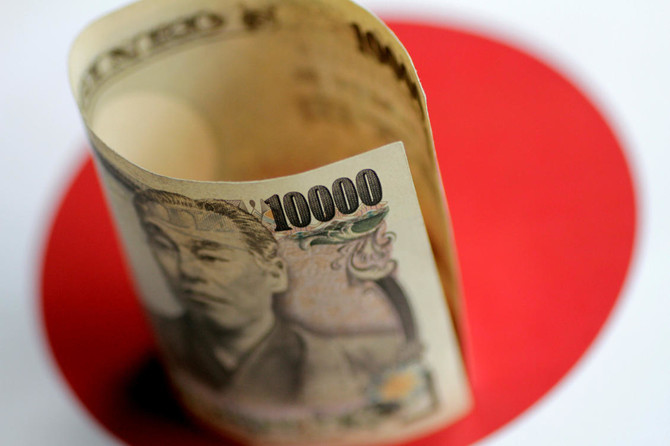
Currency speculators play deaf as analysts yell ‘year of the yen’



Saudi Aramco bolsters global oil market stability amid rising regional tensions
RIYADH: Amid growing logistical challenges facing the energy sector, operational moves by Saudi Aramco are emerging as a stabilizing factor in global oil supply.
The company has offered additional crude shipments on the spot market, a step analysts see as aimed at absorbing supply shocks and ensuring the continued flow of oil through key energy corridors.
The move aligns with Saudi Arabia’s long-standing role as a leading global producer and is intended to limit price volatility and maintain balance between supply and demand at a time of heightened geopolitical uncertainty.
Reuters reported that Aramco has offered more than 4 million barrels of Saudi crude through rare spot tenders, as tensions between the US and Iran disrupt Middle Eastern exports.
Mohammad Al-Sabban, former senior adviser to the Saudi energy minister, said the current surge in oil prices does not necessarily reflect an immediate shortage of supply. Instead, it is largely driven by what energy markets call a “geopolitical risk premium.”
Speaking to Asharq Al-Awsat, Al-Sabban said prices remaining above $100 per barrel reflect global anxiety that the conflict could expand and threaten future supply security.
He noted that higher prices, while boosting short-term revenues and fiscal surpluses for oil-exporting countries, also bring hidden costs. These include increased spending on security measures to protect oil infrastructure — costs that rise in a volatile regional environment where Gulf states face mounting security pressures.
Al-Sabban also pointed out that spot market sales are currently generating greater returns than long-term futures contracts. The uncertainty surrounding the conflict has led buyers to pay premiums for immediate deliveries, making spot transactions more attractive during the current crisis.
Strategic chokepoint
Shipping through the Strait of Hormuz, which carries roughly 20 percent of global oil supply, remains central to the crisis.
Al-Sabban warned that even a temporary closure of the waterway would inevitably reduce available supplies, potentially triggering panic in markets and forcing countries to draw from strategic reserves.
He recalled historical precedents, noting that during the Iran-Iraq war, energy markets became a hub for speculation, with negative economic consequences emerging later.
Asked whether the conflict represents a short-term economic opportunity or a broader risk for regional economies, Al-Sabban said the reality is a mix of both. High prices may offer temporary gains as long as oil remains above $100 a barrel, but a prolonged conflict could ultimately impose heavier economic burdens through rising logistical and security costs.
Flexible response
Financial and economic adviser Hussein Al-Attas said Aramco’s decision to release additional cargoes on the spot market reflects significant flexibility in managing supply and responding quickly to market shifts amid rising demand and concerns about potential shortages.
He told Asharq Al-Awsat that the move sends an important signal to global markets that Saudi Arabia continues to play the role of a swing producer, capable of intervening to maintain market balance and ease fears about supply security.
Al-Attas added that the recent surge in oil prices is largely tied to geopolitical tensions in a region that represents the heart of global energy supply.
While Brent crude could remain above $100 in the short term if supply concerns persist, he noted that history shows price spikes driven by political tensions are often temporary unless they lead to a prolonged disruption in supply.
Higher oil prices naturally increase revenues for exporting countries, potentially strengthening fiscal balances and enabling governments to finance spending and development projects, Al-Attas remarked.
Gulf states, particularly Saudi Arabia and the United Arab Emirates, may therefore benefit financially in the short term.
However, he cautioned that such gains are usually temporary rather than structural. Prolonged high energy prices can slow global economic growth by fueling inflation, which may eventually reduce demand for oil. As a result, the current price surge may represent a temporary financial opportunity rather than a lasting shift in oil revenues.
Ultimately, Al-Attas said the crisis carries two opposing dynamics: Gulf countries may benefit financially in the short term, but any wider regional conflict could pose greater risks to economic and commercial stability.
For that reason, he added, the region’s strategic interest ultimately lies in stable energy markets and uninterrupted oil flows, which are essential for sustaining global demand and supporting long-term economic growth.


