Emirates Global Aluminium posts 59% increase in 2017 net profit

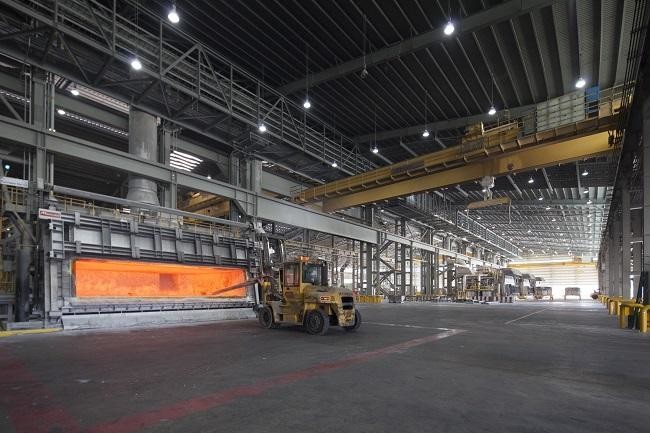
Emirates Global Aluminium (EGA) net income was at 3.3 billion dirhams last year, from a revenue of 25.5 billion dirhams, which was 20 percent higher from the 17.1 billion dirhams posted in 2016. (Courtesy EGA)
Updated 27 February 2018
Follow

Emirates Global Aluminium posts 59% increase in 2017 net profit

DUBAI: Emirates Global Aluminium (EGA), one of the world’s largest aluminum producers, reported a 59 percent increase in 2017 net profit, thanks to strong production, higher metal prices and more efficient production.
Net income was at 3.3 billion dirhams last year, from a revenue of 25.5 billion dirhams, which was 20 percent higher from the 17.1 billion dirhams posted in 2016.
“Record cast metal production of 2.6 million tons [from 2.5 million tons in 2016] and a continuing focus on cost control and operational efficiency contributed to EGA’s strong performance, amid favorable conditions in the global aluminum market,” the company said in a statement.
Sales of value-added products to 336 customers in 54 countries, which attract considerably higher premiums over LME prices, increased by 87,000 tons in 2017 to 2.1 million tons, representing 82 per cent of total turnover for the year.
“One area of particular success in 2017 stems from our development over more than 25 years of our own energy efficient smelting technology. All our reduction cells run on EGA technology, reducing costs and environmental emissions,” said Abdulla Kalban, EGA’s Managing Director and Chief Executive Officer.
“We also continued to progress well in 2017 on our strategic growth projects that are expanding our business upstream to secure the natural resources we need. Once complete, Al Taweelah alumina refinery in Abu Dhabi and GAC, our bauxite mining project in the Republic of Guinea, will deliver value for decades to come as well as create further long-term growth opportunities for EGA.”
Work on EGA’s $3.3 billion Al Taweelah alumina refinery project is 76 per cent complete and first alumina is expected during the first half of 2019, the company said. Once fully operational, the Al Taweelah alumina refinery would meet 40 per cent of EGA’s requirements, helping to secure the competitive supply of the feedstock for aluminum smelters.
The $1.4 billion Guinea Alumina Corporation bauxite mine project, meanwhile, is 37 per cent complete, with first bauxite exports expected during the second half of 2019.


Saudi Arabia’s foreign reserves rise to a 6-year high of $475bn

Updated 22 February 2026
Follow

Saudi Arabia’s foreign reserves rise to a 6-year high of $475bn

RIYADH: Saudi Arabia’s foreign reserves climbed 3 percent month on month in January to SR1.78 trillion, up SR58.7 billion ($15.6 billion) from December and marking a six-year high.

On an annual basis, the Saudi Central Bank’s net foreign assets rose by 10 percent, equivalent to SR155.8 billion, according to data from the Saudi Central Bank, Argaam reported.

The reserve assets, a crucial indicator of economic stability and external financial strength, comprise several key components.

According to the central bank, also known as SAMA, the Kingdom’s reserves include foreign securities, foreign currency, and bank deposits, as well as its reserve position at the International Monetary Fund, Special Drawing Rights, and monetary gold.

The rise in reserves underscores the strength and liquidity of the Kingdom’s financial position and aligns with Saudi Arabia’s goal of strengthening its financial safety net as it advances economic diversification under Vision 2030.

The value of foreign currency reserves, which represent approximately 95 percent of the total holdings, increased by about 10 percent during January 2026 compared to the same month in 2025, reaching SR1.68 trillion.

The value of the reserve at the IMF increased by 9 percent to reach SR13.1 billion.

Meanwhile, SDRs rose by 5 percent during the period to reach SR80.5 billion.

The Kingdom’s gold reserves remained stable at SR1.62 billion, the same level it has maintained since January 2008.

Saudi Arabia’s foreign reserve assets saw a monthly rise of 5 percent in November, climbing to SR1.74 trillion, according to the Kingdom’s central bank.

Overall, the continued advancement in reserve assets highlights the strength of Saudi Arabia’s fiscal and monetary buffers. These resources support the national currency, help maintain financial system stability, and enhance the country’s ability to navigate global economic volatility.

The sustained accumulation of foreign reserves is a critical pillar of the Kingdom’s economic stability. It directly reinforces investor confidence in the riyal’s peg to the US dollar, a foundational monetary policy, by providing SAMA with ample resources to defend the currency if needed.

Furthermore, this financial buffer enhances the nation’s sovereign credit profile, lowers national borrowing costs, and provides essential fiscal space to navigate global economic volatility while continuing to fund its ambitious Vision 2030 transformation agenda.