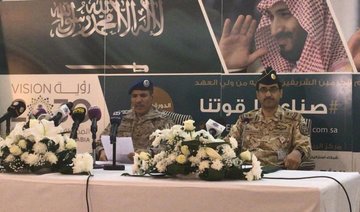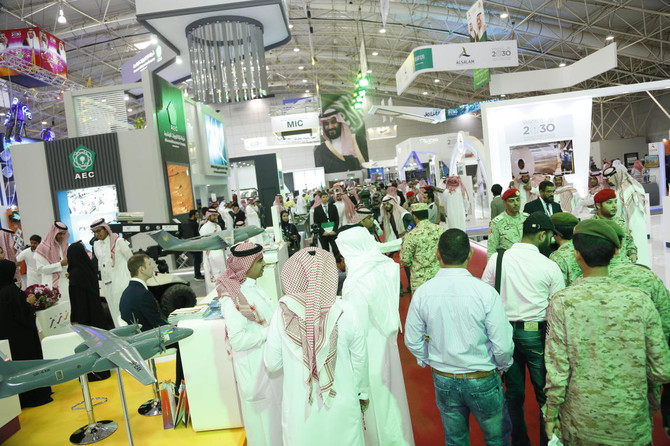


RIYADH: The Armed Forces Exhibition for Diversity of Requirements and Capabilities (AFED 2018) saw a remarkable turnout on its second day on Monday.
The defense exhibition was opened on Sunday by Gen. Abdul Rahman bin Saleh Al-Bunyan, chief of staff of the Saudi armed forces, on behalf of Crown Prince Mohammed bin Salman, with Turkey as the guest-of-honor country.
Speaking in the morning session on the Turkish experience in industry localization, Prof. Ismail Demir, chief of the Turkish defense industry, explained his country’s experience in production and localization of the defense sector.
Notably, Turkey for several decades was a buyer of foreign-made weapons systems, and stepping up its efforts in the past decade, the NATO member rose to being the producer, co-producer and partner of countless systems that it used to buy off the shelf and now aims to achieve near-full self-sufficiency.
Sharing the experience, Demir, Turkey’s top procurement official, told how the country has achieved 65 percent self-sufficiency.
On being the guest country, he told Arab News: “It is a sign of brotherly relations with the Gulf countries, especially the Kingdom.
This will go a long way to help forge greater cooperation between these countries in the defense industry.”

Prof. Ismail Demir, chief of the Turkish defense industry. (Supplied)
On Turkish industry cooperating with its Saudi counterpart in building defense capabilities, Demir said: “We understand Saudi aspirations and are ready to share our experiences, the positives and the negatives we learned about the industry.
“By working together in these areas we can reduce the cost of the process, we can improve facilities and go deep in some specific areas,” he said, adding: “There are so many areas where Saudi Arabia can join us. We are working on several ambitious projects such as electronic warfare, electronic communication, aviation and marine and submarine industry at various levels.”
There can be cooperation in research areas with 600 projects where work is in progress. These projects can be joined by universities in Saudi Arabia to join those research, he pointed out. “I am sure we will find many interesting areas to work together. This region in general must cooperate. Our future is in cooperation, the peace in this region is in cooperation,” said the defense industry chief.
Organized by the Ministry of Defense, AFED on Monday held sessions on the Saudi Arabian Military Industries (SAMI) strategy and goals, sharing ideas on localization of 50 percent of the military industries, natural resources in the Kingdom and investment opportunities, government facilities to attract foreign investments required for localization, the importance of local manufacturing strategy for national security and international experiences in manufacturing and localization of technology.
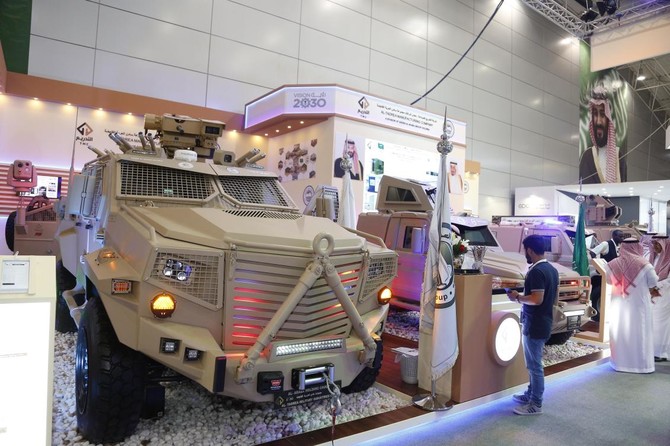
The AFED displays the requirements of the huge number of participants that include ministries, government organizations and private sectors as part of the process to achieve the goals set under Vision 2030, and the concentration of the Kingdom’s orientation toward a strong and effective strategy to localize major and supplementary industries.