BEIJING: China’s new home prices grew in January although major cities saw early signs of softening, as the government continued its efforts to rein in speculative demand to fend off bubble risk.
The acceleration in prices across the nation suggests moves by provincial governments to support first-time buyers and upgraders by relaxing some purchase restrictions may be further fanning price gains in a market where fear of missing out is strong and mortgage fraud is rampant.
Average new home prices in China’s 70 major cities rose 5 percent in January from a year earlier and 0.3 percent month on month, according to Reuters calculations based on the data from the statistics bureau on Saturday.
The government removed the sales prices for affordable housing from the latest monthly calculations, distorting comparisons with previous months’ growth data.
Prices in December grew 5.3 percent on year and 0.4 percent on month, based on data which included affordable housing.
The National Bureau of Statistics said in a statement that prices were “stable while slightly lower” last month, as eleven major cities fell year on year.
“The housing prices in tier-one cities reversed from growth to a decline and there was a slowdown in the growth rate in tier two and three cities,” it said.
China’s housing market has boomed since late 2015, giving a major boost to the economy, but is expected to gradually slow as measures to curb property speculation drag on sales.
The challenge for policymakers is to counter the risks from a slowdown in the sector and curbs to excessive borrowing without endangering a growth target of around 6.5 percent this year. A softening but still resilient property market, however, will be welcome news ahead of the annual parliament meeting in March where leaders will set economic targets for 2018.
The data marks the first price decline in tier one cities in more than two years, said Yan Yuejin, an analyst with Shanghai-based E-house China R&D Institute.
Purchase restrictions are also trickling down into lower-tier cities, while monetary policy tightening is leading to higher mortgage rates.
“Tier two and three cities will probably experience a similar decline,” he said.
Those have started knocking some heat off the market. Property sales have slowed across three different tiers in January by more than 10 percent in 15 major cities monitored by China Index Academy, a private property research firm.
Official property sales and investment data for January-February will be released by the Statistics Bureau on March 14.
But demand appeared to be more resilient than expected amid government moves to support “rigid demand” of first-time buyers and upgraders by relaxing some purchase restrictions.
The central Chinese city of Wuhan, for example, announced a pilot program in February that allows first-time buyers priority in winning new home purchase bids.
Some analysts noted that China’s housing market is becoming increasingly polarized, as prices in some smaller cities with no purchase restrictions picked up visibly but were flat or declined slightly month-on-month in most of the biggest cities.


![]()
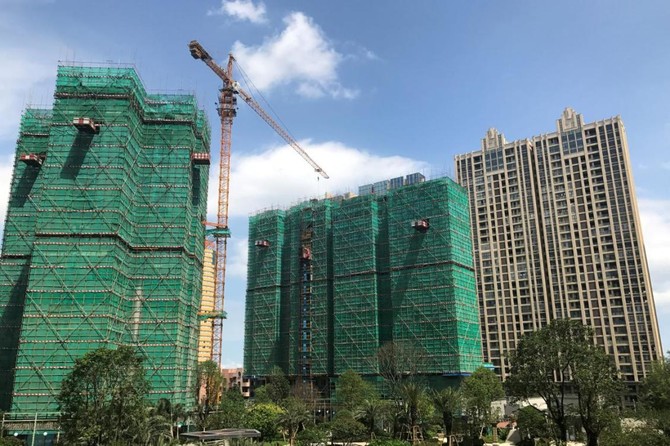
China’s January home prices rise
China’s January home prices rise

Latest updates


© 2026 SAUDI RESEARCH & PUBLISHING COMPANY, All Rights Reserved And subject to Terms of Use Agreement.