ANKARA: Turkey has despatched high-tech weaponry, designed for urban warfare, to Syria amid growing fears of an operation into the center of Afrin.
Turkish President Recep Tayyip Erdogan said this week that the Turkish army is set to lay siege to the northern city after his forces launched an operation last month against Syrian Kurdish militias.
The offensive has sparked tensions between various factions in the complex Syrian civil war. The Kurdish militants have called in support from pro-government forces, while Operation Olive Branch has heightened tensions with the US, which supports the Kurds. Turkey supports sections of the Syrian opposition rebels.
Turkish media reported that about 20 remote-controlled vehicles, mounted with sophisticated weaponry, were on their way to the Turkish forces in Afrin.
Hundreds of special operations soldiers have also been deployed to Afrin along with “volunteer village guards” — militias from predominantly Kurdish areas of Turkey, set up as a defense against attacks from the Kurdistan Workers’ Party (PKK).
The PKK is linked to the Syrian Kurdish People’s Protection Units (YPG), which Turkey is fighting in Afrin. Ankara views both groups as terrorist organizations, while the US is an ally of the YPG in the war against Daesh.
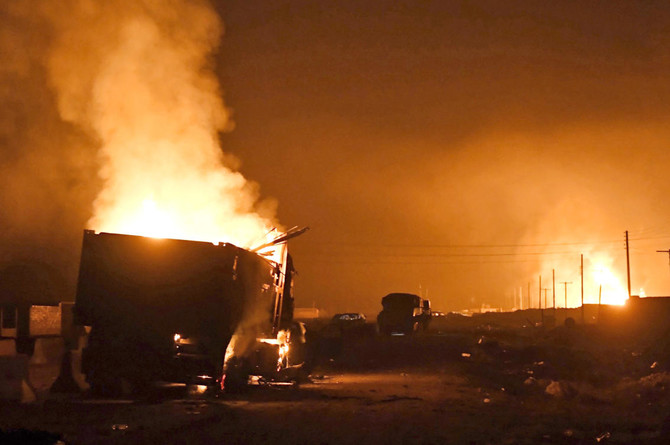
Involvement by the village guards is designed to avoid tension between Turks and Kurds within Turkey. On Thursday night, Turkish Armed Forces bombed a convoy of between 30-40 YPG vehicles carrying ammunition and weapons. The attack happened about 15 km south-east of Afrin, the military said.
Pro-regime forces, backed by Iranian militia, were reported to have entered Afrin to defend the city earlier this week.
But with Turkey showing its intention to continue the offensive, there is an increasing risk of direct clashes with forces linked to Damascus and Tehran.
Erol Bural, a former military officer and a terrorism expert at the Ankara-based research organization 21st Century Turkey Institute, said Turkey has experience in urban fighting from operations targeting the PKK in cities in south-east Turkey.
“Two years ago the PKK was pushed out of 33 different residential areas,” he told Arab News.
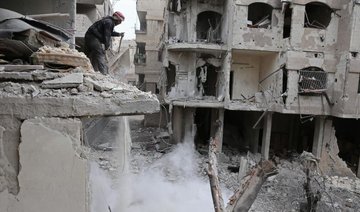
Experts predict the YPG will show the greatest resistance in Afrin city center, which has been heavily reinforced during the Syrian conflict.
“Several bombproof tunnels, and the watchtowers built by the YPG against aerial and ground operations, were revealed during Turkey’s ongoing Afrin offensive,” Bural said. “We will probably see the same in the city center, along with widespread sniper positions hidden between the houses and alleys, as well as the use of improvised explosive devices.”
Naim Baburoglu, a security analyst from Istanbul Aydin University, said he would expect the operation to reach Afrin city center to be speeded up, after critical zones surrounding the city have been captured.

Turkey prepares for urban warfare in Afrin
Sudan ‘lost all sources of revenue’ in the war: finance minister to AFP
- Ibrahim said the government is eyeing deals for Red Sea ports and private investment
- Gold production is rising year-on-year, but “unfortunately, much of it has been smuggled... across borders”
PORT SUDAN: Widespread destruction, massive military spending and plummeting oil and gold revenues have left Sudan’s economy in “very difficult times,” army-aligned finance minister Gibril Ibrahim said, nearly three years into the army’s war with rival paramilitary forces.
In an interview with AFP from his office in Port Sudan, Ibrahim said the government is eyeing deals for Red Sea ports and private investment to help rebuild infrastructure.
This week, Sudan’s prime minister announced the government’s official return to Khartoum, recaptured last year, but Ibrahim’s ministry is among those yet to fully return.
Dressed in combat uniform, the former rebel leader said Sudan, already one of the world’s poorest countries before the war, “lost all sources of state revenue in the beginning of the war,” when the Rapid Support Forces overtook the capital Khartoum and its surroundings.
“Most of the industry, most of the big companies and all of the economic activity was concentrated in the center,” he said, saying the heartland had accounted for some 80 percent of state revenue.
Ibrahim’s ex-rebel group the Justice and Equality Movement once battled Khartoum’s government but it has fought on the army’s side as part of the Joint Forces coalition of armed groups.
- Smuggling -
Sudan, rich in oil, gold deposits and arable land, is currently suffering the world’s largest humanitarian crisis, with over half of its population in need of aid to survive.
Gold production is rising year-on-year, but “unfortunately, much of it has been smuggled... across borders,” he said.
Of the 70 tons produced in 2025, only “20 tons have been exported through official channels.”
In 2024, Sudan produced 64 tons of gold, bringing in only $1.57 billion to the state’s depleted coffers, with much of the revenue spilling out via smuggling networks.
Agricultural exports have fallen 43 percent, with much of the country’s productive gum Arabic, sesame and peanut-growing regions in paramilitary hands, in the western Darfur and southern Kordofan regions.
Sudan’s livestock industry, also based predominantly in Darfur, has lost 55 percent of its exports, he said.
Since the RSF captured the army’s last holdout position in Darfur in October, the war’s worst fighting has shifted east to the oil-rich Kordofan region.
While both sides scramble for control of the territory, the country’s oil revenues have dropped by more than 50 percent — its most productive refinery, Al-Jaili near Khartoum, severely damaged.
- ‘Reconstruction’ -
Determined to defeat the RSF, authorities allocated 40 percent of last year’s budget to the war effort, up from 36 percent in 2024, according to Ibrahim, who did not specify amounts.
Yet the cost of reconstruction in areas regained by the army is immense: in December 2024, the government estimated it would need $200 billion to rebuild.
Authorities are currently eyeing public-private partnership, with firms that “are ready to spend money” including on infrastructure, Ibrahim said.
Sudan’s long Red Sea coast has over the years drawn the interest of foreign actors eager for a base on the vital waterway, through which around 12 percent of global trade passes.
“We will see which partner is the best to build a port,” the minister said, listing both Saudi Arabia and Qatar as “the main applicants.”
The Russians, for their part, had also wanted “a small port where they can have supplies,” he said, adding that “they didn’t go ahead with that yet.”
As the war rages on, Sudan shoulders a massive public debt bill, which in 2023 reached 253 percent of GDP, before falling slightly to 221 percent in 2025, according to figures reported by the International Monetary Fund.
Sudan has known only triple-digit annual inflation for years. Figures for 2025 stood at 151 percent — down from a 2021 peak of 358.
The currency has also collapsed, going from trading before the war at 570 Sudanese pounds against the dollar, to 3500 in 2026, according to the black-market rate.
Ibrahim, 71, first joined the government in 2021 as part of a short-lived transitional administration. He retained his position through a military coup later that year.
He is among several Sudanese officials sanctioned by Washington in its attempt to “limit Islamist influence within Sudan and curtail Iran’s regional activities.”