LONDON: The chief of Britain's biggest defense company said he was encouraged by the outlook for orders of the Typhoon fighter jet in the Middle East.
But BAE Systems forecast flat earnings overall in 2018 as it adjusted to lower production of the aircraft.
“The opportunity pipeline - in terms of campaigns in Europe and in the Middle East is as good as we’ve seen it,” BAE Systems’ CEO Charles Woodburn said
in a webcast following the announcement of the UK-headquartered company’s annual results.
“It certainly encourages us we will see growth coming into the next decade in Typhoon production,” he said.
His comments come as Typhoon production has slowed, at the cost of jobs, with the company announcing last October it would make nearly 2000 job cuts, due in part to a lack of jet orders.
BAE’s earnings statement released on Feb. 22 said that overall sales of airborne vehicles is expected to be 5 percent lower due to the completion of Typhoon contracts with Europe, Saudi Arabia and Oman.
Last year, the first eight Typhoon and all eight Hawk aircraft for Oman were delivered. The four remaining Typhoon aircraft are due to be delivered this year.
Typhoon support service packages are now helping deliver more revenue than aircraft production, and this is an area that is expected to grow, said Woodburn.
However, he said he expected Typhoon production will start to stabilize in coming years, particularly due to the confirmed £5 billion contract with Qatar, secured last December, to supply 24 Typhoon aircraft.
“We continue to pursue further export opportunities which if secured would drive growth back,” he said in his presentation.
Woodburn’s optimism could revive hopes in the industry that there might be progress on the much-anticipated, but yet to materialize deal to sell 48 Typhoons to Saudi Arabia.
Saudi Arabia accounted for 16 percent of BAE Systems’ total sales last year, with the US remaining the company’s biggest market accounting for 39 percent of sales.
Overall, BAE Systems’ sales were up by £0.6 billion to reach £19.6 billion in 2017. Operating profit decreased to £1.48 billion from £1.74 billion recorded in 2016.
“With an improving outlook for defence budgets in a number of our markets, we are well placed to generate good returns for shareholders,” Woodburn said in an official statement.
The company decided on a final dividend of 13 pence per share, making a total of 21.8 pence per share for the year, marking an increase on 2 percent on 2016.


![]()
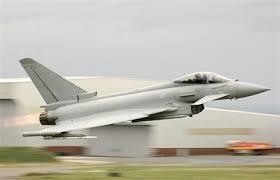
BAE Systems chief sees encouraging outlook for Typhoon orders in Middle East
BAE Systems chief sees encouraging outlook for Typhoon orders in Middle East

Latest updates


© 2026 SAUDI RESEARCH & PUBLISHING COMPANY, All Rights Reserved And subject to Terms of Use Agreement.