Britain warns of Daesh attacks in South Africa after couple kidnapped

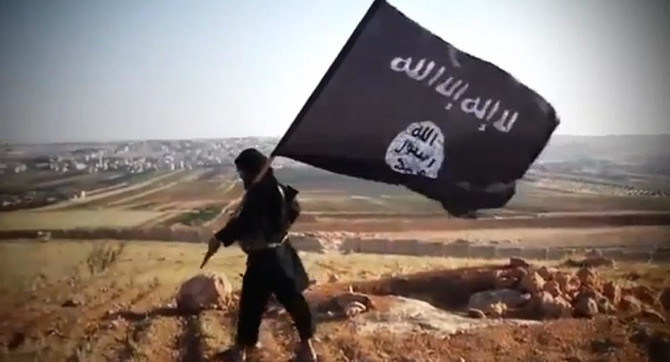
A Daesh fighter holds the group's flag. (AFP)
Updated 22 February 2018
Follow

Britain warns of Daesh attacks in South Africa after couple kidnapped

JOHANNESBURG: Britain has warned of a threat of attacks by extremists on foreigners in South Africa after two British nationals were kidnapped in a small town there, but South African police said they had no evidence militants were behind the incident.
Africa’s most industrialized country has a large expatriate community and attracts many tourists, and has seldom been associated with militancy. No attack followed a similar warning by Britain and the United States in June 2016.
South Africa’s elite police unit Hawks said the force was investigating the kidnapping, which took place on Feb. 12.
Britain’s Foreign Office (FCO) said on its website the main threat was from Daesh.
In an email to Reuters on Thursday, the FCO said: “We have updated our travel advice to include this recent incident,” referring to the kidnapping. “Our travel advice already states that terrorists are likely to try to carry out attacks in South Africa. This remains our assessment.”
The FCO declined to give details on the kidnapping.
A spokesman for the Hawks, Lloyd Ramovha, said two suspects had been arrested in connection with the kidnapping of the British couple.
Police have not identified the couple, who live in Cape Town. They were kidnapped in the small town of Vryheid in the eastern KwaZulu-Natal province, Ramovha said. Police were still investigating why they had traveled there.
“The couple are still missing at this stage. No ransom has been demanded. Our investigation so far has not revealed any links to terrorists, let alone Daesh,” Ramovha said.
“Besides that, South Africa has measures to counter terrorist threats. We are more than ready to deal with such.”
“The car the couple was driving in was found yesterday (Wednesday), and is now undergoing forensic tests,” he said.
The couple, a 74-year-old man who moved from Britain to South Africa in the 1970s and his South African-born wife, 63, both have British and South African nationalities.
Security officials and experts say there are no known militant groups operating in South Africa, where Muslims make up less than two percent of the population.
The FCO said terrorists were likely to try to carry out attacks in shopping areas in major cities and said news reports suggest that a number of South African nationals had traveled to Syria, Iraq and Libya and were likely to pose a security threat on their return.
Jasmine Opperman, director of Southern Africa Operations at the Terrorism, Research and Analysis Consortium think tank, said the British alert was “alarmist.”
“South Africa’s vulnerability for attack is there, but are there solid indications of attacks now as we sit here? There are none,” she said in an interview with eNCA television.


Trump calls for one year cap on credit card interest rates at 10 percent

Updated 10 January 2026
Follow

Trump calls for one year cap on credit card interest rates at 10 percent

  • Trump says Americans have been ‘ripped off’ by credit card companies
  • Lawmakers from both parties have raised concerns about rates

WASHINGTON: US President Donald Trump said on Friday he was ​calling for a one-year cap on credit card interest rates at 10 percent starting on January 20 but he did not provide details on how his plan will come to fruition or how he planned to make companies comply.
Trump also made the pledge during the campaign for the 2024 election that he won but analysts dismissed it at the time saying that such a step required congressional approval.
Lawmakers from both the Democratic and Republican Parties have raised concerns about high rates and have called for those to be addressed. Republicans currently hold a narrow majority in both the Senate ‌and the House ‌of Representatives.
There have been some legislative efforts in Congress ‌to pursue ⁠such ​a proposal ‌but they are yet to become law and in his post Trump did not offer explicit support to any specific bill.
Opposition lawmakers have criticized Trump, a Republican, for not having delivered on his campaign pledge.
“Effective January 20, 2026, I, as President of the United States, am calling for a one year cap on Credit Card Interest Rates of 10 percent,” Trump wrote on Truth Social, without providing more details.
“Please be informed that we will no longer let the American Public be ‘ripped off’ by Credit Card Companies,” Trump added.
The ⁠White House did not immediately respond to a request for comment on details of the call from Trump, but said on ‌social media without elaborating that the president was capping the rates.
Some ‍major US banks and credit card issuers ‍like American Express, Capital One Financial Corp, JPMorgan , Citigroup and Bank of America did not immediately respond ‍to a request for comment.
US Senator Bernie Sanders, a fierce Trump critic, and Senator Josh Hawley, who belongs to Trump’s Republican Party, have previously introduced bipartisan legislation aimed at capping credit card interest rates at 10 percent for five years. This bill explicitly directs credit card companies to limit rates ​as part of broader consumer relief legislation.
Democratic US Representative Alexandria Ocasio-Cortez and Republican Congresswoman Anna Paulina Luna have also introduced a House of Representatives bill to cap credit card ⁠interest rates at 10 percent, reflecting cross-aisle interest in addressing high rates.
Billionaire fund manager Bill Ackman, who endorsed Trump in the last elections, said the US president’s call was a “mistake.”
“This is a mistake,” Ackman wrote on X.
“Without being able to charge rates adequate enough to cover losses and earn an adequate return on equity, credit card lenders will cancel cards for millions of consumers who will have to turn to loan sharks for credit at rates higher than and on terms inferior to what they previously paid.”
Last year, the Trump administration moved to scrap a credit card late fee rule from the era of former President Joe Biden.
The Trump administration had asked a federal court to throw out a regulation capping credit card late fees at $8, saying it agreed with business and banking groups that alleged the rule was ‌illegal. A federal judge subsequently threw out the rule.