DHAKA/BHASAN CHAR/COX’S BAZAR, Bangladesh: Bangladesh is racing to turn an uninhabited and muddy Bay of Bengal island into home for 100,000 Rohingya Muslims who have fled a military crackdown in Myanmar, amid conflicting signals from top Bangladeshi officials about whether the refugees would end up being stranded there.
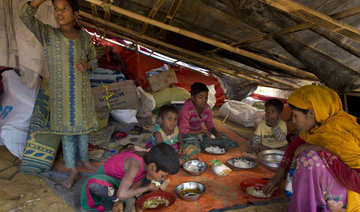
Bangladesh Prime Minister Sheikh Hasina said on Monday that putting Rohingya on the low-lying island would be a “temporary arrangement” to ease congestion at the camps in Cox’s Bazar, refuge for nearly 700,000 who have crossed from the north of Myanmar’s Rakhine state since the end of August last year.
However, one of her advisers told Reuters that, once there, they would only be able to leave the island if they wanted to go back to Myanmar or were selected for asylum by a third country.
“It’s not a concentration camp, but there may be some restrictions. We are not giving them a Bangladeshi passport or ID card,” said H.T. Imam, adding that the island would have a police encampment with 40-50 armed personnel.
British and Chinese engineers are helping prepare the island to receive refugees before the onset of monsoon rains, which could bring disastrous flooding to ramshackle camps further south that now teem with about 1 million Rohingya. The rains could start as early as late April.
Hasina’s adviser, Imam, said the question of selecting Rohingya in Cox’s Bazar to move to the island was not finalized, but it could be decided by lottery or on a volunteer-basis.
The United Nations High Commissioner for Refugees said in a statement: “We would emphasize that any relocation plan involving refugees would need to be based on and implemented through voluntary and informed decisions.”
Humanitarian agencies criticized the plan to bring Rohingya to the island when it was first proposed in 2015. Aid workers who spoke to Reuters said they remain seriously concerned that the silt island is vulnerable to frequent cyclones and cannot sustain livelihoods for thousands of people.
But work on the project has accelerated in recent months, according to architectural plans and two letters from the Bangladesh navy to local government officials and contractors seen by Reuters.
A year ago, when Reuters journalists visited Bhasan Char — whose name means “floating island” — there were no roads, buildings or people.
Returning on February 14, they found hundreds of laborers carrying bricks and sand from ships on its muddy northwest shore. Satellite images now show roads and what appears to be a helipad.
Floating Island, which emerged from the silt only about 20 years ago, is about 30 km (21 miles) from the mainland. Flat and shape-shifting, it regularly floods during June-September. Pirates roam the nearby waters to kidnap fishermen for ransom, residents of nearby islands say.
The plans show metal-roofed, brick buildings raised on pylons and fitted with solar panels. There will be 1,440 blocks, each housing 16 families.
Chinese construction company Sinohydro — better known for building China’s Three Gorges Dam — has begun work on a 13-kilometer (8-mile) flood-defense embankment for the $280-million project.
A Sinohydro engineer on Bhasan Char, reached by telephone later, said the company had “confidentiality agreements” and that questions about construction on the island should be referred to the Bangladesh government.
HR Wallingford, a British engineering and environmental hydraulics consultancy, is advising the project on “coastal stabilization and flood protection measures,” the company told Reuters in a statement earlier this month.
“The coastal infrastructure design is expected to include a flood defense embankment protecting the development area to international standards, set back from the shoreline,” it said.


![]()

New home for Rohingya refugees emerges in Bay of Bengal
New home for Rohingya refugees emerges in Bay of Bengal


Latest updates


© 2026 SAUDI RESEARCH & PUBLISHING COMPANY, All Rights Reserved And subject to Terms of Use Agreement.