

UK Prime Minister wore veil while participating in ‘Visit My Mosque’ weekend

UK PM Theresa May wearing a scarf during her visit to a mosque in Maidenhead near London on Sunday.
Updated 19 February 2018
Follow

UK Prime Minister wore veil while participating in ‘Visit My Mosque’ weekend

UK Prime Minister wore veil while participating in ‘Visit My Mosque’ weekend

PM Theresa May visited Maidenhead mosque south-east of London on
Sunday, as part of an initiative to encourage British to visit Mosques
and learn about Islam and its message calling for peace in the world.

May who covered her hair with a scarf said that it was “a very
precious occasion to be able to learn about Islam and to stress that
it is a peaceful religion.”

The doors of more than 200 British mosques were opened Sunday as part
of an initiative that started after the attacks of 7/7, 2005 on the
transport network in London to encourage dialogue between the
different faiths in the UK.

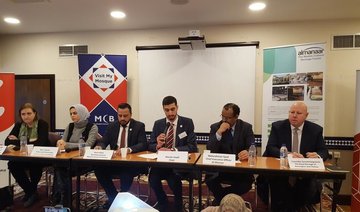
Senior UK officials participated in the initiative organized by the
Muslim Council of Britain to encourage tolerance in society. The
muslim council explained that “Visit My Mosque” day is important for
society as “open doors, open mosques (mean) open societies.”
Uganda to shut down Internet ahead of Thursday election: communication authority

Updated 10 sec ago
Follow

Uganda to shut down Internet ahead of Thursday election: communication authority

  • There was no statement from the government on the shutdown
  • The officials said the authorities did not want to “own” the decision

KAMPALA: Uganda ordered an Internet blackout on Tuesday, two days ahead of elections in which President Yoweri Museveni is seeking to extend his 40-year rule.
“This measure is necessary to mitigate the rapid spread of online misinformation, disinformation, electoral fraud and related risks, as well as preventing of incitement to violence that could affect public confidence and national security during the election period,” the Uganda Communications Commission said in a letter to Internet providers, verified by government officials to AFP.
There was no statement from the government on the shutdown. The officials said the authorities did not want to “own” the decision.
Uganda shut down the Internet during the last election in 2021 — a vote that was marred by widespread allegations of rigging and state violence against the opposition, led by singer-turned-politician Bobi Wine, who is running again for the presidency.
The government repeatedly promised that the Internet would not be shut down during the election, stating in a post on X on January 5 that “claims suggesting otherwise are false, misleading, and intended to cause unnecessary fear and tension among the public.”
The suspension was due to take effect at 6:00 p.m. local time (1600 GMT) and remain in force “until a restoration notice is issued,” the UCC said.
Essential state services were to be exempted from the ban, it added.