RAWALPINDI, Pakistan: The Pakistan Army is sending a contingent of troops to Saudi Arabia on a training and advice mission, the media wing of the Pakistan Armed Forces said in a statement on Thursday.
Inter-Services Public Relations (ISPR) said it is part of the ongoing cooperation between Pakistan and Saudi Arabia.
“Troops already there will not be employed outside KSA. The Pakistan army maintains bilateral security cooperation with many other GCC/regional countries,” the statement said.
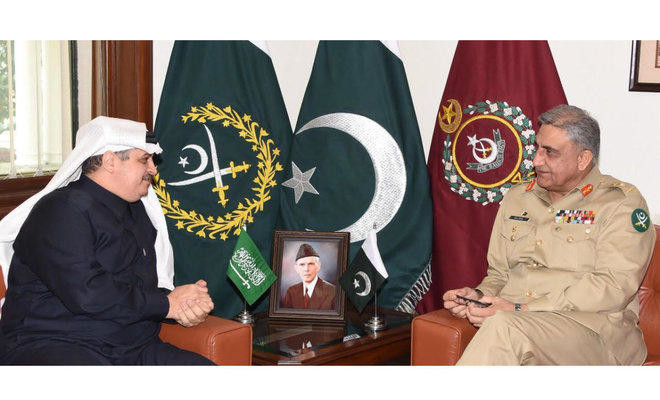
Before the announcement, Nawaf Saeed Al-Maliki, ambassador of the Kingdom of Saudi Arabia, met Gen. Qamar Javed Bajwa, chief of army staff (COAS), on Thursday at Pakistan Army’s headquarters in Rawalpindi.
“Matters of mutual interest including the regional security situation were discussed during the meeting,” the ISPR press release said.
“Pakistan and Kingdom have decades-long ties and cooperation in the field of defense, so it is important for the continuation of strategic relations,” Zafar Jaspal, professor at the school of politics and international relations in Quaid-e-Azam University, told Arab News.
“This development will not have an impact on Islamabad’s relations with any other country because the army clarified that these troops will only be on a training and advice mission,” Jaspal said.
Hasan Askari, a leading Pakistani political analyst, told Arab News that the announcement of sending more troops “reaffirms the policy of military cooperation between the two countries that has a long and positive history.”
“Pakistani troops already stationed in Kingdom work just within the limits of Saudi Arabia, so it should not be matter of concern for any other country,” Askari said.
Pakistan and Saudi Arabia enjoy close cooperation in diverse fields including defense cooperation. Armed forces of both countries regularly conduct military exercises; defense officials from Pakistan and the Kingdom also travel to each other’s county and share their experiences.
On Dec. 12, Mohammed bin Abdullah Al-Aysh, Saudi deputy defense minister, visited Pakistan and met with the Pakistani defense minister and military officials.
During the visit, Khurram Dastgir Khan, Pakistani defense minister, proposed an all-encompassing strategic cooperation agreement to deepen defense ties between the two countries.


![]()
Pakistan to send more troops to Saudi Arabia: ISPR
Pakistan to send more troops to Saudi Arabia: ISPR


Latest updates



Recommended


© 2026 SAUDI RESEARCH & PUBLISHING COMPANY, All Rights Reserved And subject to Terms of Use Agreement.