MANILA: The Philippines and China have formed a panel to study ways of jointly exploring energy resources in the disputed part of the South China Sea.
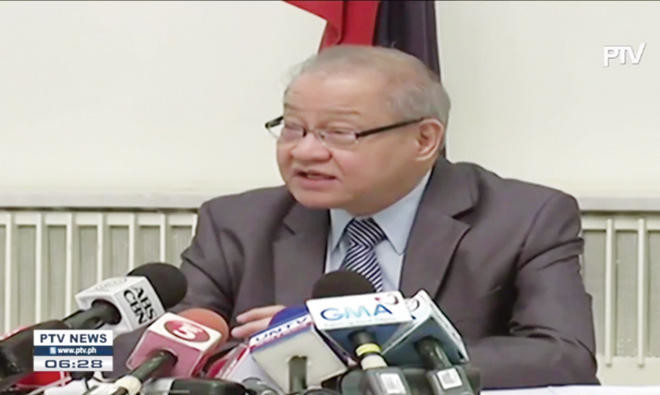
“It’s a technical working group that will study the possibility of joint oil and gas cooperation. What they will look into is if they can come to some arrangement that will be acceptable to both sides not giving up their claims,” Philippine Ambassador to China Chito Sta. Romana told Arab News.
The panel was formed during the second meeting of the Bilateral Consultation Mechanism on the South China Sea in Manila on Tuesday.
Both sides agreed to continue discussions on confidence-building measures to increase trust and confidence and to exercise restraint in activities in the South China Sea that would complicate or escalate disputes and affect peace and stability.
A joint statement released after the meeting said that there was a productive exchange of views on ways to strengthen cooperation in areas such as marine environmental protection, fisheries, marine scientific research and oil and gas, without prejudicing respective positions on sovereignty, sovereign rights and jurisdiction.
Sta. Romana said that the panel had its initial meeting on the same day. It is comprised of representatives from the Philippines’ Department of Energy and the Department of Foreign Affairs (DFA), and the China National Offshore Oil Corporation and Ministry of Foreign Affairs.
“It’s the start of a process,” Sta. Romana said, as he admitted that a joint exploration in the disputed waters was a “complex issue” that required thoroughly looking into ways to proceed without having to address the issue of sovereignty.
“The most significant thing is that the two sides are talking about it, but what the result will be is hard to say,” he said.
“Both sides will have to exchange ideas,” Sta. Romana further said. “It’s complicated. There are many sensitive issues. So, how to come to a mutually acceptable arrangement that will satisfy both sides and the legal aspects, that’s what they will be working on, but at least we’re talking.”
DFA Secretary Alan Peter Cayetano reiterated the Duterte administration’s commitment to protect the country’s claim on the disputed territories in the South China Sea.
“The Duterte administration is unwavering in its commitment to protect our country’s territorial claims and maritime entitlements. Let me also say that we are of the position that ongoing territorial disputes should be resolved in a manner consistent with the spirit of good neighborly relations and the 1982 UNCLOS (United Nations Convention on the Law of the Sea),” he said.
Cayetano said the Philippine side raised its territorial claims and sovereignty rights issues, and discussed how to manage and prevent incidents on the ground.
“Both sides expressed their countries’ respective positions on the ongoing territorial disputes. While there are points of disagreement, both delegations are in agreement that the best way forward is to cooperate and properly manage issues of mutual concern and preserve security and stability in the region,” he said.
The DFA official was not optimistic that joint exploration could ease tensions in the South China Sea. “You have to combine optimism and caution here,” he said.


![]()
Philippines, China working out joint oil exploration in South China Sea
Philippines, China working out joint oil exploration in South China Sea

Latest updates


Recommended


© 2026 SAUDI RESEARCH & PUBLISHING COMPANY, All Rights Reserved And subject to Terms of Use Agreement.