JERUSALEM: Oman’s foreign minister made a rare visit by an Arab official to a Jerusalem holy site on Thursday after holding talks with Palestinian leaders in the occupied West Bank.
Yusuf bin Alawi visited the Al-Aqsa mosque compound in Israeli-annexed east Jerusalem, an AFP journalist reported.
His visit comes in the wake of US President Donald Trump’s controversial recognition of Jerusalem as Israel’s capital on December 6, a move that angered the Muslim world.
Such a visit would usually require coordination with Israeli officials. An Israeli foreign ministry spokesman said he was unaware of the visit and could not immediately comment.
Oman and Israel do not have official diplomatic relations, as is the case with most of the Arab world.
The Al-Aqsa mosque compound is the third-holiest site for Muslims and the scene of regular tensions between Palestinians and Israeli authorities.
It is on the hill that Jews refer to as the Temple Mount, the most sacred place in Judaism as the site of the first and second Jewish temples in the biblical era.
Israeli Prime Minister Benjamin Netanyahu has spoken repeatedly of improving ties with Arab nations in recent months, but there was no sign of a link to the minister’s visit.
Bin Alawi visited the Dome of the Rock and Al-Aqsa mosque at the compound and said “it is a duty of Arabs to visit the mosque if they can.”
Jerusalem’s status is perhaps the most sensitive in the Israeli-Palestinian conflict.
Israel occupied east Jerusalem in the 1967 Six-Day War and later annexed it in a move never recognized by the international community. It sees the entire city as its capital.
The Palestinians want Jerusalem’s eastern sector as the capital of their future state.
Bin Alawi met Palestinian president Mahmud Abbas in Ramallah earlier in the day.

Oman minister makes rare visit by Arab official to Jerusalem holy site
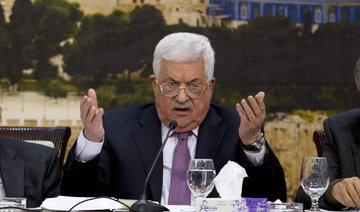
UN chief condemns Israeli law blocking electricity, water for UNRWA facilities
- The agency provides education, health and aid to millions of Palestinians in Gaza, the West Bank, Jordan, Lebanon and Syria
United Nations Secretary General Antonio Guterres condemned on Wednesday a move by Israel to ban electricity or water to facilities owned by the UN Palestinian refugee agency, a UN spokesperson said.
The spokesperson said the move would “further impede” the agency’s ability to operate and carry out activities.
“The Convention on the Privileges and Immunities of the United Nations remains applicable to UNRWA (United Nations Relief and Works Agency for Palestine Refugees in the Near East), its property and assets, and to its officials and other personnel. Property used by UNRWA is inviolable,” Stephane Dujarric, spokesman for the secretary-general, said while adding that UNRWA is an “integral” part of the world body.
UNRWA Commissioner General Phillipe Lazzarini also condemned the move, saying that it was part of an ongoing “ systematic campaign to discredit UNRWA and thereby obstruct” the role it plays in providing assistance to Palestinian refugees.
In 2024, the Israeli parliament passed a law banning the agency from operating in the country and prohibiting officials from having contact with the agency.
As a result, UNRWA operates in East Jerusalem, which the UN considers territory occupied by Israel. Israel considers all Jerusalem to be part of the country.
The agency provides education, health and aid to millions of Palestinians in Gaza, the West Bank, Jordan, Lebanon and Syria. It has long had tense relations with Israel but ties have deteriorated sharply since the start of the war in Gaza and Israel has called repeatedly for UNRWA to be disbanded, with its responsibilities transferred to other UN agencies.
The prohibition of basic utilities to the UN agency came as Israel also suspended of dozens of international non-governmental organizations working in Gaza due to a failure to meet new rules to vet those groups.
In a joint statement, Canada, Denmark, Finland, France, Iceland, Japan, Norway, Sweden, Switzerland and the United Kingdom said on Tuesday such a move would have a severe impact on the access of essential services, including health care. They said one in three health care facilities in Gaza would close if international NGO operations stopped.