

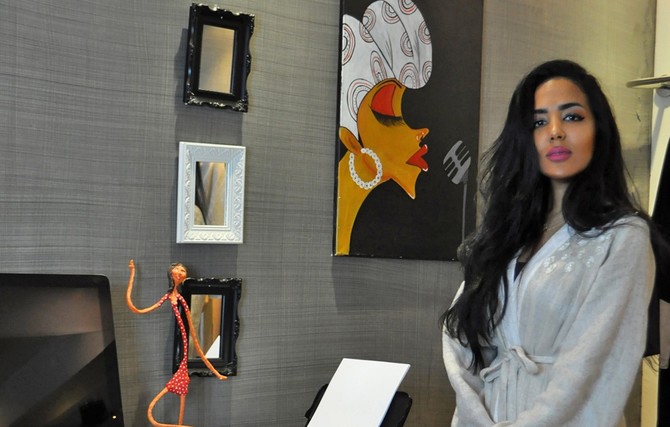
Meet the Saudi fashion star who makes her own rules

1 / 2
The clothing line is perfect for young, independent women. (Photos supplied)
2 / 2
The young designer has been interested in art and design since she was a child. (Photos supplied)
Updated 13 February 2018
Follow

Meet the Saudi fashion star who makes her own rules

JEDDAH: Mashail Abdullah Alhusaini is one of several fashion designers steadily gaining recognition in Saudi Arabia. Alhusaini claims to be the first Saudi designer to gain a Master’s degree in the Art of Fashion — she got hers from London’s City University in 2011.
Alhusaini’s much-anticipated ready-to-wear capsule collection combines traditional design with modern flourishes. In her website bio, she writes that she sees fashion as “a space where I can create my own rules and express my own feelings and ideas.” That is the inspiration behind her Masha Design brand, which she launched five years ago.

At first, Alhusaini concentrated on creating unique prêt-à-porter gowns, but over the years Masha Design has evolved. Aside from designing and selling accessories, Alhusaini has diversified Masha into three distinct clothing lines: “Couture” — custom dresses and bridal gowns; “Ramadan” — ready-to-wear themed collections including the sophisticated “Luna” and the casual, affordable “T-thobe” range; and “Masha Abaya” — delicately crafted off-the-rack abayas designed to suit young, independent women. “I design for bold, independent women who seek change,” she said.
Alhusaini credits the success of her “Ramadan” line with helping to establish Masha Design as a successful Saudi brand.
The young designer has been interested in art and design since she was a child, she told Arab News.
“Traveling played the most important and positive role in supporting my talent. I lived in France, Italy and London for years, which helped me to absorb the beauty of some of the most prominent European countries. Linguistically, this has been a great boon, making me a polyglot, a skill which furthers my ability to communicate with others and fulfill their demands,” Alhusaini said.

SOLD OUT #love #ramadan #mashadesign #ootd #goodvibes #tshirt

A post shared by Masha Design (@mashadesign) on

She attended Koefia International Academy of Haute Couture and Art of Costume in Rome, the Institute of European Design (IED) in Milan, before heading to London.
“I apply the skills and techniques that I have learned especially from the two schools (in Italy),” she said. “I use the old-school white color which is (popular in) the Haute Couture school to create night and bridal gowns. For the ‘Ramadan’ and abayas collections, I use the modern (ready-to-wear) faster techniques to create our very own patterns.”
Alhusaini said the world of fashion has shifted significantly since she launched Masha Design.
“A decade ago, consumers followed the designer. But today consumers hold the power. Fashion designers these days are forced to be hypersensitive to consumers’ needs and wants, due to the intense competition.”
When she started Masha, she said, her vision “didn’t involve anything traditional.” But she soon realized that to survive commercially, she would need to find a way to focus her creativity on classic regional styles.
“I was force to create thobe and abaya lines,” she said. “It was a huge success and helped me to get recognized in the market, but it was a huge challenge for me to create something that stands apart from others.”
Fashion is, Alhusaini feels, “one of the most competitive industries.”

“If you don’t have a thick skin, you won’t survive,” she said. “I believe we live in a constant race against the passage of time; we should overtake it before it overtakes us and leaves us striving for the ultimate modernity.”
Alhusaini keeps ahead in that race by regularly traveling to attend shows, reading a lot, and constantly checking the fashion forecasts. Social media is also an important tool, she said.
Alhusaini advised aspiring designers to ensure they have a solid knowledge of fashion — as well as talent — if they are to compete in the industry. They should, she suggested, try to innovate, and must stay strong and believe in themselves. Most importantly, she said, they must not be afraid to fail.
“I believe that everything changes in this life, whether it’s our ideas, our thoughts or we as humans. We must try to (stick with) our decisions and never give up, because you never know what you are capable of till you try and the outcome of this will surprise you. Nothing is permanent in the fashion world so don’t limit yourself,” she concluded.

Israa Allaf on her Saudi fashion brand The Untitled Project 

Updated 05 March 2026
Follow

Israa Allaf on her Saudi fashion brand The Untitled Project 

  • ‘It’s a fusion culture that really represents Saudi,’ creative director and founder tells Arab News 

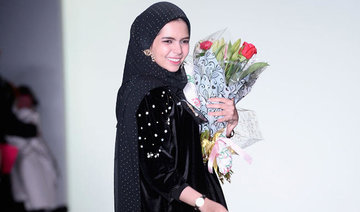
DUBAI: In 2018, when Israa Allaf launched her Saudi fashion brand The Untitled Project, “it was really hard to find something that really represented individuality,” she tells Arab News. “I really wanted to create something unique — something that felt Westernized yet at the same time felt Arab, and that you could wear as a cover-up.” 

At the time, modest fashion often left little room for self-expression. “The abaya, for example, was always worn closed, and we wanted to showcase how you can incorporate it and style it within your own clothing and have something that’s really unique to you, that you really won't find anywhere else,” Allaf says. 

In a Saudi fashion scene that has become increasingly polished and trend-driven, The Untitled Project stands out for its flowing cover-ups, richly layered prints and experimental silhouettes.  

Allaf, who studied marketing, began by designing the pieces herself before stepping into the role of creative director and building a team around her.  

“That’s why you can also see with the designs that we have many different themes. We have different artists from all around the world creating something — it’s a bit more of a fusion culture that really represents Saudi, but shows a different type of craft,” she explains. 

That idea of fluidity is also built into the brand’s name. “I actually came up with the name before even (thinking about starting the company),” Allaf says, adding that she wanted to avoid the rigid associations that come with most labels. “Brand names really put you in a box… and we didn’t want that. A woman has layers. She’s not one thing.”  

That philosophy shapes who she designs for: two main types of women. One who leans into statement pieces, another who dresses according to the occasion. 

Though Allaf is now based in Riyadh, her company’s soul remains deeply tied to Jeddah, especially the city’s beach culture and relaxed aesthetic.


“In Riyadh, they like to wear their abayas long. In Jeddah, they like to wear them short. They like their slippers. They like their ankle-length pieces, or even shorter pieces, and we really embody the Jeddah girl brand,” Allaf says. “We’d say we’re more colorful — having, like, seven-plus colors in one piece and making it still look beautiful on a woman.”  

Behind every item of The Untitled Project’s clothing — all of which are produced in Saudi Arabia — is a meticulous process that can stretch over months, sometimes focusing on just a single print or a single abaya, Allaf says. Her goal is always to ensure each design reaches its strongest possible version before it is ever released. 

The clothes are created using only silk, linen and cotton, chosen for their natural feel and their ability to showcase the brand’s intricate prints. 

Sustainability is also central to the brand’s identity, with organic materials and a strong focus on reusing fabric. Leftover textiles, embroidery and archived materials from previous collections are redesigned and reworked into new garments, allowing older pieces to take on a new life instead of being discarded. 

Small-batch production supports that approach. “Why make hundreds of a piece when we don’t know the demand? We’ll create a smaller batch and test it out on the market,” says Allaf, adding that doing so leaves “room for experimentation.”  

Even the brand’s packaging is designed with reuse in mind. After customers began repurposing the original boxes — often as makeshift homes for their cats — the brand leaned into the idea, redesigning the packaging to encourage customers to reuse it for storage and everyday needs rather than throwing it away. 

“We intentionally wrote on the backs that they can be cat-house boxes. We wanted the customers to also reuse,” Allaf says.  

One of The Untitled Project’s most meaningful designs is “Scene Leaving the Corniche.”  

“I love it so much. It just looks great on all skin tones. It has symmetry and it has asymmetry as well,” says Allaf. With butterflies, flowers and palm motifs, it captures the brand’s identity.  

“That is going to be the new brand staple print,” she says. “It represents the brand’s personality the best.” 

Through fabric, form and community projects, Allaf continues to push the idea that fashion can be thoughtful, expressive and adaptable — just like the women she designs for.