End reliance on public jobs, IMF tells Middle East countries

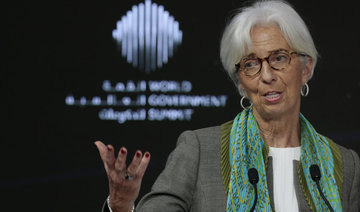
International Monetary Fund (IMF) managing director Christine Lagarde (CNN)
Updated 12 February 2018
Follow

End reliance on public jobs, IMF tells Middle East countries

DUBAI: Middle East countries must equip their youth with skills for the private-sector workplace to help curb dependence on government employment, International Monetary Fund (IMF) managing director Christine Lagarde said.

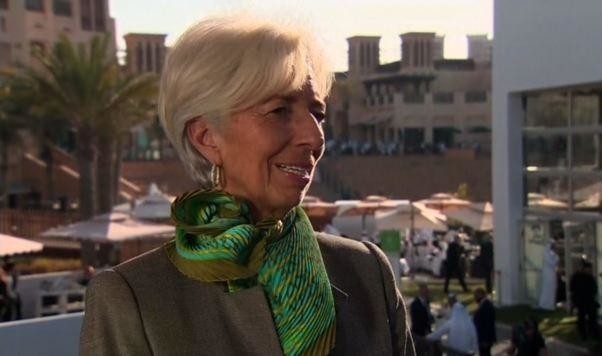
Failure to encourage a transition to the private sector would lead to “a very messy situation if there are no jobs around,” Lagarde told CNNMoney Emerging Markets EditorJohn Defterios.

“Five million (young people) per year every year (will be entering the job market) in the next five years, so there has to be a focus on helping them access the job market, making sure they’re equipped with the skills to adjust to what will be a new workplace,” she said.

The IMF chief said that youth unemployment is a particular concern in the Middle East and North Africa, with jobless rates as high as 30 percent in nine out of 21 countries in the region. The region’s population is among the youngest in the world, with over 40 percent under 20 years of age.

“More young people are coming (to the job market),” she said.

With about 5 million entering the region’s job market annually, there has been pressure on governments to absorb the new workforce through public employment, though the IMF said that this had not translated into lower overall unemployment.

In a study released last month, the IMF called on Middle East countries to reduce their bloated public wage bills at a time of heightened fiscal constraints.

“The use of public wage bill policies to influence broad socioeconomic outcomes has not achieved the desired objectives. Though other factors are also at play, countries continue to struggle with high unemployment, poverty and inadequate service delivery,” the study said.

Public wage bills in the Middle East and North Africa region, as well as Pakistan, are higher than in other emerging market and developing economies, the IMF said. In the past 10 years, these countries allocated an average 6 percent of annual GDP, or about a fifth of their total expenditure, to the government payroll.

“Wage bills are now weighing on fiscal sustainability amid slowing or declining fiscal revenue and economic growth due to lower oil prices and remittances. If left unaddressed, these tensions will intensify in the coming years due to demographic changes and technological innovation,” the IMF said.

Lagarde said that “there has to be a shift from assuming the public sector will employ everybody, as was the case in many countries in the region.

“(We should) welcome the private sector, giving it some certainty, so that investors feel comfortable, (thereby) creating activity, employing young people and avoiding what would be a very messy situation if there were no jobs around,” Lagarde said.

“(Without jobs) there would be no hope,” she said.


Middle East war economic impact to depend on duration, damage, energy costs, IMF official says

Updated 05 March 2026
Follow

Middle East war economic impact to depend on duration, damage, energy costs, IMF official says

  • Katz: Prolonged increase in energy prices could unanchor inflation expectations
  • IMF: 2026 global GDP outlook was solid, too early to judge war’s impact on growth

WASHINGTON: The Middle East war’s impact on the global economy will depend on its duration and damage to infrastructure and industries in the region, particularly whether energy price increases are short-lived or persistent, the International Monetary Fund’s number two official said on Tuesday.

IMF First Deputy Managing Director Dan Katz told the Milken Institute Future of Finance conference in Washington that if there is prolonged uncertainty from the conflict and a prolonged impact on energy prices, “I would expect central banks to be cautious and ‌respond to the ‌situation as it materializes.”
He said the conflict could ​be “very ‌impactful ⁠on ​the global economy ⁠across a range of across a range of metrics, whether it’s inflation, growth and so on” but it was still early to have a firm conviction.
Prior to the US and Israeli air strikes on Iran and counterattacks across the region, the IMF had forecast solid global GDP growth of 3.3 percent in 2026, powering through tariff disruptions due in part to the continued AI investment boom and expectations of productivity gains.
Katz said ⁠that the economic impact from the Middle East conflict would ‌be influenced by its duration and further geopolitical ‌developments.
Earlier, the IMF said it was monitoring the ​conflict’s disruptions to trade and economic activity, ‌surging energy prices and increased financial market volatility.
“The situation remains highly fluid and ‌adds to an already uncertain global economic environment,” the Fund said in a statement issued from Washington. Katz said the IMF will look at the conflict’s direct impacts on the region, including damage to infrastructure, and disruptions to key sectors.
“Tourism is an important one. Air travel. Is ‌there physical damage to infrastructure, production facilities, and the big industry in particular that everyone will be focused on is, ⁠of course, the energy ⁠industry,” he said.
Oil rose further on Tuesday as Iran vowed to attack ships passing through the Strait of Hormuz. Brent crude oil , the global benchmark, surged to $83 per barrel, up 15 percent from its level on Friday.
Katz said he expected central banks to “look through” a temporary rise in energy prices, given their focus on core inflation. But central banks could respond if a more persistent energy shock results in “a destabilizing of inflation expectations.”
He said the post-COVID inflation spike of 2022 was influenced by energy impacts from Russia’s invasion of Ukraine, with more pass-through from headline inflation to core inflation.
“And so I’m sure central banks, as they are thinking about how the ​geopolitical situation is translating into ​energy markets, will be looking at the lessons of the pandemic and seeing if they can apply any of those lessons in setting monetary policy,” Katz said.