JERUSALEM: President Donald Trump questioned Israel’s interest in making peace with the Palestinians in an interview published Sunday, spotlighting its West Bank settlements as a complicating factor.
In the interview in the Israel Hayom daily, Trump also cast doubt on the Palestinians’ desire to strike a deal. But his comments about Israel mark rare criticism from a president who has publicly sparred with the Palestinians while forging warm ties with Israel ahead of the expected presentation of a US peace outline.
“Right now, I would say the Palestinians are not looking to make peace, they are not looking to make peace. And I am not necessarily sure that Israel is looking to make peace. So we are just going to have to see what happens,” Trump was quoted as saying. He did not disclose details about the anticipated peace plan.
Israel Hayom is owned by American billionaire Sheldon Adelson, a Trump backer and a supporter of Israeli Prime Minister Benjamin Netanyahu. In the interview, Trump criticized Israel’s West Bank settlements, which the Palestinians and most of the international community view as illegal obstacles to peace. The Trump White House has been less publicly critical of Israel’s settlement building than previous administrations.
“The settlements are something that very much complicates and always have complicated making peace, so I think Israel has to be very careful with the settlements,” he said.
Relations between the US and the Palestinians have spiraled since Trump recognized Jerusalem as Israel’s capital in December. Since then he has cut US funding to a UN agency that assists Palestinian refugees and threatened to withhold aid money to the Palestinians unless they resume negotiations with Israel.
The Palestinians, who claim Israeli-annexed east Jerusalem as their capital, saw Trump’s announcement as unfairly taking sides with Israel. They say the US is not an honest broker and have pre-emptively rejected any peace proposal presented by the Trump administration.


![]()
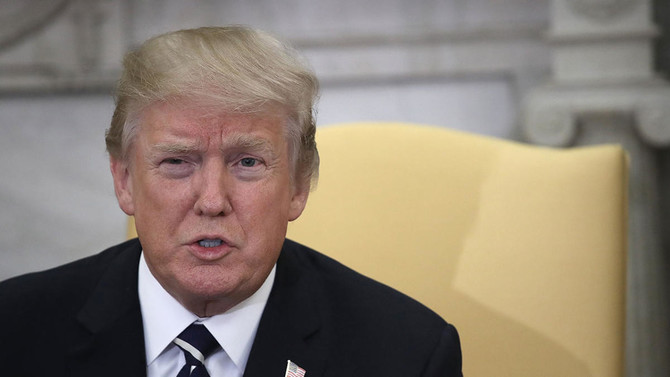

Trump questions Israel’s interest in making peace
Trump questions Israel’s interest in making peace
US authorizes the departure of some embassy personnel from Israel due to safety risks
- The United States has authorized the departure of some embassy personnel and their families from Israel due to safety risks, the US embassy said in a post on X on Friday
REUTERS: The United States has authorized the departure of some embassy personnel and their families from Israel due to safety risks, the US embassy said in a post on X on Friday.
It said the US embassy could further restrict US government employees and their families from traveling to certain areas of Israel, Jerusalem’s Old City and the West Bank without advance notice, and advised US citizens to consider leaving Israel while commercial flights remain available.
It said the US embassy could further restrict US government employees and their families from traveling to certain areas of Israel, Jerusalem’s Old City and the West Bank without advance notice, and advised US citizens to consider leaving Israel while commercial flights remain available.
Latest updates


© 2026 SAUDI RESEARCH & PUBLISHING COMPANY, All Rights Reserved And subject to Terms of Use Agreement.