DUBAI: Bahrain has ordered 17,000 English school textbooks reprinted for labeling the body of water surrounding the Arab island kingdom as the “Persian Gulf,” a political taboo, state news agency BNA reported on Monday.
Bahrain and the other US-allied Gulf Arab states resent the term, which is commonly used in English to denote the Gulf, through which large amounts of oil are shipped.
The Gulf Arab states accuse non-Arab Iran, formerly known as Persia and which lies on the other side of the sea lane, of seeking to dominate the region, a charge Tehran denies. They insist on calling the stretch of water the “Arabian Gulf.”
Bahrain’s education ministry, the news report said, had commissioned an unnamed “overseas establishment” to print the books for third-grade schoolchildren and provided it with “correct material to include in the book, including the Arabian Gulf map.”
“The discrepancy was spotted at the time of distributing the textbooks to students ... The establishment was obliged to re-print 17,000 copies of the textbook after correction of the error,” BNA quoted a ministry official saying.
US President Donald Trump infuriated Iran last October when he appeared to break from more traditional diplomatic parlance by using the term “Arabian Gulf” in a policy speech to describe the waterway.


![]()
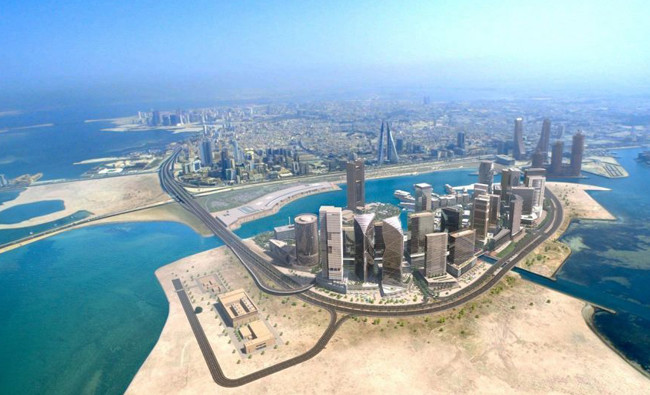

Bahrain orders 17,000 school textbooks reprinted over ‘Persian Gulf’ gaffe
Short Url
https://arab.news/cgk69
Bahrain orders 17,000 school textbooks reprinted over ‘Persian Gulf’ gaffe


Lebanon, Jordan seek solutions after Damascus bans non-Syrian trucks
- Lebanon and Jordan are seeking a solution with Syria after the latter barred foreign trucks from entering its territory, officials from both countries told AFP on Tuesday.
BEIRUT: Lebanon and Jordan are seeking a solution with Syria after the latter barred foreign trucks from entering its territory, officials from both countries told AFP on Tuesday.
Damascus had issued a decision on Saturday stipulating that “non-Syrian trucks will not be allowed to enter” the country, and that goods being imported by road must be unloaded at specific points at border crossings.
The decision exempts trucks that are only passing through Syria to other countries.
Dozens of trucks unable to enter the country were lined up on the Lebanese side of the Masnaa border crossing on Tuesday, an AFP photographer saw.
Ahmad Tamer, head of land and maritime transportation at the Lebanese transport ministry told AFP that discussions were underway with Damascus over the decision.
He said the issue was not specifically targeting Lebanon — which is trying to reset ties with Damascus after the fall of Bashar Assad — adding that he hoped to hold a meeting with the Syrian side soon.
Lebanon sends around 500 trucks to Syria per day, according to Tamer.
In Jordan, also affected by the decision, transport ministry spokesperson Mohammed Al-Dweiri told AFP that “discussions are currently underway, and we are awaiting a response from the Syrian side regarding allowing foreign trucks to enter and cross.”
Dweiri said that Jordanian trucks were continuing to unload their cargo at the free zone at the Nassib border crossing with Syria despite some “confusion.”
Around 250 Jordanian trucks travel to Syria daily, according to him.
A source in the Syrian General Authority for Ports and Customs told AFP that the decision aimed to “regulate the movement of cargo through the ports.”
Representatives of unions and associations in Lebanon’s transport sector denounced the decision on Tuesday and warning of “negative repercussions,” according to the state-run National News Agency.
Syria is the only land route Lebanon can use to export merchandise to wealthy Gulf markets.
As part of continued attempts to rekindle ties, the two countries signed an agreement on Friday to hand around 300 Syrian convicts over to Damascus.
Damascus had issued a decision on Saturday stipulating that “non-Syrian trucks will not be allowed to enter” the country, and that goods being imported by road must be unloaded at specific points at border crossings.
The decision exempts trucks that are only passing through Syria to other countries.
Dozens of trucks unable to enter the country were lined up on the Lebanese side of the Masnaa border crossing on Tuesday, an AFP photographer saw.
Ahmad Tamer, head of land and maritime transportation at the Lebanese transport ministry told AFP that discussions were underway with Damascus over the decision.
He said the issue was not specifically targeting Lebanon — which is trying to reset ties with Damascus after the fall of Bashar Assad — adding that he hoped to hold a meeting with the Syrian side soon.
Lebanon sends around 500 trucks to Syria per day, according to Tamer.
In Jordan, also affected by the decision, transport ministry spokesperson Mohammed Al-Dweiri told AFP that “discussions are currently underway, and we are awaiting a response from the Syrian side regarding allowing foreign trucks to enter and cross.”
Dweiri said that Jordanian trucks were continuing to unload their cargo at the free zone at the Nassib border crossing with Syria despite some “confusion.”
Around 250 Jordanian trucks travel to Syria daily, according to him.
A source in the Syrian General Authority for Ports and Customs told AFP that the decision aimed to “regulate the movement of cargo through the ports.”
Representatives of unions and associations in Lebanon’s transport sector denounced the decision on Tuesday and warning of “negative repercussions,” according to the state-run National News Agency.
Syria is the only land route Lebanon can use to export merchandise to wealthy Gulf markets.
As part of continued attempts to rekindle ties, the two countries signed an agreement on Friday to hand around 300 Syrian convicts over to Damascus.
Latest updates


Recommended


© 2026 SAUDI RESEARCH & PUBLISHING COMPANY, All Rights Reserved And subject to Terms of Use Agreement.