WASHINGTON, Feb 8 : Two British Daesh militants known for their role in the torture and killings of Western hostages were captured by Syrian Kurdish fighters, two US officials said on Thursday.
The men were the last of a group of four militants known as the “Beatles,” for their English accents, to remain at large.
The two, whose capture was first reported by the New York Times, were identified as Alexanda Kotey and El Shafee Elsheikh.
A separate US official, speaking on condition of anonymity, said the Syrian Democratic Forces (SDF) had captured the two in early January in eastern Syria. The official said US forces in the area had been given access to the militants.
A US-led coalition has pushed Daesh out of most of the territory it controlled in Iraq and Syria, but its leader, Abu Bakr Al-Baghdadi, who proclaimed the self-styled caliphate in 2014, remains at large.
The US State Department sanctioned Kotey in January 2017, saying he was a guard for the “Beatles” and “likely engaged in the group’s executions and exceptionally cruel torture methods, including electronic shock and waterboarding.”
Kotey had also acted as a recruiter and was responsible for recruiting several British nationals to join the militant group, the State Department said.
In March 2017, the State Department sanctioned Elsheikh, saying he was “said to have earned a reputation for waterboarding, mock executions, and crucifixions while serving as an ISIS jailer.”
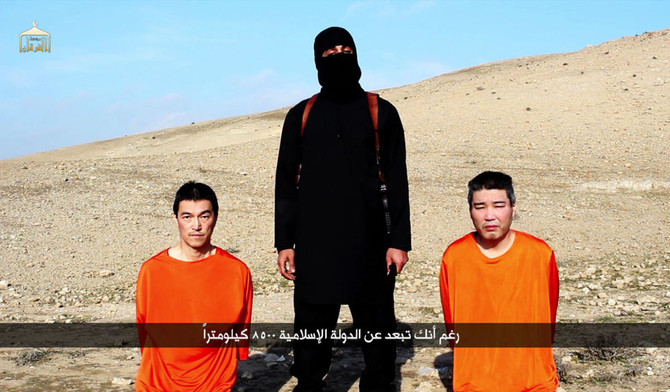
The most notorious of the four was Mohammed Emwazi, known as “Jihadi John,” an executioner of hostages made famous by Daesh videos of beheadings.
A US-British missile strike believed to have killed Emwazi, a British citizen of Arab origin, was months in preparation but came together at lightning speed in 2015 in the Syrian town of Raqqa, according to US officials.
Emwazi became the public face of Daesh and a symbol of its brutality after appearing in videos showing the murders of US journalists Steven Sotloff and James Foley, US aid worker Abdul-Rahman Kassig, British aid workers David Haines and Alan Henning, Japanese journalist Kenji Goto and other hostages.


![]()
Syrian Kurds capture two British Daesh militants — US officials
Syrian Kurds capture two British Daesh militants — US officials
Latest updates


© 2026 SAUDI RESEARCH & PUBLISHING COMPANY, All Rights Reserved And subject to Terms of Use Agreement.