ABU DHABI: The Saudi stock exchange, or Tadawul, aims to become the dominant market in the Arabian Gulf with further moves to encourage foreign investment, a leading forum was told on Thursday.
Sarah Al-Suhaimi, head of the Tadawul, told the Milken Institute MENA Summit in the UAE capital: “For this region to become significant in global terms there will have to be one main market and that is what we are working on. This thinking has already been happening. It is the will and intention of the Tadawul to grow itself and become the biggest stock exchange in the region.
“I also know that the Capital Markets Authority (CMA, the market regulator) has been working with other regulators in the Gulf Cooperation Council to have common regulations that would allow foreign companies to list in Saudi Arabia, or to have dual listings,” she said.
The Saudi stock exchange, based in Riyadh, is already the biggest market in the Middle East by market capitalization and trading volumes, but lags well behind others — notably the UAE stock markets — in the proportion of stock held by foreign investors.
Future inclusion in emerging markets (EM) indices, now being considered by the index compilers, would boost foreign ownership, currently a mere 1 percent of the total, she said.
Al-Suhaimi said that “everything is done” for EM index inclusion later this year. “We know because we have been working with the indices and with foreign investors.”
The coming initial public offering (IPO) of the national oil company Saudi Aramco, which is pledged to least part of its historic flotation in Riyadh, would also have a major effect on the Saudi market, she said.
Asked whether the Tadawul remained confident that it could “exclusively” stage the IPO, which could be worth up to $100 billion, she said: “We are ready and waiting for any decision the company might make, whether that’s for a dual listing with another exchange or a local listing. We are prepared to do whatever is decided.”
Achieving a unified stock exchange in the region would be a challenging process. Other GCC states have marketed themselves as “gateway” hubs for investors in the region and are likely to guard that position jealously.
The UAE, in particular, has two main equity markets — in Dubai and Abu Dhabi — around which the country has built a strategy of financial “clusters” to lure foreign investment.
But investors at the forum said the idea could work. “The UAE and Saudi Arabia have been cooperating on so much lately that this could be the next thing they do together. The pie will just get bigger with the transformation underway in Saudi,” said one banker, who declined to be named.
There was general agreement at the summit that the opening up of the Saudi economy to foreign investment would benefit the whole region. Miguel Azevedo, head of investment banking for the Middle East and Africa for American banking giant Citigroup, said that the investment climate had improved significantly. “But what we need are transactions. IPOs were almost nonexistent just a year ago. The Adnoc Distribution IPO has traded well and we need more like that.”
He said that the Aramco public offering would “massively increase awareness and the attraction of the region. It is the biggest transaction in the history of mankind.”


![]()
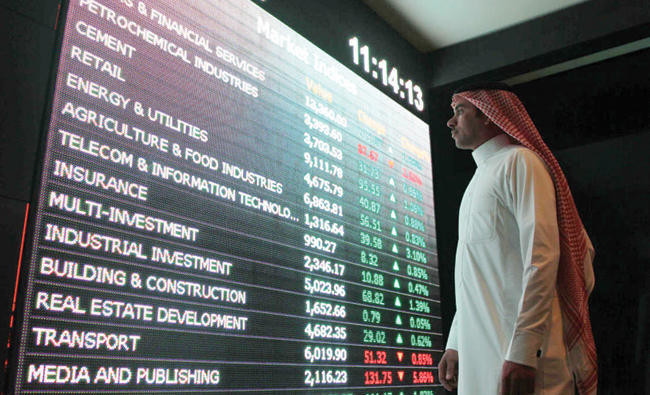
Saudi exchange ‘aims to dominate Arabian Gulf markets’
Saudi exchange ‘aims to dominate Arabian Gulf markets’


Latest updates


© 2026 SAUDI RESEARCH & PUBLISHING COMPANY, All Rights Reserved And subject to Terms of Use Agreement.