


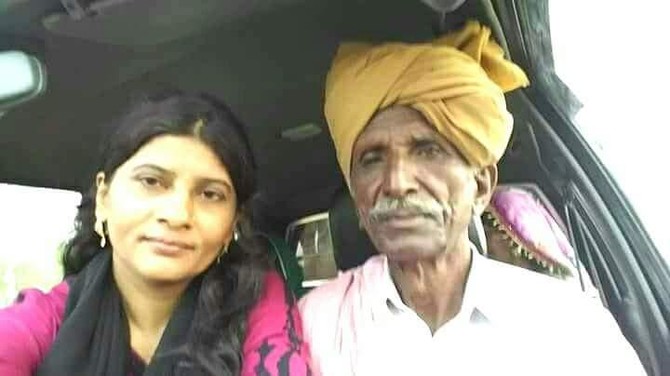
KARACHI: Krishna Kumari could become the first woman from Pakistan’s scheduled Hindu caste to be elected to the Senate.
Kumari, 38, is a member of the Kohli tribe of the Hindu community living in the Nagarparker area of Thar near the border with India. She is one of a dozen candidates nominated by the Pakistan People’s Party (PPP) for the upcoming senate elections in March.
“I’m happy, I’m feeling great,” Kumari told Arab News as she arrived unnoticed at the Election Commission of Pakistan (ECP) regional office in Karachi on Wednesday alongside a number of senators and ministers.
“I never dreamed that I would ever make it to the upper house of Pakistan’s Parliament,” she said.
Kumari began actively working for social change in 2005 after attending several youth leadership workshops. She started out by identifying cases of bonded labor and compiling case studies of women in bondage.
Kumari was quick to stress that she did not feel her position as a member of one of the country’s scheduled castes had held her back.
“Being in a minority has never been a disadvantage in Pakistan. I have never faced any discrimination for being a non-Muslim Pakistani and my selection proves that Pakistan is a country of people from all faiths,” she said. “It is a lack of education (that complicates) our entry to the forums like Parliament.”
Kumari stressed that education, particularly for girls, will remain her top priority for the next six years if she is elected as a senator.
“I have not set many targets. I have only one target and that’s educating all girls of Sindh in general and Thar in particular,” she said.
She added that she hoped to be able to represent disadvantaged women, too.
“In Thar, there was no one to listen to the problems of Thari women,” she said. “With my election to the Senate, they will have their own voice in the top forum of legislature.”
Mehnaz Rehman, a rights activist associated with the Aurat Foundation, told Arab News, “Kumari’s election would (improve) the image of Pakistan, which is (often) criticized for discrimination against minorities.”
Kumari’s journey has not been an easy one.
“My life was the toughest. My family was held for bonded labor when I was a child,” Kumari recalled, explaining that the eventually freed her family.
“Our father, though he himself was illiterate, was determined to give us an education,” she said. “At dawn, I would go to school but (straight after school) my mother would take us to the farmland and we would work there until sunset.”
Kumari credited former Prime Minister Benazir Bhutto with opening the door for other women in Pakistani politics.
“It’s the ideology of BB Shaheed which has given women a chance to serve everywhere from the embassies to the foreign office and provincial and national assemblies, to the senate of Pakistan,” Kumari said.
She also expressed her thanks to PPP Chairman Bilawal Bhutto Zardari — Benazir’s son — for the opportunity to “serve Pakistan and promote national cohesion and harmony.”
If elected, Kohli would become just the second Hindu woman to be elected to Pakistan’s senate — after Ratna Bhagwandas Chawla, who sat from 2006 to 2012 — but the first from the scheduled Hindu caste.
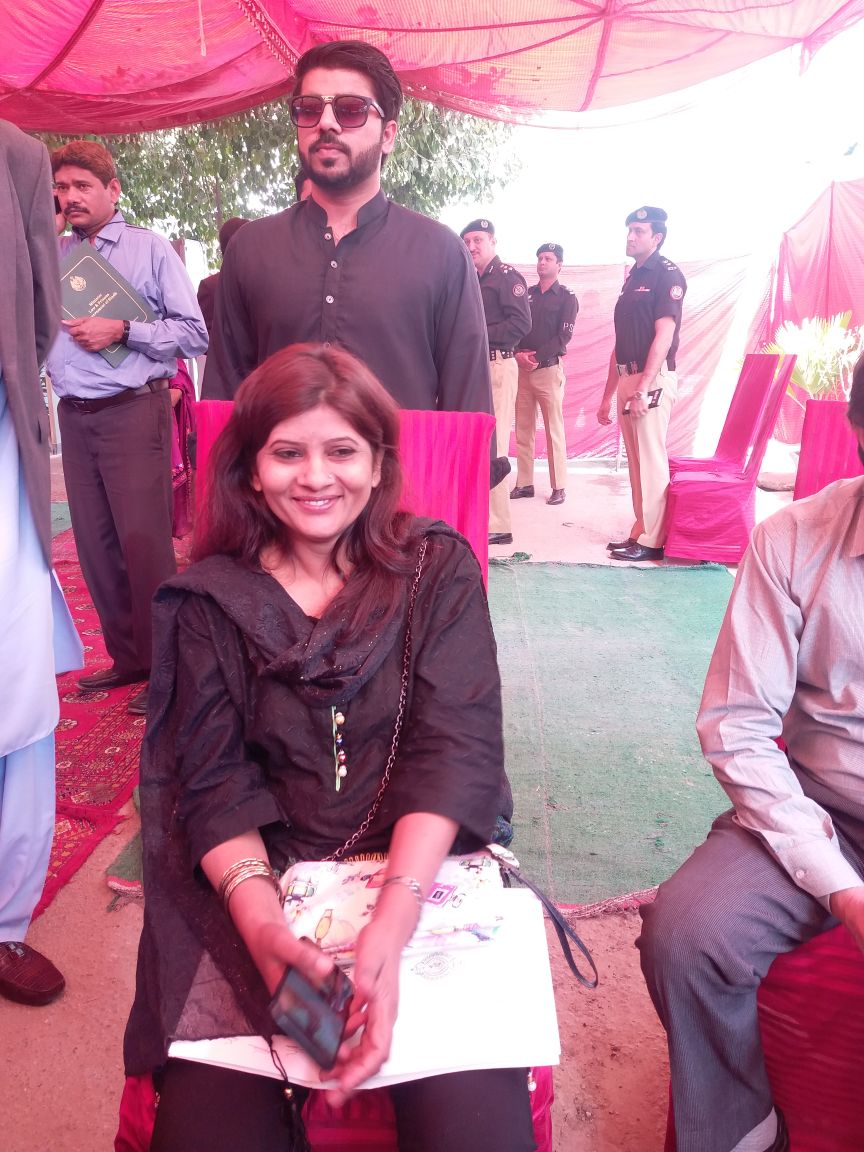
Kirshna Kumari waits for her turn to submit the nomination papers. (AN photos)


