Endgame looms for South Africa’s Jacob Zuma

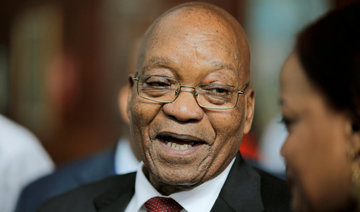
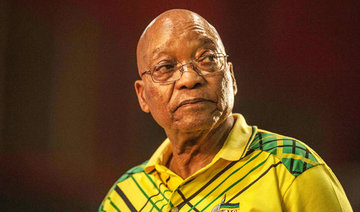
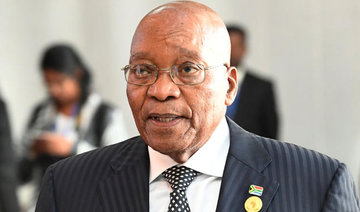
Jacob Zuma engineered the ouster of former president Thabo Mbeki in 2008 shortly after taking over the helm of the African National Congress. (Reuters)
Updated 07 February 2018
Follow

Endgame looms for South Africa’s Jacob Zuma

JOHANNESBURG: Efforts by South Africa’s ruling African National Congress (ANC) to unseat President Jacob Zuma tilted toward the endgame on Wednesday as the speaker of parliament said party leader Cyril Ramaphosa would outline Zuma’s fate imminently.
Zuma, in power since 2009, has been in a weakened position since Deputy President Ramaphosa replaced him as ANC leader in December.
The ANC had scheduled an urgent meeting of its national executive on Wednesday evening to discuss Zuma’s future but postponed it late on Tuesday after “constructive” talks between Zuma and Ramaphosa.
The delay increased speculation that a deal for Zuma to resign had been ironed out. Times Live, an online news service, quoted sources as saying Zuma would resign as soon as a list of preconditions had been finalized.
Speaker Baleka Mbete suggested South Africans would learn of Zuma’s fate within hours.
“In this day there will be some progress which the president of the ANC will be ready to come back to us about,” she told the eNCA television channel.
Zuma’s spokesman declined to comment.
Zuma engineered the ouster of former president Thabo Mbeki in 2008 shortly after taking over the helm of the ANC. He has not said whether he will resign voluntarily before his second term as president ends next year.
The 75-year-old has been South Africa’s most controversial president since the end of white-minority rule in 1994, overseeing a tumultuous nine years marked by economic decline and numerous allegations of corruption.
Some within the ANC and the opposition say the Gupta family, friends of Zuma, have used their links with the president to influence cabinet appointments and win state tenders.
The Guptas and Zuma have denied any wrongdoing but the allegations are the focus of a judicial enquiry.


Trump administration labels 3 Muslim Brotherhood branches as terrorist organizations

Updated 5 sec ago
Follow

Trump administration labels 3 Muslim Brotherhood branches as terrorist organizations

  • The State Department designated the Lebanese branch a foreign terrorist organization
  • “These designations reflect the opening actions of an ongoing, sustained effort to thwart Muslim Brotherhood chapters’ violence,” Rubio said

WASHINGTON: President Donald Trump’s administration has made good on its pledge to label three Middle Eastern branches of the Muslim Brotherhood as terrorist organizations, imposing sanctions on them and their members in a decision that could have implications for US relationships with allies Qatar and Turkiye.
The Treasury and State departments announced the actions Tuesday against the Lebanese, Jordanian and Egyptian chapters of the Muslim Brotherhood, which they said pose a risk to the United States and American interests.
The State Department designated the Lebanese branch a foreign terrorist organization, the most severe of the labels, which makes it a criminal offense to provide material support to the group. The Jordanian and Egyptian branches were listed by Treasury as specially designated global terrorists for providing support to Hamas.
“These designations reflect the opening actions of an ongoing, sustained effort to thwart Muslim Brotherhood chapters’ violence and destabilization wherever it occurs,” Secretary of State Marco Rubio said in a statement. “The United States will use all available tools to deprive these Muslim Brotherhood chapters of the resources to engage in or support terrorism.”
Rubio and Treasury Secretary Scott Bessent were mandated last year under an executive order signed by Trump to determine the most appropriate way to impose sanctions on the groups, which US officials say engage in or support violence and destabilization campaigns that harm the United States and other regions.
Muslim Brotherhood leaders have said they renounce violence.
Trump’s executive order had singled out the chapters in Lebanon, Jordan and Egypt, noting that a wing of the Lebanese chapter had launched rockets on Israel after Hamas’ Oct. 7, 2023, attack in Israel that set off the war in Gaza. Leaders of the group in Jordan have provided support to Hamas, the order said.
The Muslim Brotherhood was founded in Egypt in 1928 but was banned in that country in 2013. Jordan announced a sweeping ban on the Muslim Brotherhood in April.
Nathan Brown, a professor of political science and international affairs at George Washington University, said some allies of the US, including the United Arab Emirates and Egypt, would likely be pleased with the designation.
“For other governments where the brotherhood is tolerated, it would be a thorn in bilateral relations,” including in Qatar and Turkiye, he said.
Brown also said a designation on the chapters may have effects on visa and asylum claims for people entering not just the US but also Western European countries and Canada.
“I think this would give immigration officials a stronger basis for suspicion, and it might make courts less likely to question any kind of official action against Brotherhood members who are seeking to stay in this country, seeking political asylum,” he said.
Trump, a Republican, weighed whether to designate the Muslim Brotherhood a terrorist organization in 2019 during his first term in office. Some prominent Trump supporters, including right-wing influencer Laura Loomer, have pushed his administration to take aggressive action against the group.
Two Republican-led state governments — Florida and Texas — designated the group as a terrorist organization this year.