Polisario ‘ready’ for direct Western Sahara talks with Rabat

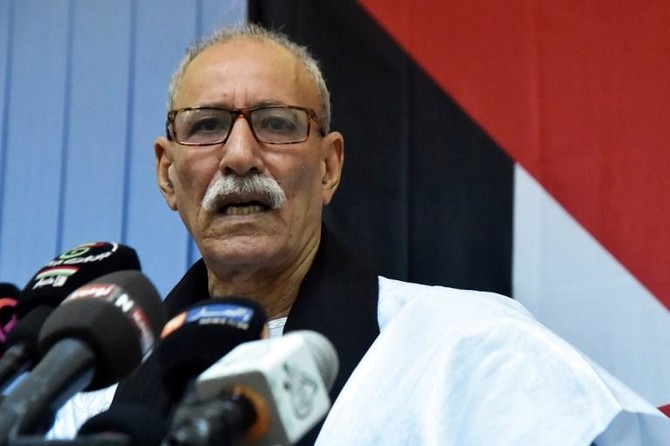
Brahim Ghali, Polisario secretary general and president of the self-proclaimed Sahrawi Arabic Democratic Republic. (AFP)
Updated 05 February 2018
Follow

Polisario ‘ready’ for direct Western Sahara talks with Rabat

ALGIERS: The Polisario Front which seeks independence for Western Sahara said Monday it is ready for direct negotiations with Morocco on the future of the disputed territory.
Mohamed Salem Ould Salek, foreign minister of the self-declared Sahrawi Arab Democratic Republic which controls a thin strip of the territory, said a Polisario delegation had met in Berlin on January 25 with the UN envoy on Western Sahara, Horst Koehler.
“This is a new phase of discussions aimed at preparing for a new phase of direct negotiations,” he told a news conference in Algiers, which supports the Polisario.
The Polisario is “ready for direct negotiations with the Kingdom of Morocco to make peace,” Ould Salek said.
Morocco has also said it would meet with Koehler, a former German president appointed in August as special envoy to lead a new UN push for talks, but without giving a date.
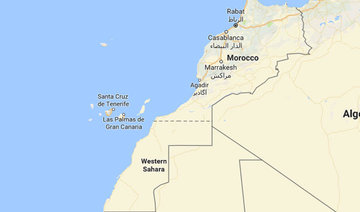
The Polisario and Morocco fought for control of Western Sahara from 1974 to 1991, with Rabat taking over the desert territory before a UN-brokered cease-fire in the former Spanish colony.
Rabat considers Western Sahara an integral part of Morocco and proposes autonomy for the resource-rich territory, but the Polisario Front insists on a UN referendum on independence.
The two sides have not held direct talks since 2012.


Russia says two crew members from US-seized tanker released

Updated 28 January 2026
Follow

Russia says two crew members from US-seized tanker released

  • “Two Russian sailors have been released and are on their way home to Russia,” Zakharova said
  • Russia announced earlier this month that the US had decided to release the Russian duo

MOSCOW: Moscow said Wednesday two Russian crew members of a tanker seized this month by the United States in the Atlantic had been released and were on their way home.
US authorities took over the Russian-flagged vessel earlier this month, alleging it was part of a shadow fleet carrying oil from countries such as Venezuela, Russia and Iran in violation of US sanctions.
The United States said publicly that the Marinera’s crew could be prosecuted. Russia said that would be “categorically unacceptable” and accused Washington of stoking tensions and threatening international shipping.
“Two Russian sailors have been released and are on their way home to Russia,” foreign ministry spokeswoman Maria Zakharova told the state-run RIA Novosti news agency on Wednesday.
Russia announced earlier this month that the United States had decided to release the two Russian crew members, but last week its Foreign Minister Sergei Lavrov said the decision had not yet been implemented.
The captain and the first officer of the tanker have left UK waters, Solicitor General for Scotland, Ruth Charteris told a court hearing Tuesday, Press Association news agency reported.
“The captain and the first officer are now aboard the US Coast Guard vessel Munro and have departed the United Kingdom’s territorial sea,” Charteris said.
Twenty-six of the 28 crew have left the ship, officials told AFP. They were processed at a military site in Inverness, Scotland, the court was told, according to Press Association.
Five wanted to travel to the United States and 21 elsewhere. None have claimed asylum, the court heard.
“At the request of the US authorities, crew members have been allowed to disembark for onwards travel,” a UK government spokesperson told AFP Wednesday.
“They will be processed in line with all appropriate immigration and legal requirements.”
Britain was not involved in the movement of the other two crew members, the government said.
The United States seized the tanker, previously known as Bella 1, which was being escorted by the Russian navy, after chasing it from near the Venezuelan coast.
It was re-flagged and re-named to bring it under Russian jurisdiction in a bid to discourage the United States from trying to take it as part of its campaign against Venezuela.