DUBAI: Since the foundation of the Kingdom of Saudi Arabia, US industrial corporations have been the most committed partners in its economic development, notably in the exploration and production of oil, but also right across the heavy industry sector.
As the Kingdom moves to the next phase with the Vision 2030 strategy to reduce oil dependence, US corporations are again playing a leading role. The razzamatazz of the first foreign visit by President Donald Trump to Riyadh in May was further proof that the US-Saudi “special relationship” is blooming, especially in business matters.
GE, the American industrial giant once known as General Electric, has been involved in that relationship for a long time. Power was, and still is, a major requirement for Saudi Arabia, and power generation has been at the heart of the GE proposition since Thomas Edison, one of the company’s founders, switched on the first commercially viable light bulb 140 years ago. It has been estimated GE turbines produce a third of the world’s electricity.
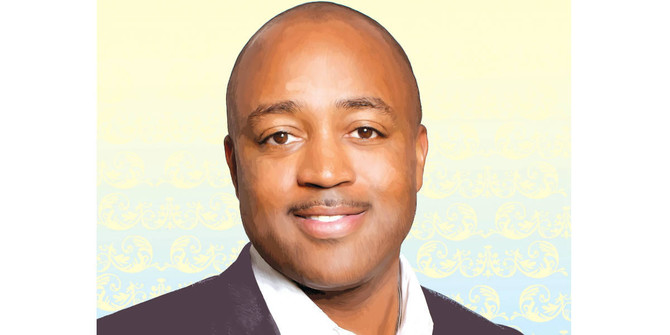
Russell Stokes, the chief executive of GE’s power division since last summer, is relatively new to the Middle East, but is a GE veteran of 20 years, and he gets the wider historical picture.
“GE has supported regional development for over 80 years in more than 20 countries, working to support growth and build the energy, transportation and health care sectors. We have more than 3,000 customers and 14,000 employees in the region. GE equipment was used in the very first oil explorations in Saudi Arabia in the 1930s,” he said.
It is still very much involved in the Kingdom’s oil sector via its oil-services business, Baker Hughes, one of Saudi Aramco’s main partners.
The GE power portfolio contains all the traditional aspects of the business, like turbines and engines for power generation and distribution from oil, gas and steam, as well a water technology essential in a desert region. But it also increasingly includes nuclear and alternative power sources, like wind, wave and solar.
So GE is more than just an industrial company; it is also at the cutting edge of industrial innovation. In Saudi Arabia, for example, it operates the GE Manufacturing Technology Center in Dammam, with a specialized research and development business complementing manufacturing and maintenance facilities.
The center has a 70 percent Saudi workforce, and has collaborated with over 300 small- to medium-sized enterprises. “We help to strengthen the Kingdom’s industrial ecosystem,” said Stokes.
That ecosystem is undergoing a profound change. The Vision 2030 strategy involves reducing dependence on oil and promoting private-sector entrepreneurialism as opposed to public-sector bureaucracy.
But it also involves embracing the “fourth industrial revolution” — the transformation of economic systems put in train by the intersection of digital, communications and robotic technology. Projects like the $500 billion Neom mega-city, which will have more robots than people, as well as other high-tech developments, are a central part of the strategy.
These days, GE calls itself a “digital industrial company,” and Stokes explained what this means for the power business in the Middle East.
“The industrial Internet is helping companies reach new levels of productivity and gain competitive advantages. GE is the world’s leading digital industrial company, marrying software and hardware to deliver outcomes for customers that were previously unattainable, such as gains in efficiency for power plants or less downtime for jet engines.
“Being a digital industrial company is both internal and external for GE — internal to provide our employees with the latest tools and empower them to be high performers, and external so our customers can benefit from the digital technology solutions we offer,” he said.
How does this principle apply to Saudi Arabia, with its unique demographic challenges and power requirements?
“Energy consumption in the Kingdom is high on a per capita basis, with power generation investments being made to meet demand for the industrialized economy. As the Saudi Vision 2030 is implemented there is likely to be long-term growth in demand for energy. As per the aims of Vision 2030, that demand is going to be met with a more diversified energy mix, including ambitious targets for renewables and a continued focus on more efficiency.
“With approximately 50 percent of Saudi Arabia’s population under the age of 30, the younger generations will likely be at the forefront of supporting new forms of energy and changing behaviors, and we should embrace them,” he said.
So Saudi Arabia’s next generation has a new and different requirement for basic everyday power and water needs, and GE will be involved in finding solutions to those changing demands. But on top of that, the Kingdom will also need some innovative thinking for the mega-projects that are the flagships of the transformation strategy — Neom, the Red Sea Resort and the other big economic and leisure hubs planned in the Kingdom. Stokes is looking forward enthusiastically to getting involved in these.
“These mega-projects are truly path-breaking, and have the potential to make an enormous positive impact on the economy of the Kingdom. For example, Neom is creating a world-class hub that will help enable key economic sectors, including renewable energy and water, biotech, and advanced manufacturing. As the world’s leading digital industrial company, GE is very excited about these projects,” he said.
Some skeptics have questioned the practicality of achieving the transformation planned in the Kingdom, both in terms of changing the conservative social and business culture of Saudi citizens, and the challenges of undertaking such a profound transformation in a comparatively short time frame. Does Stokes think Vision 2030 is achievable?
“It is bold and comprehensive, and being led by strong and committed leadership. Yes, I believe it is achievable. The vision is holistic, with a drive for transparency and clearly articulated measurements related to execution. The role of the private sector, as well as companies like GE, is important to build local capabilities and capacity, not just for Saudi Arabia but also for exports. The key to Vision 2030 now will be for all of us to continue working collaboratively for the benefit of the country,” he said.
The other aspects of the Saudi transformation that might attract GE is the corporate opportunity it presents. The government is planning a $200 billion privatization program involving the sell off of parts of the economy currently owned by the government, with power and water key parts of that.
GE’s expertise and long-standing relationship with the Kingdom would seem to put it in a good position to buy or at least joint venture on some of the privatization assets, but Stokes declined to talk details. “We are constantly open to new prospects for growth and evaluating potential partnerships and collaborations. We will assess each opportunity as it comes our way,” he said.
Outside the Kingdom, the wider Middle East, North Africa and Turkey (MENAT) is a key region within the global GE set-up, contributing $17.8 billion of the $112 billion of worldwide industrial revenue the company reported in 2016. There are big plants in Kuwait and the UAE, and also in Qatar, which Stokes declined to discuss.
“The Middle East remains a critically important region for GE’s global growth, and we have a strong customer and employee base here. For the energy industry, we continue to see demand for gas, renewables and steam power projects in the region, and we have expanded our services capabilities to ensure long-term support is available as well. As the energy mix continues to evolve, we will be able to offer technologies which best fit the needs of the region, our customers and the visions of forward-thinking plans like the Saudi Vision 2030,” he said.
At home in the US, GE has been through a challenging time, with a change of chief executive coinciding with a falling share price as doubts emerged among investors about some aspects of the conglomerate’s long-term strategy.
Last month, new CEO John Flannery announced a strategy review after a $6.2 billion charge emerged relating to the financial services business, which is being investigated by the US authorities.
How these financial issues will play out remains to be seen, but it seems unlikely they would impact GE’s core power business, which is the mainstay of its operations in the region.
At the Riyadh conference in May, GE announced $15 billion of deals with the Kingdom, mostly in the power-generation business, but also with Saudi Aramco, the national oil giant, and in the medical technology and training sector. That is a sign of ongoing commitment to the Kingdom after GE’s decades of involvement there.
“The world is transforming rapidly, and the digital industrial transformation is happening in all industries, but the transformation of energy is really what is becoming a global phenomenon. The convergence of hardware, software, controls and the cloud is a personal passion of mine,” said Stokes.
“With the astounding growth in the MENAT region over the last few years, we will continue to seek out local collaborators to make the future a reality.”


![]()
GE helping generate the energy behind Saudi Vision 2030
GE helping generate the energy behind Saudi Vision 2030
- 80 years on, GE very much involved in Kingdom's energy sector
- With KSA's strong and committed leadership, Vision 2030 is achievable — GE exec
Related


Latest updates


Recommended


© 2026 SAUDI RESEARCH & PUBLISHING COMPANY, All Rights Reserved And subject to Terms of Use Agreement.