CAYCE, United States: Two Amtrak employees were killed and more than 100 others injured Sunday when a passenger train carrying 147 people hit a freight train in the US state of South Carolina, authorities said.
Amtrak train 91 — traveling between New York and Miami — derailed in Cayce, outside the state capital Columbia, when it collided with the CSX freight train at around 2:30 am (0730 GMT).
It was the third deadly incident involving an Amtrak train since December, raising questions about the safety of the national railway service.
Amtrak said in a statement that the lead engine derailed along with some passenger cars. Eight crew members and 139 passengers were on board.
A total of 116 people were taken to area hospitals for treatment, many with “minor injuries,” Governor Henry McMaster told reporters. US media reported injuries ranged from cuts and bruises to broken bones.
He identified the dead as Amtrak personnel and said the freight train, which was stationary, appeared to be empty.
“It appears the Amtrak train was on the wrong track,” the governor said.
“We need a conversation around the country” about rail safety, he added, after visiting passengers at a shelter set up by the local Red Cross in a school.
“As you and your loved ones gather at church and other houses of worship today, we ask that you pray for those affected and the families of those who have passed away,” he said on Twitter.
US President Donald Trump, who was in Florida for the weekend, was briefed and was receiving updates, a White House spokeswoman said.
“Our thoughts and prayers are with everyone that has been affected by this incident,” deputy press secretary Lindsay Walters said.
The National Transportation Safety Board (NTSB) said it was investigating the incident. CSX said its personnel were on site to assist law enforcement.
The Lexington County Sheriff’s Department confirmed all passengers had been evacuated.
Officials added that although 5,000 gallons of fuel spilled following the crash, the leak was contained and there was no danger to the public.
“The incident is very near the state farmers’ market and other residential areas but right now, everyone is safe,” said Derrec Becker, public information officer at the South Carolina Emergency Management Division.
Passenger Derek Pettaway told CNN he was traveling south from Philadelphia to Orlando in a sleeper cabin when he was awoken by the impact of the crash.
“Nobody was panicking,” he said. “I’m pretty sure everybody was asleep and I think people were in shock.”
Pettaway added Amtrak staff had evacuated passengers in a “really calm fashion.”
The Lexington County Sheriff later said four buses had been made available to take Amtrak passengers to their final destinations.
“My prayers are with the families of those killed in the train crash in Lexington County this morning, and hoping for the best for all those injured. South Carolina is with you all!” tweeted Tim Scott, one of the state’s two US senators.
Congressman Joe Wilson called the incident “heartbreaking.”
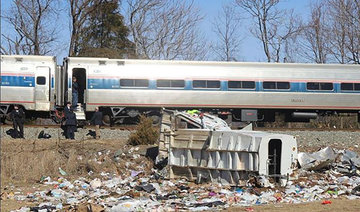
It comes just days after an Amtrak train carrying several dozen Republican lawmakers including House Speaker Paul Ryan hit a garbage truck in Virginia, killing one person and causing six others, including a congressman, to need hospital treatment.
In December, three people were killed when an Amtrak passenger train derailed in Washington state near the city of Tacoma, sending cars flying off a bridge and onto a busy interstate highway.
Preliminary information obtained from an event data recorder in the rear locomotive showed that train, which was traveling on a new route for the first time, was speeding at 80 miles (128 kilometers) per hour in a 30 mph zone.


![]()
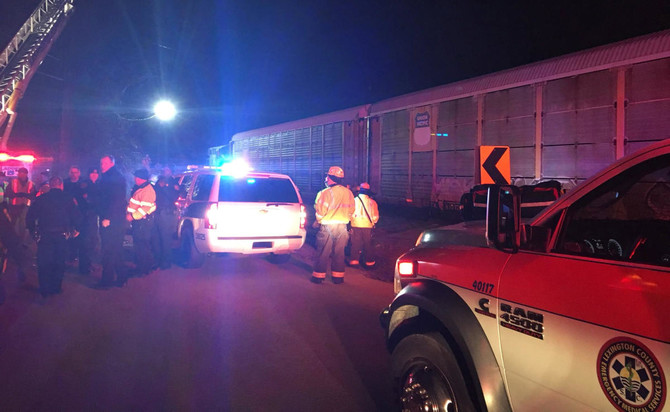
Two dead, more than 100 hurt in South Carolina train collision
Two dead, more than 100 hurt in South Carolina train collision

Latest updates




© 2026 SAUDI RESEARCH & PUBLISHING COMPANY, All Rights Reserved And subject to Terms of Use Agreement.