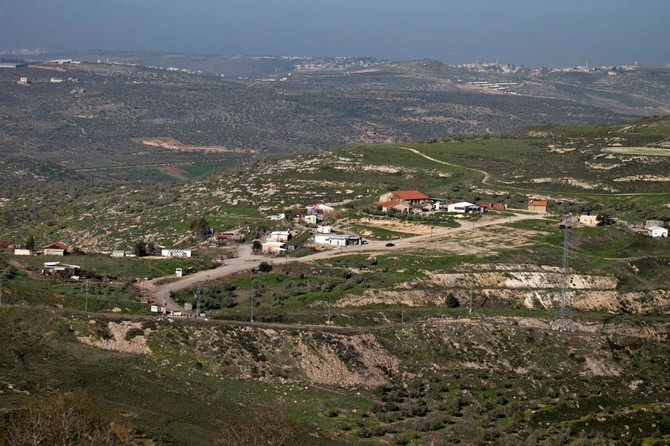
JERUSALEM: The Israeli government is due on Sunday to discuss giving retroactive approval to a wildcat settlement in the occupied West Bank, where an Israeli rabbi was shot dead last month.
The official agenda for Sunday's weekly cabinet meeting says ministers will hear a motion to designate the 15-year-old Havat Gilad outpost as a "new community" which will have the necessary building permits and a state budget.
Rabbi Raziel Shevah was shot dead near Havat Gilad, where he lived, on January 9.
The following week, Israeli troops searching for his attackers shot dead a Palestinian suspect in the city of Jenin in the northern West Bank, about 35 kilometres (22 miles) north of Havat Gilad.
At Shevah's funeral there were calls for "revenge" during a speech by Education Minister Naftali Bennett of the far-right Jewish Home party.
Bennett responded by saying that the only revenge should be in building more settlements.
Defence Minister Avigdor Lieberman, sponsor of the forthcoming cabinet motion, spoke on Wednesday of getting official recognition for Havat Gilad.
"We promised and the proposal to normalise Havat Gilad outpost as a regular community will be brought to the cabinet for approval this coming Sunday," Lieberman wrote on Twitter.
According to his cabinet motion the outpost was founded in 2002 and currently houses about 40 families.
Israeli settlements are seen as illegal under international law and major obstacles to peace as they are built on land the Palestinians see as part of their future state.
Israel however differentiates between settlements it has approved and those it has not.
Those without approval are referred to as outposts and are typically populated by hardline religious nationalists who see the entire West Bank as part of Israel.
Past attempts by Israeli authorities to dismantle Havat Gilad have led to clashes with settlers there.
Israel has several times given retroactive approval to outposts and last year work began on the first government-sanctioned settlement built in the Palestinian territories in some 25 years.
Israel faced sharp criticism from the administration of former US president Barack Obama over settlement construction, but that has not been the case with Donald Trump's White House and Israeli officials have sought to take advantage.
European nations and the UN maintain their strong opposition to settlement building.


Israel moves to ‘legalize’ rogue settlement
Israel moves to ‘legalize’ rogue settlement


Iraq welcomes the appointment of Iran’s new supreme leader
- Armed faction Kataeb Hezbollah said it reflects a profound understanding “of the existential challenges confronting the nation”
BAGHDAD: Iraq’s Prime Minister Mohammed Shia Al-Sudani welcomed on Monday the appointment of Mojtaba Khamenei as Iran’s new supreme leader after his predecessor and father was killed in US and Israeli strikes.
“We express our confidence in the ability of the new leadership in the Islamic Republic of Iran to manage this critical stage,” and to further strengthen “the unity of the Iranian people” amid the current challenges, Sudani said in a statement.
He stressed that Iraq stands in solidarity with Iran and supports “all steps aimed at ending the conflict.”
Iran wields significant influence in Iraqi politics, and also backs armed groups whose power has grown both politically and financially.
Iraq has for decades been a proxy battleground between the US and Iran.
Pro-Tehran Iraqi groups were among the first to welcome the new supreme leader.
The powerful Badr organization said the new leadership represents a “blessed continuity of the path of the Islamic revolution.”
The Asaib Ahl Al-Haq faction said choosing Mojtaba Khamenei shows continuity and “reinforcement of the Islamic republic’s role as a central pillar in the axis of resistance.”
Armed faction Kataeb Hezbollah said it reflects a profound understanding “of the existential challenges confronting the nation.”
“The best successor to the best predecessor,” said Kataeb Hezbollah, which is part of the Islamic Resistance of Iraq — a pro-Iran alliance that has been claiming attacks on US bases since the start of the war in the Middle East.
Senior Iraqi politician and moderate cleric Ammar Al-Hakim wished the new supreme leader “success in following the path of his martyred father... in upholding the word of truth.”


