MANILA: Manila’s top diplomat accused Human Rights Watch on Friday of deceiving the international community by making it appear that the Philippines has become the “Wild, Wild West of Asia.”
Foreign Secretary Alan Peter Cayetano demanded an apology from the US-based rights group mainly for reporting a larger number of drug suspects killed in President Rodrigo Duterte’s crackdown on illegal drugs to back up a statement that human rights in the Philippines “is at its worst” since the late strongman Ferdinand Marcos’s time.
On Tuesday, Human Rights Watch said Cayetano has a record of serving as “Duterte’s chief denier of the growing evidence linking state-sanctioned killings to the anti-drug campaign.” It added that the Duterte administration has pursued a “distraction strategy,” which appears aimed at sidelining domestic and international demands for accountability for the drug killings.
The group cited an estimate by private groups and media organizations of the drug war death toll as having surpassed 12,000 over the past 18 months.
Cayetano said that was a false assertion because the Philippine national police have recorded 3,968 deaths of suspects in more than 80,600 anti-drug operations from the time Duterte took power in 2016 until last November. At least 119,023 drug suspects were arrested in those operations.
“In making such a conclusion, Human Rights Watch is creating the impression that the Philippine government is engaged in the wholesale slaughter of innocent people,” Cayetano said in a statement, in which he demanded the group back up its claim with facts.
“There is no perfect law enforcement system,” Cayetano said. He added that while law enforcers strive to ensure that the rights of people are respected, including crime suspects, drug syndicates have unleashed violence against the enforcers. At least 86 police officers and soldiers have been killed and 226 others wounded “when drug personalities chose to fight back,” he said.
Cayetano declared at the United Nations General Assembly last September that the government’s drug campaign is a “necessary instrument to preserve and protect the human rights of all Filipinos.” Phelim Kine of Human Rights Watch said Tuesday that the statement did more than “add gross insult to injury for the families of slain suspects under the crackdown.”
“It also airbrushed Human Rights Watch and the investigative journalists demonstrating that many of those deaths amount to extrajudicial killings by Philippine National Police personnel and their agents,” he said.
“Human Rights Watch joins a growing list of institutions and people, including United Nations officials, targeted for harassment and intimidation for demanding accountability for abuses linked to the drug war,” Kine said, citing the jailing of opposition Sen. Leila de Lima, who has questioned the legality of Duterte’s campaign.
Crimes have declined under Duterte, Cayetano said. “In its rush to condemn the Philippine government, Human Rights Watch ... “set aside the countless stories of victims of the unspeakable crimes committed by those who sell and use illegal drugs such as the gang rapes and killings by methamphetamine-crazed individuals of children and even their own family members.”
He said Human Rights Watch had made it appear “that the Philippines has become the Wild, Wild West of Asia where we just kill people left and right.”
The government’s “hostility to accountability underscores the need for a UN-led international investigation of the killings to help expose the extent of the abuses and to determine possible targets for a criminal investigation, including possible prosecutions for crimes against humanity,” Kine said.
Duterte has denied he condones extrajudicial killings, although he has openly threatened drug dealers with death for years. He credits his harsh approach to crime for an improvement in law and order in southern Davao city, where he served as mayor for more than two decades before becoming president.
Last week, Duterte said about 600 criminals were killed during his time as mayor, but added, “It was all legit.”


![]()
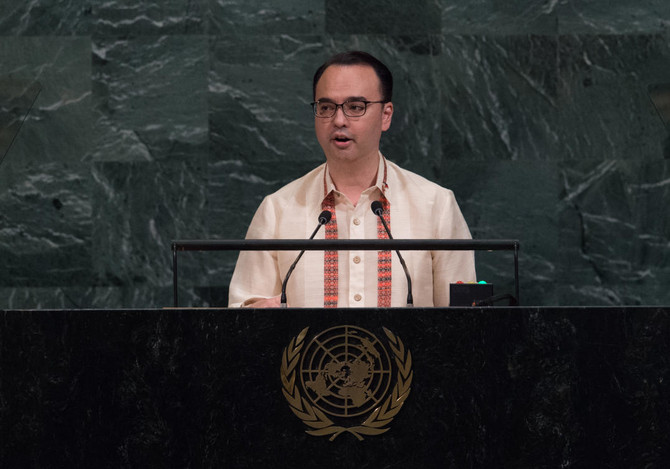
Philippine official: We’re not ‘Wild, Wild West of Asia’
Philippine official: We’re not ‘Wild, Wild West of Asia’
Latest updates


© 2026 SAUDI RESEARCH & PUBLISHING COMPANY, All Rights Reserved And subject to Terms of Use Agreement.