No VAT on exports: Saudi tax authority

Updated 26 January 2018
Follow

No VAT on exports: Saudi tax authority

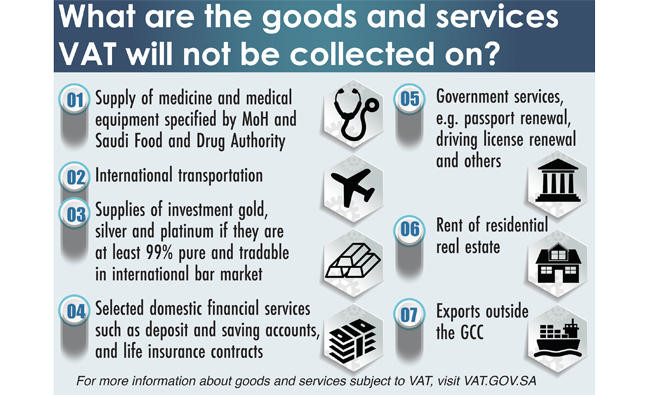
JEDDAH: The General Authority of Zakat and Tax (GAZT) clarified that Saudi Arabian exports are zero-rated under the VAT Law and Implementing Regulations.
This means that in-Kingdom enterprises exporting goods and services can deduct the VAT-eligible input taxes they paid, as long as they file their tax returns as required.
GAZT stressed that the provision of zero-rating exports is one of many incentives given under the VAT to enterprises exporting goods and services.
In order to apply the zero rating, the supplier of goods and services must retain evidence that they have been transported from the Gulf Cooperation Council (GCC) region, within 90 days after supply, as stipulated in Article 32 of the regulations.
All intra-GCC supplies will be zero-rated as an interim measure until VAT is officially implemented in the remaining member nations and electronic VAT system is established across the GCC.
All exporting enterprises must retain the relevant documents, including those issued by Saudi Customs, which prove that the supplies have been formally cleared for export on behalf of the supplier or customer for each supply, commercial documents with the customer’s details and place of delivery, as well as transport documents for the delivery or receipt of the supplies outside the GCC region.
GAZT may reject the documents if they fail to provide sufficient evidence that the supply was transported outside the GCC region, and the standard 5 percent VAT rate will apply.
GAZT also reminded all VAT registered enterprises with annual supplies exceeding SR40 million ($10.7 million) to file monthly tax returns, as stipulated by the VAT Law and Implementing Regulations.


Economic growth and resilience at heart of 2nd AlUla Emerging Market Economies Conference

Updated 03 February 2026
Follow

Economic growth and resilience at heart of 2nd AlUla Emerging Market Economies Conference

  • Event on Feb. 8 and 9 will bring together ministers, governors of central banks, policymakers, economic experts and international financial institutions
  • Emerging-market economies a ‘pivotal element’ in global economic system due to effect they have on growth and stability, says Saudi Finance Minister Mohammed Al-Jadaan

RIYADH: The second annual AlUla Conference for Emerging Market Economies, which Saudi Arabia will host next week, offers a platform to exchange views on global developments and discuss policies and reforms that support inclusive growth and strengthen economic resilience, the Kingdom’s finance minister said.

The event on Feb. 8 and 9 will bring together finance ministers, governors of central banks and policymakers, alongside economic experts and representatives of international financial institutions.

Organized by the Saudi Ministry of Finance in partnership with the International Monetary Fund, it takes place as emerging-market economies face mounting challenges amid rapid global economic change.

Finance Minister Mohammed Al-Jadaan said the decision to host the conference reflects Saudi Arabia’s ongoing commitment to efforts that support global financial and economic stability, and highlights the growing influence of emerging economies on worldwide growth.

Emerging-market economies represent a “pivotal element” in the global economic system due to the direct impact they have on economic growth and stability, he added.

“The AlUla Conference for Emerging Market Economies provides a unique platform for exchanging views on global economic developments, and discussing policies and reforms that will support inclusive growth and enhance economic resilience, in light of broader international cooperation that contributes to confronting common challenges,” Al-Jadaan said.

Kristalina Georgieva, managing director of the IMF, said the event would help emerging economies deal with growing uncertainty driven by technological change, demographic shifts and geopolitical tensions.

“The AlUla conference provides a vital platform for emerging economies to discuss how they can navigate the risks and embrace the opportunities ahead,” she said.

“In these times of sweeping transformations in the global economy, policymakers face a more challenging and uncertain environment. Countries should work together to strengthen resilience through sound macroeconomic and financial policies.”