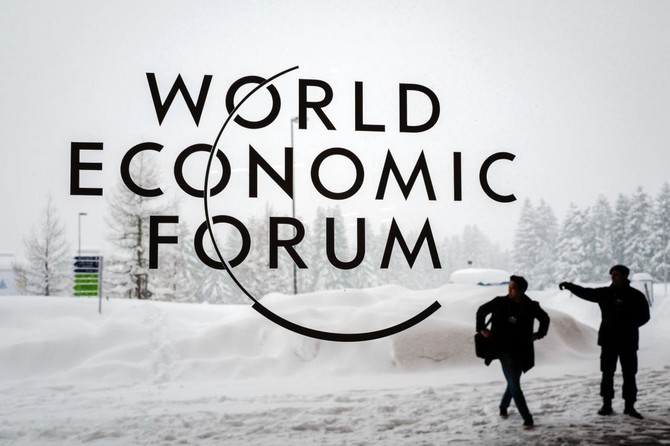
DAVOS: Middle East CEOs are more optimistic about global economic activity than ever, according to the annual survey by accounting and consulting firm PwC unveiled in Davos at the World Economic Forum annual meeting.
Th survey reported that regional CEOs, like their counterparts elsewhere in the world, were more confident about economic prospects than in previous years. For the first time, a majority of top executives in the region — some 52 percent — thought that global economic growth would improve this year.
That level has doubled since last year, and is higher than the previous record in 2014, before the drastic falls in the price of oil that year.
That positive feeling is in line with the global trend shown in the PWC survey. A record-breaking number of CEOs were optimistic about the economic environment worldwide, at least in the short term, the survey showed, with the strongest levels shown in the US, where 59 percent of bosses think things will improve this year.
“CEOs’ optimism in the global economy is driven by the economic indicators being so strong. With the stock markets booming and gross domestic product (GDP) expected to grow in most major markets around the world, it’s no surprise CEOs are so bullish,” said PwC’s global chairman, Bob Moritz.
CEOs, especially in the Middle East, are rather more cautious when it comes to their own markets, however. Outside of North America, confidence about the bosses’ own corporate growth is slightly better, but there was a downturn in perceived prospects in western Europe, Africa and the Middle East.
Only 33 percent of regional CEOs thought revenue growth would improve in their organizations this year, down from 38 percent last time.
The bosses’ changing attitude to foreign investment is also having an effect on regional business, the survey showed. Saudi Arabia was in the number 12 slot as an investment destination for global CEOs in 2017, but has fallen out of the top rankings this time. The UAE became the region’s top representative in the top FDI rankings, at number 15.
The US consolidated its position as the number one destination for investment, with 46 percent of CEOs saying that it was the most important for overall growth prospects in 2018, compared with 43 percent.
China was the second most important market for global CEOs, while both India and Canada reported a surge in investor interest.
Over-regulation was once again regarded as the main factor “that keeps CEOs awake at night,” according to PwC. An unchanged 43 percent said this was their biggest worry this year, but terrorism, geopolitical uncertainty and cyber threats all increased as potential concerns.
In the Middle East, geopolitical uncertainty, cyber threats and over-regulation were the top three worries for regional CEOs. They were less worried about unemployment, social instability and the availability of key skills among their potential workforce.
The PwC survey is based on interviews with 1,293 CEOs in 85 countries between August and November last year.


![]()
Mideast CEOs’ confidence in global economy at record levels
Mideast CEOs’ confidence in global economy at record levels

Latest updates


© 2026 SAUDI RESEARCH & PUBLISHING COMPANY, All Rights Reserved And subject to Terms of Use Agreement.