Gulf Stevedoring Contracting Company (GSCCO), part of the Gulftainer group of companies, recently hosted a Jubail Value Proposition event to identify new business opportunities and examine the investment outlook in the rising import and export destination.
Held at the InterContinental Al-Jubail on Jan. 15, the event drew the participation of more than 100 government stakeholders and maritime industry professionals including representatives of major exporters and importers, logistics companies, transporters and shipping lines from across Saudi Arabia. Among the high-profile attendees were Ali Nasser Al-Khater, deputy director general of Jubail Commercial Port (JCP), Abdul Aziz Al-Rayees, representative of Saudi Ports Authority (SEAPA), Omar Mosaid Al-Subaiee, captain at Jubail Coast Guard, and Nasser Al-Dossary, deputy director general of Jubail Customs.
The one-day flagship event featured a series of interactive presentations and discussions that highlighted the value proposition that JCP presents to industrial and commercial entities in the region. Saleem Kadernani, group commercial manager at Gulftainer, delivered a presentation on Jubail’s capabilities and the benefits the port can offer to shipping lines, exporters and importers. Other distinguished speakers included Mohammed Abdul Aziz bin Battal, director of MEA Solids Supply Chain at SABIC, and Ahmed Hassan Gomaa, logistics and customs coordinator at Técnicas Reunidas.
Ranked the Middle East’s fastest-growing port in 2017, JCP serves as an ideal hub not only for industrial exports but also for imports to the dynamic markets of Saudi Arabia’s eastern and central provinces. It is currently a port of call for almost all global shipping lines with direct weekly services and has one of the fastest customs clearance processes in the country.
In his keynote address, Iain Rawlinson, group commercial director of Gulftainer, said: “The Jubail Value Proposition event aligns with our vision of developing world-class port infrastructure that is critical for economic development and trade activity in the region. The Saudi government’s concerted efforts to diversify the economy and its commitment to innovation have catalyzed growth in the country’s ports and logistics sectors. I hope that today’s discussions provide you with innovative insights that encourage new ways of doing business in Jubail so that we can leverage the city’s unique status as a logistical gateway and prominent trade hub for the region.”
Richard James, managing director of GSCCO, said: “Jubail’s strategic geographic location has enabled it to evolve into a pivotal gateway for international trade and industrial activity, enhancing Saudi Arabia’s economic and trade potential. The city is home to our flagship facilities, including the Jubail Container Terminal (JCT), that contribute significantly to the region’s economic activity.”


GSCCO hosts Jubail Value Proposition event
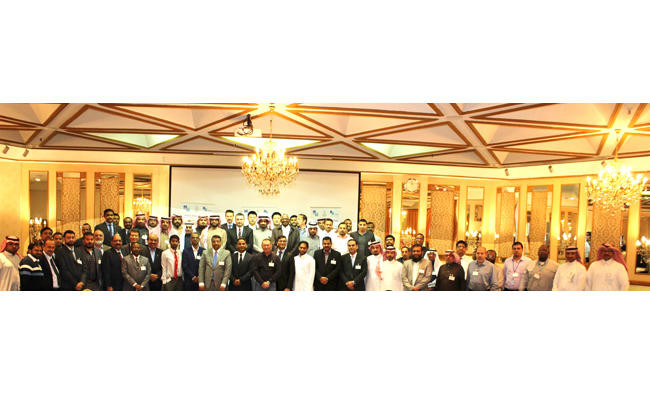
GSCCO hosts Jubail Value Proposition event

Schneider Electric launches academy in Saudi Arabia to build future-ready talent
Schneider Electric has announced the launch of the Energy Tech Academy Middle East and Africa in Saudi Arabia, a regional capability platform dedicated to skilling, upskilling, and knowledge sharing.
The launch comes at a critical moment as the Kingdom accelerates energy transition, industrial localization, and human capability development under Vision 2030. The academy reinforces the Kingdom’s leadership role in building future-ready talent while supporting industrial and energy transformation across the wider Middle East and Africa region.
The Energy Tech Academy Middle East and Africa is not a traditional training center; it is a regional platform translating Schneider Electric’s global energy technology expertise into applied capability for Saudi Arabia and the broader region. Anchored in Riyadh, the academy is designed to serve as a benchmark for skills development and enablement across the MEA.
The launch reflects Schneider Electric’s long-term commitment to investing in people and capabilities, and to supporting national priorities across energy, industry, and digital infrastructure.
Mohamed Shaheen, cluster president of Schneider Electric Saudi Arabia and Yemen, said: “This launch reflects our long-term commitment to Saudi Arabia and to building capability that lasts. After more than 40 years in the Kingdom, we continue to invest where impact matters most: in people. Launching the Energy Tech Academy Middle East and Africa from Riyadh underscores our belief that sustainable transformation is built on local capability and trusted partnerships.”
The academy directly supports Saudi Arabia’s focus on human capability development, localization, and Saudi-made outcomes by enabling the skills behind advanced energy systems, industrial automation, and digital infrastructure. Capabilities developed through the academy will support Saudi manufacturing, national projects, and resilient supply chains, while also strengthening regional industrial ecosystems.
“The Energy Tech Academy Middle East and Africa is designed to enable real outcomes,” said Walid Sheta, zone president for the MEA at Schneider Electric. “By equipping talent with future-ready skills across electrification, automation, and digital intelligence, we are strengthening Saudi and regional capability to design, operate, and lead the energy and industrial systems of the future.”
The launch event in Riyadh brought together senior government representatives, industry partners, customers, and Schneider Electric’s leadership, highlighting the importance of cross-sector collaboration in aligning education, skills development, and labor market needs.
Designed as a long-term platform, the Energy Tech Academy Middle East and Africa will continue to evolve through partnerships, programs, and continuous capability development, reinforcing Saudi Arabia’s role as a regional hub for skills, knowledge, and industrial enablement.


