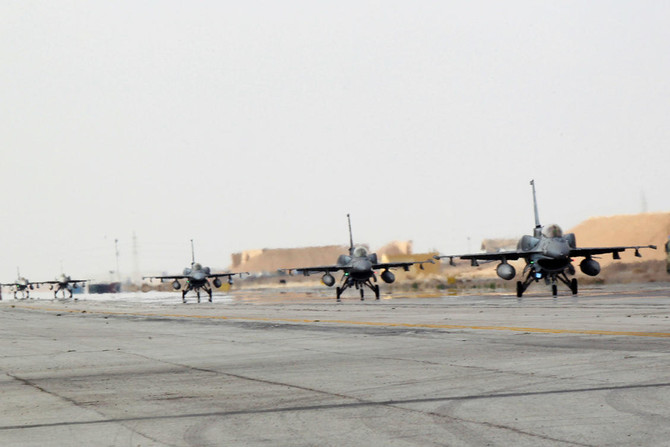
ABU DHABI: A military official in the United Arab Emirates said on Tuesday its forces had instructions not to escalate an ongoing diplomatic crisis with Qatar.
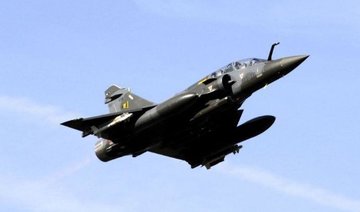
UAE military aircraft would also fly alternative routes over Saudi Arabia to avoid the possibility of interception by Qatari warplanes, air force brigadier general Helal Saeed Al-Qubaisi told reporters at a news conference in the capital Abu Dhabi.
The UAE said on Monday that Qatari warplanes had twice intercepted its civilian aircraft during routine flights to Bahrain, but Qatar called the claim “completely untrue.”
Qatar said the UAE allegation followed incidents on Dec. 21 and Jan. 3 in which it accused UAE military aircraft of violating its airspace. Abu Dhabi denies the charges.
The UAE is one of four Arab countries, along with Saudi Arabia, Bahrain and Egypt, that imposed travel, diplomatic and trade sanctions on Qatar in June 2017, accusing it of supporting terrorism. Doha denies the charges.

UAE military ordered not to escalate Qatar crisis: Official
High-level Turkish team to visit Damascus on Monday for talks on SDF integration
- The visit by Turkiye’s foreign and defense ministers and its intelligence chief comes amid efforts by Syrian, Kurdish and US officials to show some progress with the deal
ANKARA: A high-level Turkish delegation will visit Damascus on Monday to discuss bilateral ties and the implementation of a deal for integrating the Kurdish-led Syrian Democratic Forces (SDF) into Syria’s state apparatus, a Turkish Foreign Ministry source said.
The visit by Turkiye’s foreign and defense ministers and its intelligence chief comes amid efforts by Syrian, Kurdish and US officials to show some progress with the deal. But Ankara accuses the SDF of stalling ahead of a year-end deadline.
Turkiye views the US-backed SDF, which controls swathes of northeastern Syria, as a terrorist organization and has warned of military action if the group does not honor the agreement.
Last week Foreign Minister Hakan Fidan said Ankara hoped to avoid resorting to military action against the SDF but that its patience was running out.
The Foreign Ministry source said Fidan, Defense Minister Yasar Guler and the head of Turkiye’s MIT intelligence agency, Ibrahim Kalin, would attend the talks in Damascus, a year after the fall of former President Bashar Assad.
TURKEY SAYS ITS NATIONAL SECURITY IS AT STAKE
The source said the integration deal “closely concerned Turkiye’s national security priorities” and the delegation would discuss its implementation. Turkiye has said integration must ensure that the SDF’s chain of command is broken.
Sources have previously told Reuters that Damascus sent a proposal to the SDF expressing openness to reorganizing the group’s roughly 50,000 fighters into three main divisions and smaller brigades as long as it cedes some chains of command and opens its territory to other Syrian army units.
Turkiye sees the SDF as an extension of the outlawed Kurdistan Workers Party (PKK) militant group and says it too must disarm and dissolve itself, in line with a disarmament process now underway between the Turkish state and the PKK.
Ankara has conducted cross-border military operations against the SDF in the past. It accuses the group of wanting to circumvent the integration deal and says this poses a threat to both Turkiye and the unity of Syria.
The visit by Turkiye’s foreign and defense ministers and its intelligence chief comes amid efforts by Syrian, Kurdish and US officials to show some progress with the deal. But Ankara accuses the SDF of stalling ahead of a year-end deadline.
Turkiye views the US-backed SDF, which controls swathes of northeastern Syria, as a terrorist organization and has warned of military action if the group does not honor the agreement.
Last week Foreign Minister Hakan Fidan said Ankara hoped to avoid resorting to military action against the SDF but that its patience was running out.
The Foreign Ministry source said Fidan, Defense Minister Yasar Guler and the head of Turkiye’s MIT intelligence agency, Ibrahim Kalin, would attend the talks in Damascus, a year after the fall of former President Bashar Assad.
TURKEY SAYS ITS NATIONAL SECURITY IS AT STAKE
The source said the integration deal “closely concerned Turkiye’s national security priorities” and the delegation would discuss its implementation. Turkiye has said integration must ensure that the SDF’s chain of command is broken.
Sources have previously told Reuters that Damascus sent a proposal to the SDF expressing openness to reorganizing the group’s roughly 50,000 fighters into three main divisions and smaller brigades as long as it cedes some chains of command and opens its territory to other Syrian army units.
Turkiye sees the SDF as an extension of the outlawed Kurdistan Workers Party (PKK) militant group and says it too must disarm and dissolve itself, in line with a disarmament process now underway between the Turkish state and the PKK.
Ankara has conducted cross-border military operations against the SDF in the past. It accuses the group of wanting to circumvent the integration deal and says this poses a threat to both Turkiye and the unity of Syria.
© 2025 SAUDI RESEARCH & PUBLISHING COMPANY, All Rights Reserved And subject to Terms of Use Agreement.