DHAKA: Camps housing more than a million Rohingya refugees in Bangladesh are facing “great risk” of a landslide, according to a recent UN Development Programme (UNDP) report.
The Rapid Environmental Impact Assessment report suggests that the recent influx of Rohingya Muslim refugees fleeing persecution in Myanmar has had a hugely negative impact on forest land in Cox’s Bazar, with thousands of hectares destroyed for the construction of camps and for much-needed fuel for fires.
“The establishment of makeshift camps in Ukhia and Teknaf sub-districts, close to several unique environmentally sensitive areas, threatens global biodiversity and causes the degradation of critical natural habitats,” the report claimed.
Around 1,485 hectares of forest land in Ukhia, Whykong, and Teknaf has so far been affected, and more land will be degraded if the practice continues, it warned, adding that the effect of the influx on biodiversity “may become irreversible if not properly managed.”
The report identified 28 risk factors, rated from “critical” to “low,” for local residents and refugees. The list included landslides, loss of biodiversity, deforestation, contamination of surface water, and the rapid exhaustion of underground water supplies.
The UNDP has submitted the report to Bangladesh’s Ministry of the Environment, and authorities are now assessing ways to mitigate the impact of the refugees’ arrival.
According to the report, the area is now so badly damaged that heavy rainfall or strong winds may cause landslides in the area, threatening the refugees’ lives.
However, the report also warns that refugees may be at risk from their host community, as diminishing resources are likely to cause tension and social conflict.
Saiful Islam, deputy director of the Department of Environment at Cox’s Bazar, told Arab News: “The region is located on a fault line, so a small deviation of the plate under the earth could create a massive earthquake, making landslides highly likely. Since it is a densely populated area, the number of casualties would likely be very high.”
The Bangladeshi government has already adopted a forestation plan in some parts of the roadside hills from which the refugees were shifted to a different area, said Islam. But that program can only begin during the next monsoon season.
The deforestation has also affected the natural habitats of the area, leading to an increased number of wildlife attacks. During the past four months, at least eight wild elephant attacks on the refugee camps have been reported.
“There are four elephant tracks in this area, but since the elephants’ habitat has been squeezed, they come down to the locality in search of food and attack people,” said Mohammad Nikarujjaman, commissioner of Ukhia sub-district.
“Now the conflict between wildlife and man has increased significantly.”
Nikarujjaman told Arab News that in the latest elephant attack, on Friday morning, killed one refugee and injured four others. Six makeshift houses were also destroyed.
A total of 12 refugees have reportedly been killed in separate elephant attacks since August.


![]()
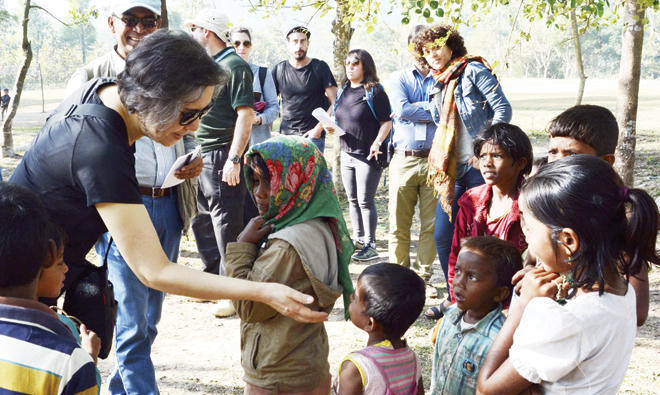
Deforestation in Bangladesh puts Rohingya refugees at risk: UNDP
Deforestation in Bangladesh puts Rohingya refugees at risk: UNDP


Latest updates


© 2026 SAUDI RESEARCH & PUBLISHING COMPANY, All Rights Reserved And subject to Terms of Use Agreement.