NICOSIA: Greece, Jordan and Cyprus called for more effective support to countries on the frontline of the Middle East refugee crisis on Tuesday and pledged to deepen cooperation on a host of issues from water management to protection of artefacts.
As millions of people have poured out of Syria, Jordan, Lebanon and Turkey have taken in hundreds of thousands of refugees, while Greece has been used as a launchpad for many seeking to reach other European countries.
The three leaders also urged the international community to offer more support to Jordan and other countries which have borne the brunt of a mass influx of refugees fleeing the war in Syria.
Anastasiades and Tsipras said they would ask fellow European Union member countries to lend more assistance to Jordan.
“We underlined the huge challenges our countries face on the refugee crisis and naturally the need for the international community to actively and effectively support countries which host large numbers of refugees,” Greek Prime Minister Alexis Tsipras said after a meeting with Jordan’s King Abdullah II and Cypriot President Nicos Anastasiades in Nicosia that were billed as the cornerstone of a new partnership.
He did not say what sort of support the countries want.
Jordan hosts over 1.3 million Syrian refugees, while thousands of refugees and migrants are stuck in Greece after its Balkan neighbors sealed off a route used by more than a million people in 2015 and early 2016 to get to other European states.
“Its an international concern and host countries like Jordan need the world’s support,” King Abdullah said.
“We are shouldering an immense refugee burden and cannot be left alone as we undertake this humanitarian responsibility on behalf of the world.”
The three countries said they would seek to boost cooperation on issues such as water management, tourism projects and in the shipping sector.
“It is no secret that we live in a very tough neighborhood, rife with challenges but also with opportunities and together, our chances of capitalizing on these opportunities ...increase tenfold,” Abdullah said.
Meanwhile, the Cypriot president said the fight against extremism necessitates even closer cooperation with Greece and Jordan.
Abdullah said his country is working with others to close off all routes for extremists. He said despite successes in Iraq and Syria, they can’t be allowed to regroup and establish footholds elsewhere.
An agreement was also signed on the prevention of theft, illicit excavations and export of cultural property.


![]()
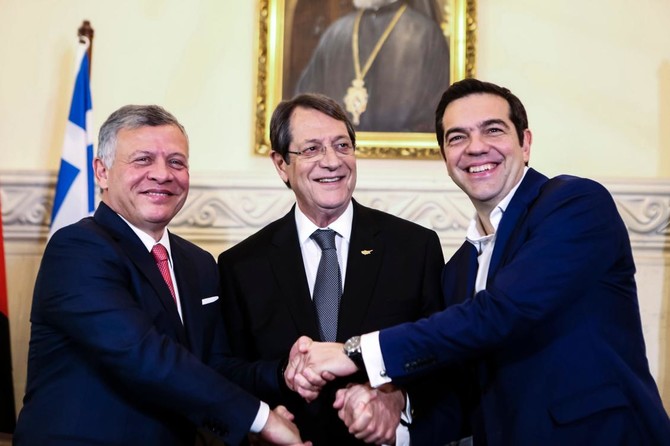
Jordan, Greece and Cyprus say more support needed to states on refugee frontline
Jordan, Greece and Cyprus say more support needed to states on refugee frontline
Related


Latest updates


Recommended


© 2026 SAUDI RESEARCH & PUBLISHING COMPANY, All Rights Reserved And subject to Terms of Use Agreement.