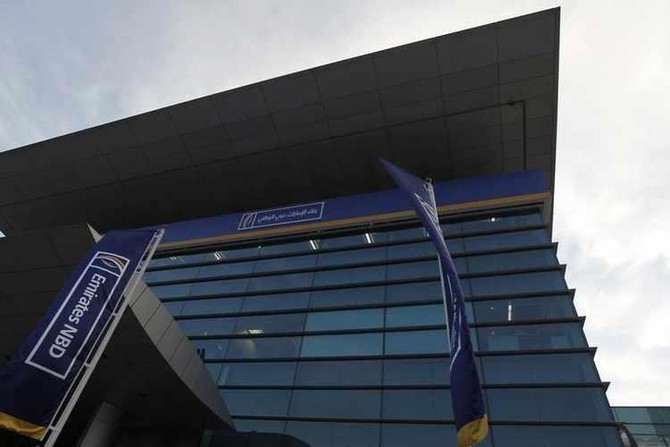
DUBAI: Emirates NBD, Dubai’s largest lender, posted a 17.2 percent rise in fourth-quarter net profit on Tuesday.
The bank, the first major lender from the UAE to report its earnings during the quarter, made a net profit of Dh2.18 billion in the three months to December 31, a statement from the bank said, compared with Dh1.86 billion in the corresponding period of 2016.
SICO Bahrain forecast the bank to post a net profit of Dh2.23 billion for the quarter, while EFG Hermes expected a profit of Dh1.98 billion.
Full-year profit meanwhile rose 15 percent from 2016 to Dh8.35 billion, which the bank attributed to “asset growth, a control on expenses and reduced provisions.”
Total income for 2017 amounted to Dh15.455 billion, 5 percent higher than the Dh14.748 billion figure reported in 2016.
“2017 marked a successful year for Emirates NBD as we achieved a record annual net profit … As a leading bank in the region and a front-runner in digital banking innovation with a strong balance sheet, we are well placed to take advantage of growth opportunities in our preferred markets. In light of the solid performance by the bank, we are proposing a cash dividend at 40 fils per share,” Sheikh Ahmed Bin Saeed Al Maktoum, the Chairman of Emirates NBD, said in a statement.
Emirate NBD’s group-wide assets rose 5 percent to Dh470.4 billion in 2017; its aggregate loan portfolio also increased a similar percentage to Dh304.1 billion, ditto with total deposits which went up to Dh326.5 billion for the whole year.

Dubai lender Emirates NBD posts 17.2% rise in fourth-quarter profit
Oil prices rise sharply after attacks in Middle East disrupt global energy supply
- Traders were betting the supply of oil from Iran and elsewhere in the Middle East would slow or grind to a halt.
- Attacks throughout the region have restricted countries’ ability to export oil to the rest of the world
NEW YORK: Oil prices rose sharply Monday as US and Israeli attacks on Iran and retaliatory strikes against Israel and US military installations around the Gulf sent disruptions through the global energy supply chain.
Traders were betting the supply of oil from Iran and elsewhere in the Middle East would slow or grind to a halt. Attacks throughout the region, including on two vessels traveling through the Strait of Hormuz, the narrow mouth of the Arabian Gulf, have restricted countries’ ability to export oil to the rest of the world. Prolonged attacks would likely result in higher prices for crude oil and gasoline, according to energy experts.
West Texas Intermediate, the light, sweet crude oil produced in the United States, was selling for about $72 a barrel early Monday, up around 7.3 percent from its trading price of about $67 on Friday, according to data from CME group.
A barrel of Brent crude, the international standard, was trading at $78.55 per barrel early Monday, according to FactSet, up 7.8 percent from its trading price of $72.87 on Friday, which had been a seven-month high at the time.
Higher global energy prices could lead to consumers paying more for gasoline at the pump and shelling out more for groceries and other goods, at a time when many are already feeling the impacts of elevated inflation.
Roughly 15 million barrels of crude oil per day — about 20 percent of the world’s oil — are shipped through the Strait of Hormuz, making it the world’s most critical oil chokepoint, according to Rystad Energy. Tankers traveling through the strait, which is bordered in the north by Iran, carry oil and gas from Saudi Arabia, Kuwait, Iraq, Qatar, Bahrain, the UAE and Iran.
Iran had temporarily shut down parts of the strait in mid-February for what it said was a military drill, which led oil prices to jump about 6 percent higher in the days that followed.
Against that backdrop, eight countries that are part of the OPEC+ oil cartel announced they would boost production of crude Sunday. The Organization of Petroleum Exporting Countries, in a meeting planned before the war began, said it would increase production by 206,000 barrels per day in April, which was more than analysts had been expecting. The countries boosting output include Saudi Arabia, Russia, Iraq, the United Arab Emirates, Kuwait, Kazakhstan, Algeria and Oman.
“Roughly one-fifth of global oil supply passes through the Strait of Hormuz, a vital artery for world trade, meaning markets are more concerned with whether barrels can move than with spare capacity on paper,” said Jorge León, Rystad’s senior vice president and head of geopolitical analysis, in an email. “If flows through the Gulf are constrained, additional production will provide limited immediate relief, making access to export routes far more important than headline output targets.”
Iran exports roughly 1.6 million barrels of oil a day, mostly to China, which may need to look elsewhere for supply if Iran’s exports are disrupted, another factor that could increase energy prices.