JAKARTA: A mezzanine floor overlooking the main lobby of the Indonesian Stock Exchange building collapsed on Monday, injuring scores of people, many of them students, under slabs of concrete and other debris.
The high-rise building, constructed in the late 1990s, is part of a two-tower complex in the heart of the financial district and houses dozens of other offices including the World Bank. It was the target of a car bombing by Islamist militants in September 2000.
Police ruled out a bomb as a cause of Monday’s collapse. They said more than 70 people had been injured, but no deaths had been reported.
Jakarta governor Anies Baswedan visited the site and said the city will “audit the building,” which was last inspected by authorities in May.
“I have conveyed to the building’s management that the audit of the construction should start tonight so that the activities of the stock exchange are not disturbed,” Baswedan told reporters.
Safety standards are often loosely enforced in Indonesia. Last year, a fire that ripped through a fireworks factory on the outskirts of Jakarta killed around 50 people in one of the country’s worst industrial accidents. A police investigation found multiple safety violations.
Many of the injured were university students who were on the mezzanine floor when it collapsed.
“There was a rumbling noise but it wasn’t an explosion. It was like something had fallen, and suddenly the floor we were standing on fell away,” said student Alfita, 20, who uses one name. She escaped with light bruises.
Dramatic CCTV footage aired on television showed a floor shearing away in a matter of seconds under the students. Reuters could not immediately authenticate the video.
“Slabs of concrete started to fall, there was lots of dust. Water pipes had burst,” said Megha Kapoor, who works in the building and was in the lobby at the time.
Police cordoned off the complex as people fled the building and the more seriously injured were taken away by stretcher.
Triana Tambunan, business development manager at MRCC Siloam hospital, one of the hospitals near the building, said 30 people had been admitted so far. Victims were being treated at four hospitals.
“The bone fractures may be serious. We need to carry out further evaluations,” she said, adding there were at least three suspected fractures.
Stock exchange president director Tito Sulistio said the exchange would pay for the treatment of the visiting students.
Finance Minister Sri Mulyani Indrawati said she hoped the collapse would not affect investor confidence in the tropical Southeast Asian archipelago. The exchange resumed business in the afternoon as per schedule.


![]()
![]()
![]()
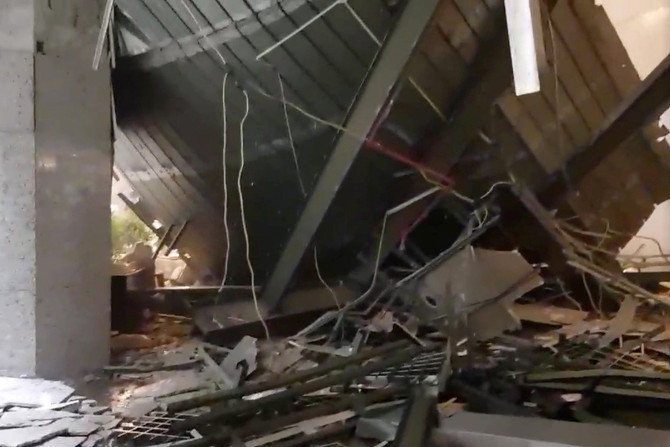
Scores injured as Indonesia stock exchange building lobby floor collapses
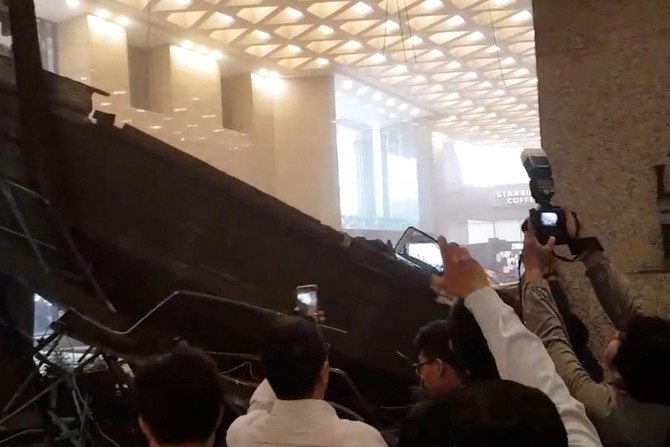

Scores injured as Indonesia stock exchange building lobby floor collapses

Latest updates


Recommended


© 2026 SAUDI RESEARCH & PUBLISHING COMPANY, All Rights Reserved And subject to Terms of Use Agreement.