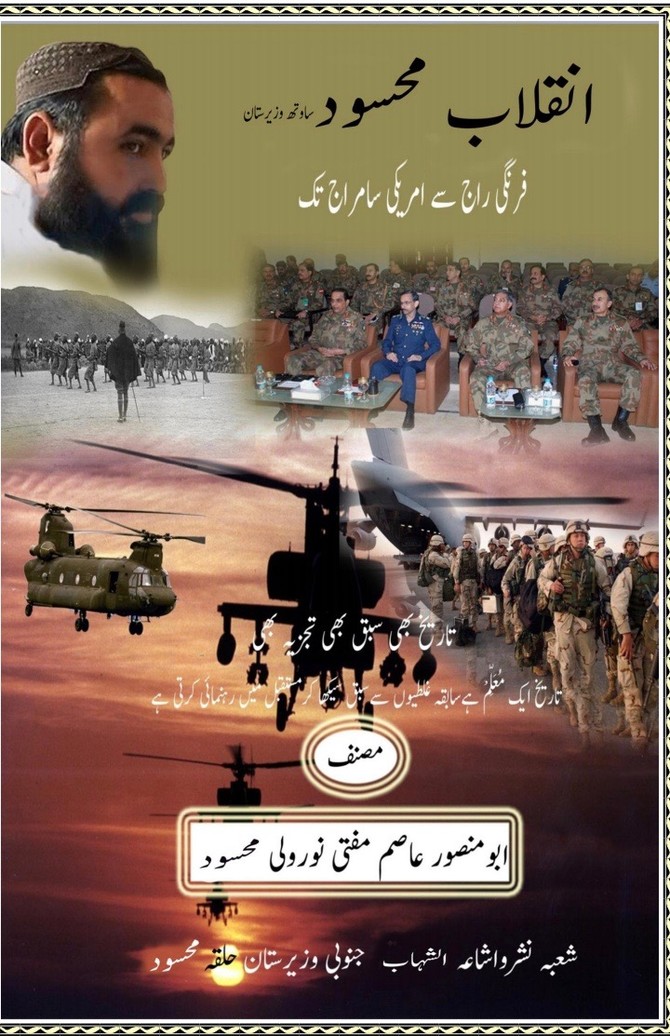
ISLAMABAD: A recent book by a senior Tehrik-e-Taliban Pakistan (TTP) leader claims that his group was behind the 2007 assassination of Pakistan’s first woman Prime Minister Benazir Bhutto.
The new book, ‘Inqilab Mehsood South Waziristan: From British Raj to American Imperialism,’ was released on Nov 30, 2017, and written by Abu Mansoor Asim Mufti Noor Wali, a senior leader in the Taliban terror group.
Arab News has obtained a copy of the 588-page online book.
Benazir Bhutto was assassinated in the garrison city of Rawalpindi shortly after she addressed an election rally on December 27, 2007.
According to the the book author, two suicide bombers, Bilal alias Saeed and Ikramullah, were assigned to carry out the attack on Benazir Bhutto on December 27.
“Bomber Bilal first fired at Benazir Bhutto from his pistol and the bullet hit her neck. Then he detonated his explosive vest and blew up people in the procession,” the book says.
The book adds that the terrorist Taliban group was also involved in the suicide attack on Benazir Bhutto’s procession in Karachi October 2007, which had killed nearly 140 people, but Benazir had survived.
“Despite attacks on Benazir Bhutto’s procession in Karachi, the government had not taken appropriate security measures that made it possible for the attackers to have easy access to Benazir Bhutto,” the book says.
A former Taliban leader confirmed to Arab News that the book has written by the group.
Then President Pervez Musharraf had blamed TTP for the attack on Benazir Bhutto, and the Ministry of Interior, after the incident, released an audio conversation and said it was between the two men who were assigned to kill Benazir Bhutto.
In August 2017 an anti-terrorism court (ATC) in Rawalpindi formally charged Musharraf in the case of Benazir Bhutto assassination and declared him “most wanted” in the case.
But Musharraf denied any involvement and dismissed the charges as politically-motivated.
The five TTP suspects in Benazir’s murder case — Rafaqat Hussain, Husnain Gul, Sher Zaman, Aitzaz Shah and Abdul Rashid — were cleared of all charges in the murder trial in August last year.
The book covers the TTP’s history, its attacks, military operations in the tribal regions, TTP’s activities in Afghanistan, tribal system, Mehsood tribe role in the TTP, TTP operations in Karachi and its campaign against polio vaccination.
Pakistan Peoples Party co-chairman Bilawal Bhutto, and the son of Benazir Bhutto, blamed Musharraf for his mother’s assassination on her 10th death anniversary on Dec. 27, last year.
Pakistan Peoples Party’s spokesperson Farhatullah Babar said the Taliban claim has strengthened the party’s suspicion that the militants had been “used to execute the terrorist act.”
“In fact we have been demanding to know who were the masterminds behind the plan to martyr Benazir Bhutto,” Babar told Arab News.
“Whoever the mastermind might have been they should be exposed. They had in fact used these people (Taliban) to execute the plan,” the PPP leader added.

Pakistan Taliban book claims group was behind Benazir Bhutto’s assassination
Mexico fears more violence after army kills leader of powerful Jalisco cartel
GUADALAJARA: School was canceled in several Mexican states and local and foreign governments alike warned their citizens to stay inside, as widespread violence erupted following the army’s killing of the powerful leader of the Jalisco New Generation Cartel.
Nemesio Rubén Oseguera Cervantes, known as “El Mencho” was the boss of one of the fastest-growing criminal networks in Mexico, notorious for trafficking fentanyl, methamphetamine and cocaine to the United States and staging brazen attacks against government officials who challenged it.
He was killed during a shoot-out in his home state of Jalisco as the Mexican military attempted to capture him. Cartel members responded with violence across the country, blocking roads and setting fire to vehicles.
President Claudia Sheinbaum urged calm and authorities announced late Sunday they had cleared most of the more than 250 cartel roadblocks across 20 states. The White House confirmed that the US provided intelligence support to the operation to capture the cartel leader and applauded Mexico’s army for taking down a man who was one of the most wanted criminals in both countries.
Mexico hoped the death of the world’s biggest fentanyl traffickers would ease Trump administration pressure to do more against the cartels, but many remained hunkered down and on edge as they waited to see the powerful cartel’s reaction.
Many fear more violence
Guadalajara, the capital of Jalisco state and Mexico’s second-largest city, was almost completely shut down on Sunday as fearful residents stayed home.
Passengers arriving to the city’s international airport Sunday night were told it was operating with limited personnel because of the burst of violence.
Jacinta Murcia, a 64-year-old nutrition products vendor, was among those nervously walking late Sunday night through the airport, where earlier in the day travelers sprinted and ducked behind chairs fearing violence. Most flights into the city were suspended on Sunday.
Murcia anxiously scrolled through news stories on social media showing the face of “El Mencho” and sent messages to her children, who were tracking her location as she tried to travel across the city to her house after dark.
“My plan today leaving the airport is to see if there are any taxis, but I’m scared of everything. That there are blockades, that there’s a curfew, that something could happen,” she said. “I’m all alone.”
Authorities in Jalisco, Michoacan and Guanajuato reported at least 14 other people killed Sunday, including seven National Guard troops.
Videos circulating on social media showed tourists in Puerto Vallarta walking on the beach with smoke rising in the distance.
In another part of the airport a group of elderly Mexicans gathered, discussing how to get home.
“We better all go together,” one said. “Go with God.”
A blow against a cartel could be a diplomatic coup
David Mora, Mexico analyst for International Crisis Group, said the capture and outburst of violence marks a point of inflection in Sheinbaum’s push to crack down on cartels and relieve US pressures.
US President Donald Trump has demanded Mexico do more to fight the smuggling of the often-deadly drug fentanyl, threatening to impose more tariffs or take unilateral military action if the country does not show results.
There were early signs that Mexico’s efforts were well received by the United States.
US Amb. Ron Johnson recognized the success of the Mexican armed forces and their sacrifice in a statement late Sunday. He added that “under the leadership of President Trump and President Sheinbaum, bilateral cooperation has reached unprecedented levels.”
But it may also pave the way for more violence as rival criminal groups take advantage of the blow dealt to the CJNG, Mora said.
“This might be a moment in which those other groups see that the cartel is weakened and want to seize the opportunity for them to expand control and to gain control over Cartel Jalisco in those states,” he said.
“Ever since President Sheinbaum has been in power, the army has been way more confrontational, combative against criminal groups in Mexico,” Mora said. “This is signaling to the US that if we keep cooperating, sharing intelligence, Mexico can do it, we don’t need US troops on Mexican soil.”
‘El Mencho’ was a major target
Oseguera Cervantes, who was wounded in the operation to capture him Sunday in Tapalpa, Jalisco, about a two-hour drive southwest of Guadalajara, died while being flown to Mexico City, the Defense Department said in a statement.
During the operation, troops came under fire and killed four people at the location. Three more people, including Oseguera Cervantes, were wounded and later died, the statement said.
White House Press Secretary Karoline Leavitt said via X that the US government provided intelligence support for the operation. “‘El Mencho’ was a top target for the Mexican and United States government as one of the top traffickers of fentanyl into our homeland,” she wrote. She commended Mexico’s military for its work.
The US State Department had offered a reward of up to $15 million for information leading to the arrest of El Mencho. The Jalisco New Generation Cartel is one of the most powerful and fastest growing criminal organizations in Mexico and began operating around 2009.
In February 2025, the Trump administration designated the cartel as a foreign terrorist organization.
Sheinbaum has criticized the “kingpin” strategy of previous administrations that took out cartel leaders, only to trigger explosions of violence as cartels fractured. While she has remained popular in Mexico, security is a persistent concern and since US President Donald Trump took office a year ago, she has been under tremendous pressure to show results against drug trafficking.
The Jalisco cartel has been one of the most aggressive cartels in its attacks on the military — including on helicopters — and is a pioneer in launching explosives from drones and installing mines. In 2020, it carried out a spectacular assassination attempt with grenades and high-powered rifles in the heart of Mexico City against the then head of the capital’s police force and now federal security secretary.
Nemesio Rubén Oseguera Cervantes, known as “El Mencho” was the boss of one of the fastest-growing criminal networks in Mexico, notorious for trafficking fentanyl, methamphetamine and cocaine to the United States and staging brazen attacks against government officials who challenged it.
He was killed during a shoot-out in his home state of Jalisco as the Mexican military attempted to capture him. Cartel members responded with violence across the country, blocking roads and setting fire to vehicles.
President Claudia Sheinbaum urged calm and authorities announced late Sunday they had cleared most of the more than 250 cartel roadblocks across 20 states. The White House confirmed that the US provided intelligence support to the operation to capture the cartel leader and applauded Mexico’s army for taking down a man who was one of the most wanted criminals in both countries.
Mexico hoped the death of the world’s biggest fentanyl traffickers would ease Trump administration pressure to do more against the cartels, but many remained hunkered down and on edge as they waited to see the powerful cartel’s reaction.
Many fear more violence
Guadalajara, the capital of Jalisco state and Mexico’s second-largest city, was almost completely shut down on Sunday as fearful residents stayed home.
Passengers arriving to the city’s international airport Sunday night were told it was operating with limited personnel because of the burst of violence.
Jacinta Murcia, a 64-year-old nutrition products vendor, was among those nervously walking late Sunday night through the airport, where earlier in the day travelers sprinted and ducked behind chairs fearing violence. Most flights into the city were suspended on Sunday.
Murcia anxiously scrolled through news stories on social media showing the face of “El Mencho” and sent messages to her children, who were tracking her location as she tried to travel across the city to her house after dark.
“My plan today leaving the airport is to see if there are any taxis, but I’m scared of everything. That there are blockades, that there’s a curfew, that something could happen,” she said. “I’m all alone.”
Authorities in Jalisco, Michoacan and Guanajuato reported at least 14 other people killed Sunday, including seven National Guard troops.
Videos circulating on social media showed tourists in Puerto Vallarta walking on the beach with smoke rising in the distance.
In another part of the airport a group of elderly Mexicans gathered, discussing how to get home.
“We better all go together,” one said. “Go with God.”
A blow against a cartel could be a diplomatic coup
David Mora, Mexico analyst for International Crisis Group, said the capture and outburst of violence marks a point of inflection in Sheinbaum’s push to crack down on cartels and relieve US pressures.
US President Donald Trump has demanded Mexico do more to fight the smuggling of the often-deadly drug fentanyl, threatening to impose more tariffs or take unilateral military action if the country does not show results.
There were early signs that Mexico’s efforts were well received by the United States.
US Amb. Ron Johnson recognized the success of the Mexican armed forces and their sacrifice in a statement late Sunday. He added that “under the leadership of President Trump and President Sheinbaum, bilateral cooperation has reached unprecedented levels.”
But it may also pave the way for more violence as rival criminal groups take advantage of the blow dealt to the CJNG, Mora said.
“This might be a moment in which those other groups see that the cartel is weakened and want to seize the opportunity for them to expand control and to gain control over Cartel Jalisco in those states,” he said.
“Ever since President Sheinbaum has been in power, the army has been way more confrontational, combative against criminal groups in Mexico,” Mora said. “This is signaling to the US that if we keep cooperating, sharing intelligence, Mexico can do it, we don’t need US troops on Mexican soil.”
‘El Mencho’ was a major target
Oseguera Cervantes, who was wounded in the operation to capture him Sunday in Tapalpa, Jalisco, about a two-hour drive southwest of Guadalajara, died while being flown to Mexico City, the Defense Department said in a statement.
During the operation, troops came under fire and killed four people at the location. Three more people, including Oseguera Cervantes, were wounded and later died, the statement said.
White House Press Secretary Karoline Leavitt said via X that the US government provided intelligence support for the operation. “‘El Mencho’ was a top target for the Mexican and United States government as one of the top traffickers of fentanyl into our homeland,” she wrote. She commended Mexico’s military for its work.
The US State Department had offered a reward of up to $15 million for information leading to the arrest of El Mencho. The Jalisco New Generation Cartel is one of the most powerful and fastest growing criminal organizations in Mexico and began operating around 2009.
In February 2025, the Trump administration designated the cartel as a foreign terrorist organization.
Sheinbaum has criticized the “kingpin” strategy of previous administrations that took out cartel leaders, only to trigger explosions of violence as cartels fractured. While she has remained popular in Mexico, security is a persistent concern and since US President Donald Trump took office a year ago, she has been under tremendous pressure to show results against drug trafficking.
The Jalisco cartel has been one of the most aggressive cartels in its attacks on the military — including on helicopters — and is a pioneer in launching explosives from drones and installing mines. In 2020, it carried out a spectacular assassination attempt with grenades and high-powered rifles in the heart of Mexico City against the then head of the capital’s police force and now federal security secretary.
© 2026 SAUDI RESEARCH & PUBLISHING COMPANY, All Rights Reserved And subject to Terms of Use Agreement.