LONDON: He once seemed untouchable but since his arrest in London on Sunday, Alexandre Djouhri, the wealthy tycoon and middleman accused of funnelling money from the Qaddafi family to former French President Nicolas Sarkozy, has lost his sheen of invincibility.
The 58-year-old French-Algerian has refused a summons for questioning by French judges investigating a four-year-old inquiry into allegations by former Libyan regime members, including Muammar Qaddafi’s son, Seif Al-Islam, that he passed tens of millions of euros from the family to Sarkozy during his successful 2007 presidential campaign.
Officers were waiting for Djouhri with a European arrest warrant when he landed at Heathrow Airport. He was detained on suspicion of fraud and money laundering.
He was released on bail following a hearing at a UK court on Wednesday, and ordered to make a £1 million security payment. He has been instructed to stay at his daughter’s flat in London ahead of a formal extradition hearing set for April.
Coverage of the case has peeled back some of the layers surrounding Djouhri’s activities as an intermediary between members of the French political establishment and the Libyan regime under former leader Qaddafi.
His dealings with North Africa date back two decades when he began facilitating business transactions involving water systems, rubbish collection and oil for French environmental services group Vivendi Environment (now Veolia).
Monsieur Alexandre, as he was known, had close links with France’s right-wing elite, in particular former Prime Minister Dominique de Villepin, who, according to sources quoted by Spanish newspaper Público, brought him along to talks in Tunisia between Libyan regime loyalists and rebel forces, shortly before the final offensive that ousted Qaddafi in 2011.
Djouhri has also been linked to former IMF chief and politician Dominique Strauss Kahn. An attempt by French news magazine Paris Match to compile a profile on him prior to the events which resulted in the end of the Libyan civil war, were allegedly halted by a spokesperson for Strauss Kahn.
Of most interest to investigators looking into Monsieur Alexandre’s Libya links is his relationship with Sarkozy. At this point another character emerges onto the scene, one of Djouhri’s rivals, a French-Lebanese businessman named Ziad Takieddine.
It was after claims made by Takieddine — that he had delivered €5 million from Qaddafi to Sarkozy — that inquiries into the former president’s campaign fund were stepped up.
During an interview with Mediapart published in November 2016, Takieddine — described as an arms dealer and intermediary — recounted in detail how he carried three suitcases full of cash from Tripoli to Paris ahead of the campaign in 2007, handing them over to Sarkozy and his chief of staff at the time Claude Guéant, another of Djouhri’s close connections in the upper echelon’s of France’s political establishment.
During his dealings with Sarkozy, Djouhri also played an instrumental role in brokering an agreement to release Bulgarian nurses being held in Tripoli and acted as a mediator in the divorce settlement between the former president and his then-wife, Cecilia Sarkozy (now Attias).
French authorities investigating the Qaddafi funding allegations are also inquiring into the sale of a villa in 2008 believed to have been owned by Djouhri.
The property, a dilapidated residence in south-east France with an estimated value of €4.4 million, was sold at the vastly inflated price of €10 million to a Libyan investment fund managed by Qaddafi’s former chief of staff Béchir Saleh.
Investigators are exploring the possibility that the excess funds were funnelled into the Sarkozy campaign.
“There’s always a fear, or a suspicion in Libya that individuals like Béchir Saleh will be able to use the resources that have been moved out of Libya under the regime to fund their political campaigns and their activities within Libya now and in the future,” said Tim Eaton, a research fellow at Chatham House specializing in the Middle East and North Africa.
“That’s why people do look closely at these things because we are talking about significant amounts of money that could make a real difference.”
Little is known of Djouhri’s upbringing or how he accumulated his vast personal wealth. He was born in Saint Denis, a poor suburb of the Parisian banlieue and is now a resident of Geneva, Switzerland.
But his rise to the top of French political circles, was evident last month when he attended a dinner with President Emmanuel Macron in Algiers.


![]()
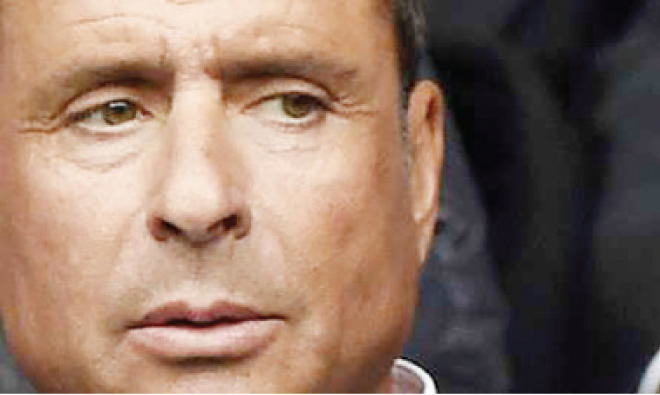
The middleman in spotlight over Qaddafi-Sarkozy funding allegations
The middleman in spotlight over Qaddafi-Sarkozy funding allegations


Latest updates


Recommended


© 2026 SAUDI RESEARCH & PUBLISHING COMPANY, All Rights Reserved And subject to Terms of Use Agreement.