ISTANBUL: Turkish president Tayyip Erdogan told Russian counterpart Vladimir Putin on Thursday he should stop Syrian attacks on its opposition in northern Syria if he wants peace negotiations to succeed, Turkish presidential sources said.
Erdogan spoke to Putin on the phone, they said.
Turkey has been fiercely opposed to Syrian president Bashar Assad during his country’s six-year-old civil war but has recently been working with his allies Russia and Iran for a political resolution to the conflict.
The three countries had agreed last year to establish a “de-escalation zone” in the opposition-held Idlib province and surrounding region, which borders Turkey.
However, a government offensive helped by Iran-backed militia has gathered pace in Idlib in the last two weeks, according to rebels and a military media unit run by Lebanon’s Hezbollah, which is fighting on the Syrian government side.
Rebels launched a counter attack on Thursday.
Turkey on Tuesday called the Russian and Iranian ambassadors to its ministry of foreign affairs to ask the envoys to urge the Syrian government in Damascus to end the border violations in the Idlib de-escalation zone.
Russia’s defense ministry had asked the Turkish military on Wednesday to tighten control over armed groups in Idlib after two groups of drones attacked Russian bases on Jan. 6.
Syrian state media, citing a foreign ministry source, said on Thursday that regime forces were fighting to “liberate from the terrorism of the Nusra Front and the other terrorist organizations that belong to it.”
Turkey has accused the Syrian government of using the presence of the Nusra Front, which now fights under the banner of the Tahrir Al-Sham alliance, as an excuse to attack civilians and moderate opposition groups.
Humanitarian aid organizations, rescuers and activists allege the Syrian and Russian air forces have struck hospitals, schools and market places in congested residential areas in rebel-held towns.
Both the Syrian army and Moscow deny hitting civilian areas and say intensive raids only strike at militants.


![]()
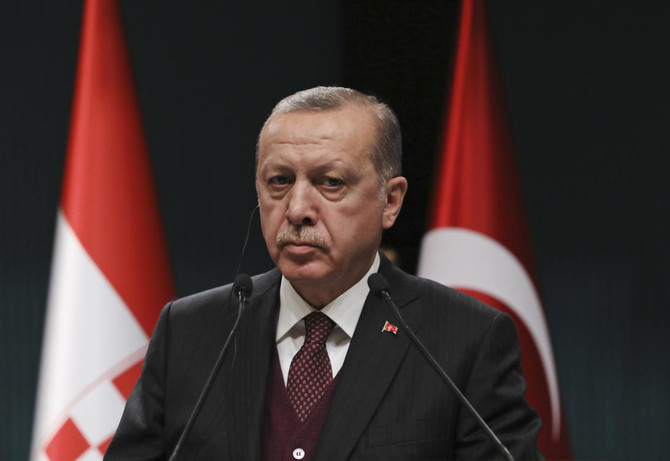
Erdogan calls on Putin to end northern Syria attacks by regime forces
Erdogan calls on Putin to end northern Syria attacks by regime forces
Latest updates


© 2026 SAUDI RESEARCH & PUBLISHING COMPANY, All Rights Reserved And subject to Terms of Use Agreement.