DHAKA: Rohingya refugees are still arriving in Bangladesh as violence forces them to leave Myanmar, according to a report released over the weekend.
“This week, Rohingya refugees were still arriving in Cox’s Bazar, Bangladesh — the New Year bringing no end to the reports of violence and fears, which forced them to flee their homes in Myanmar,” said the report by the International Organization for Migration (IOM).
“Over 2,400 refugees are estimated to have arrived in Bangladesh during December 2017, with more people continuing to arrive each day as 2018 begins,” the report said.
Rohingya refugees from the Arakan state of Myanmar continue to enter Bangladesh while authorities of both countries discuss the process of refugee repatriation starting this month.
In the first week of January, about 60 Rohingya refugees entered Bangladesh through the Teknaf border in Cox’s Bazar district, as confirmed by local Union Parishad chairman Noor Hossain. The refugees narrated the ongoing atrocities by the Myanmar army in Rakhine.
“We were encircled by the army for the past few months. We could not even go to the jungle to collect firewood. There is an acute crisis of food,” said Farida Begum, 29, who lived in the Buthidhang area under Rakhine state of Myanmar. Farida, along with her three children, reached Bangladesh four days ago and took shelter at Tengkhali camp in Ukhia, Cox’s Bazar.
“My brother-in-law and two cousins were shot dead by the army during the first week of September. Still I tried to stay there. But these days food is scarce in my locality and that compelled me to cross the border,” Farida said.
Despite the ongoing atrocities in Rakhine, Bangladesh and Myanmar are now working on Rohingya refugee repatriation. The Joint Working Group (JWG) formed according to the deal signed on Nov. 23 last year for the repatriation of refugees, is expected to meet by mid January in Myanmar’s capital Naypyidaw, according to foreign ministry sources in Dhaka. The agreement demanded repatriation to begin within two months of signing the deal. But analysts express reservations over the success of the JWG meeting.
“Are the Rohingyas comfortable with the idea of repatriation amidst the ongoing violence?” the former Bangladeshi ambassador to the United States, Humayun Kabir, told Arab News.
Citing the three important players — the government, army and the Buddhist community of Myanmar — he says the “political government of the country needs to take the initiative and create a friendly environment so that the Rohingyas feel confident going back to their place,” he said. “The repatriation should be voluntary. Under the current circumstances, I don’t feel that they will be comfortable to go back voluntarily.”
Professor Akmol Hossain, who teaches International Relations at Dhaka University, said: “The Rohingya need to see that a favorable and welcoming situation prevails in Rakhine. Bangladesh has faced the Rohingya refugee crisis earlier as well and it took a long time to repatriate them.”
“After signing the agreement, repatriation becomes a bilateral issue for Bangladesh but we simultaneously need continuous international support,” Professor Akmol said. “We need to sensitize the Organization of Islamic Cooperation [OIC] leaders to make more diplomatic efforts. At the outset of the refugee crisis, the Bangladesh government had drawn very good international attention through its diplomatic efforts, which recently seems to have dimmed. We need to build pressure on Myanmar government through effective diplomacy.”
According to IOM, as of Jan. 7 a total of 655,000 Rohingya refugees had taken shelter in Bangladesh since the violence escalated in late August last year. The international migration agency fears a continuation of violence against Rohingyas in the new year, which has compelled them to leave the Myanmar and live an austere life in Bangladesh’s refugee camps.
Olga Rodbello, mental health and psycho-social support coordinator for IOM in Cox’s Bazar, said, “We continue to see a great deal of distress among Rohingya survivors arriving in Bangladesh. They have faced a lot of adversity and many are in need of psycho-social support to help restore a sense of safety and further strengthen the resilience they’ve already shown.”


![]()
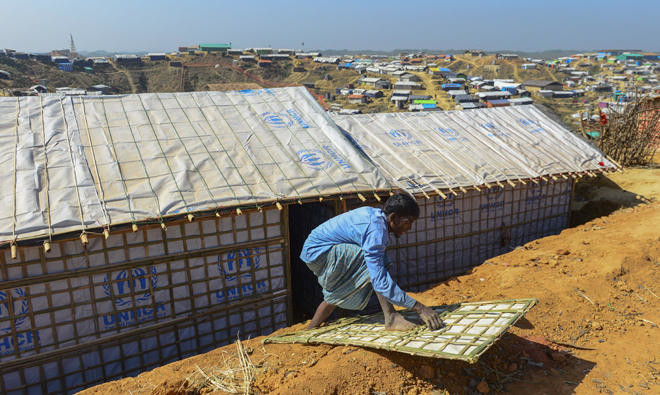
Violence forces more Rohingya to flee to Bangladesh
Violence forces more Rohingya to flee to Bangladesh

Latest updates




© 2026 SAUDI RESEARCH & PUBLISHING COMPANY, All Rights Reserved And subject to Terms of Use Agreement.