BAGHDAD: The Iraqi parliament on Monday launched an investigation into the quantities of oil exported by the Kurdish regional government (KRG) during the past three years from Kirkuk’s oil fields and the Kurdish region.
It is seeking to prosecute officials involved in oil smuggling and to monitor their bank accounts inside and outside of Iraq.
KRG took advantage of the dramatic collapse of the Iraqi Army in June 2014 to drive Iraqi security forces out of the northern oil hub city of Kirkuk, its lucrative oil fields and all the nearby disputed areas. It seized control of oil exports from the area until Oct. 26 when Baghdad launched a huge military offensive to drive Kurdish forces into the Kurdish region.
KRG has been exporting an average of 400,000-650,000 bpd from Kirkuk and the fields of the Kurdish region, but exports have halved since October as the federal government in Baghdad imposed a series of punitive measures including banning international flights from and to the region and shut down the border crossings between the region and Turkey, Iran and Syria.
The resolution approved by the parliament states that the investigation committee, which has to file its report in four weeks, will consist of the members of the Oil and Gas, Financial and Integrity parliamentary committees. The committees will investigate the quantities of oil exported during the period in which the fields were under the control of KRG, and the funds obtained from sales of oil, starting from July 1, 2014 until today.
“The (Kurdish region) has benefited from Kirkuk oil exports, and there are big questions relating to the revenues of oil,” Masoud Haider, a Kurdish federal lawmaker and a member of the Parliamentary Financial committee, told Arab News.
“We as the Kurdish bloc have many inquiries related to the (oil) revenues and the expenditure ... loads of oil has been exported (by KRG) but we (the Kurds in the region) do not know where the revenues go,” Haider said.
“(In Kurdistan), there are 120,000 people who receive government salaries who have not received more than a third of their salaries since 2014.”
A senior Iraqi federal oil official talking to Arab News on condition of anonymity said that the data of the federal Oil Ministry recorded in the past three years indicated that KRG had exported 800,000–850,000 bpd until October.
“KRG officials said that they were exporting just 500,000 bpd and using the rest for domestic consumption within the region,” the official said. “This is not true. 350,000 bpd is a very big amount and it is not reasonable to be used for the daily consumption in the region.”
“Our information suggest that there have been large oil-smuggling operations taking place in the region on an almost daily basis until today. They (the involved officials) used the tankers to smuggle oil of Kirkuk and the region to Turkey and Iran,” the official said.
A senior Kurdish lawmaker involved in talks between Baghdad and Kurdistan to solve issues between the two sides, including about oil, declined to be named but told Arab News that the records of the Oil and Gas Parliamentary Committee showed that oil exports carried out by KRG has dropped to 270,000–300,000 bpd since October, “but oil smuggling to Turkey and Iran has been continuing.”
“Daily, 60,000 bpd has been smuggled by tankers to Iran and 100,000–150,000 bpd to Turkey,” the Kurdish lawmaker said.
The parliament resolution also asked the federal Oil Ministry to stop the work of “Kar” company — which has been appointed by KRG since 2014 to supervise oil exports from the Kirkuk fields to the Turkish port of Ceyhan — hand oil production in the Kirkuk oil fields to the state-owned North Oil Company (NOC) and submit all oil exports to the Iraqi Oil Marketing Company (SOMO).
“Kar” is a Kurdish oil company operating in Kurdistan. Kurdish lawmakers told Arab News that “Kar” is owned and established by Masoud Barazani, the former president of the Kurdish region and the most influential Kurdish figure in the country.
“The work of this (Kar) company in Kirkuk oil fields is unconstitutional as this is a private company and everything related to oil and gas should be under the control and supervision of the federal Oil Ministry,” A’awad Al-A’awadi, a member of the parliamentary Oil and Gas Committee, told Arab News.
“This company was appointed by the (Kurdish) regional government and KRG has no right to practice any works related to run the oil and gas in Kirkuk or anywhere else,” A’awadi said.
Monday’s parliamentary resolution orders the Iraqi Central Bank to follow up amounts deposited in Iraqi and foreign banks as a result of the sales of oil extracted from the Kirkuk fields and the Kurdish region and present a detailed report including the amounts of money and names of officials who benefited from the sales.
“The government needs to know where the money gone, because this money were not spent in Kurdistan,” a senior federal official close to the Iraqi Prime Minister Haider Al-Abadi told Arab News on condition of anonymity.
“The Kurdish officials have admitted that they were exporting 500,000 bpd in the past three years, but they refuse to deliver any details relating to where the money went and how it was spent,” the official said.
“They were selling at prices below the price of SOMO by $6-10, in addition to the quantities of smuggled oil which they refuse to recognize,” he said.
“This file (the Kurdish officials involved in oil smuggling) cannot be closed (until there is) details about who (is involved), how much (money they got) and where (the banks accounts where the money deposited).”


![]()
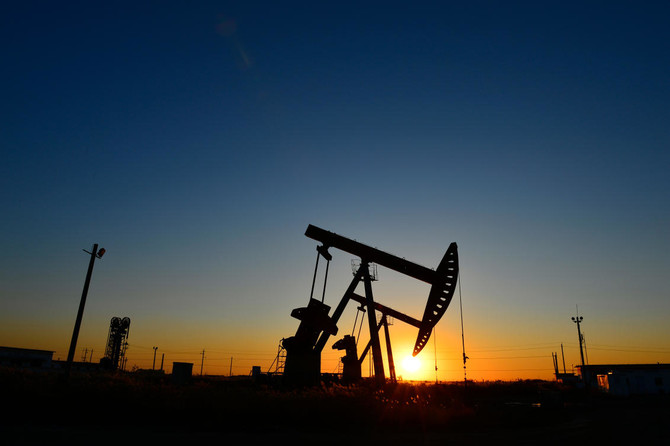
Iraqi government orders probe into Kurdistan region’s oil exports
Iraqi government orders probe into Kurdistan region’s oil exports

Latest updates


© 2026 SAUDI RESEARCH & PUBLISHING COMPANY, All Rights Reserved And subject to Terms of Use Agreement.