French star singer France Gall dies aged 70

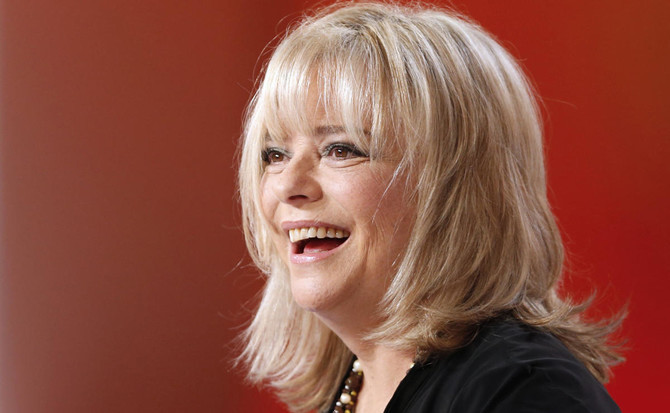
This file photo shows French singer France Gall taking part in the TV show “Le grand journal” on a set of French TV Canal+, in Paris on Oct. 30, 2012. (AFP)
Updated 07 January 2018
Follow

French star singer France Gall dies aged 70

PARIS: French singer France Gall, who shot to fame in the 1960s with a series of hits, died Sunday aged 70, her spokeswoman announced.
Gall, who became a star in 1965 when she won the Eurovision song contest as a strikingly blonde and slightly awkward teenager, had been battling cancer for two years and died in a hospital west of Paris.
During the peak of her career in the 1960s and 70s she formed partnerships with some of the most famed French musicians of the era, notably Gainsbourg, but also Claude Francois and Michel Berger.
She was the original inspiration behind the 1968 hit “Comme d’Habitude” made famous in its English rendition as “My Way” by American crooner Frank Sinatra.
Glam-rocker Francois wrote “Comme d’Habitude” about his split-up with Gall.
Later reworked as “My Way” by English performer Paul Anka, the song went on to become the Sinatra classic.
After Gall’s first breakthrough at Eurovision with “Poupee de Cire, Poupee de Son,” (Wax Doll, Rag Doll), Gainsbourg wrote her 1966 follow-up, the scandalous “Les Sucettes” (The Lollipops).
As a 19-year-old, Gall said she hadn’t understood that the lyrics could be interpreted as referring to oral sex and later said she would never have performed the song if she’d known.
After collaborating with Gainsbourg, she began a hugely successful partnership with Berger in 1974 and would go on to marry the songwriter two years later in a relationship that would be marked by tragedy.
He died of a heart attack aged 44 in 1992 and the eldest of their two children, daughter Pauline, who was born with cystic fibrosis, passed away five years later.
Gall disappeared from the public eye after Pauline’s death in 1997, only to reappear in 2015 for a musical stage show featuring her numerous hits with her late husband.


Thai coffee chains cut default sugar content in coffee and tea drinks in a new health push

Updated 11 February 2026
Follow

Thai coffee chains cut default sugar content in coffee and tea drinks in a new health push

  • The Health Department says Thais consume 21 teaspoons of sugar daily, far exceeding the World Health Organization’s recommended six teaspoons
  • Officials warn this increases obesity and diabetes risks. A survey found iced coffee and bubble tea contain high sugar levels

BANGKOK: For many Thais, a meal doesn’t feel complete without an iced coffee or tea so sugary it could pass for dessert. The government, concerned about the health consequences, wants them to dial it back.
Starting Wednesday, nine major coffee chains across the country have pledged to cut the default sugar content in some of their drinks by half in a government initiative aimed at tackling excessive sugar consumption.
According to the Health Department, Thais consume an average of 21 teaspoons of sugar per day, more than three times the World Health Organization’s recommended limit of six teaspoons. Health officials warn that such high intake increases the risk of obesity, diabetes and other diseases.
The initiative is the first significant step to change consumers’ sugar consumption behavior, said Amporn Benjaponpitak, the director general of the department.
Pakorn Tungkasereerak, the department’s deputy, said 2025 data show that about 45 percent of Thais aged 15 and older are obese, while 10 percent of the population has diabetes.
A survey by the Bureau of Nutrition found that a 22-ounce (650-milliliter) iced coffee contains an average of nine teaspoons of sugar, while a 10-ounce (300-milliliter) serving of bubble milk tea — an iced milk tea with tapioca pearls known as boba — can contain as much as 12 teaspoons.
Sirinya Kuiklang, an office worker, said she approves of the changes. She already orders her drinks at just 25 percent of the standard sugar level, but she is aware that many others consume too much sugar.
“It’s good for Thai people,” she said.
Another office worker, Porwares Tantikanpanit, said he has enjoyed his non-coffee beverages at their current sugar levels but is willing to adjust if shops reduce the sweetness.
However, putting the policy into practice may prove challenging. Officials have said each brand can apply the initiative as they see fit.
Some customers have expressed confusion in response to social media posts promoting the initiative, asking how to order drinks with the level of sweetness that they prefer. Several brands said that the reduction applies only to certain menu items.