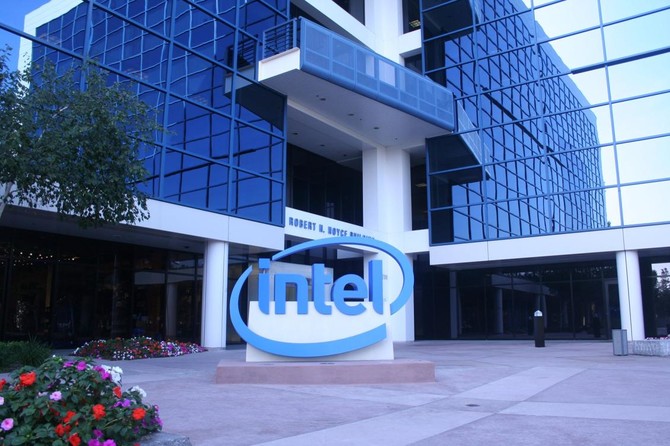
Tech firms battle to resolve security flaw

Updated 07 January 2018
Follow

Tech firms battle to resolve security flaw

PARIS: Amazon, Google and now Apple — as the list of digital giants hit by the “Spectre” and “Meltdown” computer security flaws grows longer, the race is on to limit the damage.
“All Mac systems and iOS devices are affected, but there are no known exploits impacting customers at this time,” Apple — whose devices are usually regarded as secure — said in a post on an online support page.
Almost all microprocessors produced over the past 10 years by Intel, AMD and ARM are affected. No PC or mobile device can function without the miniature components that are effectively nerve centers for executing computer programs and apps.
And that is what distinguishes them from previous security alerts that have tended to involve software rather than hardware.
In theory, Spectre and Meltdown could enable a user to “access kernel level memory access, exposing critical information that would be stored there, like system passwords,” said Chris Morales, head of security analytics at Vectra.
Luke Wagner, a software engineer at Mozilla, wrote on a security blog that it was “possible to use similar techniques from web content to read private information.”
Effectively, all electronic devices manufactured all around the world in recent years contain potentially vulnerable chips.
The biggest names in the sector, including Amazon, Google, Microsoft and Mozilla, are now rushing out updates and patches to eliminate the flaw.
US giant Intel, as well as its rivals AMD and ARM, have started installing updates.
In a statement on Thursday, Intel said it and its partners “have made significant progress in deploying updates” to mitigate any threats.
“Intel expects to have issued updates for more than 90 percent of processor products introduced within the past five years,” an Intel statement said.
“In addition, many operating system vendors, public cloud service providers, device manufacturers and others have indicated that they have already updated their products and services.”
Apple, for its part, advised only getting apps from its online App Store which vets programs for safety, and said it has already released some “mitigations” to protect against the exploit and planned to release a defensive update for Safari on macOS and iOS in the coming days.
But some experts believe that the only real “fix” in some cases would be replacing the chip itself, which would be a huge issue for the computing industry.
That said, the experts concede that hacking the chips would require a very high level of technical expertise and the risks were therefore limited.
The US Computer Emergency Readiness Team (CERT) said that it was “not aware of any active exploitation at this time.”
In Germany, the BSI Federal Office for Information Security, similarly found no evidence of any “active exploitation” of the flaw.
In addition to the security flaw, Intel found itself in hot water Friday over the announcement that its CEO had sold some of his shares in the company.
According to the specialist magazine Solutions Numeriques, Intel was aware of the existence of the security flaw in its chips at the end of November. But in the fourth quarter of last year, CEO Brian Krzanich sold nearly 900,000 shares, halving his stake in the company, according to Bloomberg.
A company spokesman told Bloomberg that the sale had nothing to do with the issue of the security flaw, insisting that Krzanich had exercised options according to a pre-set timetable agreed long before.
Intel shares which slid this week on the news regained slightly less than a percent on Friday to $44.74 at the close of the Nasdaq exchange.
Meanwhile, lawsuits seeking class action status have been filed against Intel in federal courts in three US states.
The civil suits accuse Intel of “unjust and deceptive” tactics that resulted in people buying computers with flawed chips.
A suit filed in federal court in California argued that people with computers powered by Intel chips are faced with the “unappealing choice” of either replacing the machines or accepting “massive security vulnerabilities” and downgraded performance, the suit argued.
— AFP


AI will never replace human creativity, says SRMG CEO 

Updated 30 January 2026
Follow

AI will never replace human creativity, says SRMG CEO 

  • Speaking to Maya Hojeij, senior business anchor at Asharq with Bloomberg, Jomana R. Alrashid expressed pride in SRMG platforms that had absorbed and adopted AI

RIYADH: Jomana R. Alrashid, CEO of Saudi Research and Media Group, highlighted how AI cannot replace human creativity during a session at The Family Office’s “Investing Is a Sea” summit at Shura Island on Friday. 

“You can never replace human creativity. Journalism at the end of the day, and content creation, is all about storytelling, and that’s a creative role that AI does not have the power to do just yet,” Alrashid told the investment summit. 

“We will never eliminate that human role which comes in to actually tell that story, do the actual investigative reporting around it, make sure to be able to also tell you what’s news or what’s factual from what’s wrong ... what’s a misinformation from bias, and that’s the bigger role that the editorial player does in the newsroom.”

Speaking on the topic of AI, moderated by Maya Hojeij, senior business anchor at Asharq with Bloomberg, the CEO expressed her pride in SRMG platforms that had absorbed and adopted AI in a way that was “transformative.”

“We are now translating all of our content leveraging AI. We are also now being able to create documentaries leveraging AI. We now have AI-facilitated fact-checking, AI facilities clipping, transcribing. This is what we believe is the future.”

Alrashid was asked what the journalist of the future would look like. “He’s a journalist and an engineer. He’s someone who needs to understand data. And I think this is another topic that is extremely important, understanding the data that you’re working with,” she said.

“This is something that AI has facilitated as well. I must say that over the past 20 years in the region, especially when it comes to media companies, we did not understand the importance of data.”


The CEO highlighted that previously, media would rely on polling, surveys or viewership numbers, but now more detailed information about what viewers wanted was available. 

During the fireside session, Alrashid was asked how the international community viewed the Middle Eastern media. Alrashid said that over the past decades it had played a critical role in informing wider audiences about issues that were extremely complex — politically, culturally and economically — and continued to play that role. 

“Right now it has a bigger role to play, given the role again of social media, citizen journalists, content creators. But I also do believe that it has been facilitated by the power that AI has. Now immediately, you can ensure that that kind of content that is being created by credible, tier-A journalists, world-class journalists, can travel beyond its borders, can travel instantly to target different geographies, different people, different countries, in different languages, in different formats.”

She said that there was a big opportunity for Arab media not to be limited to simply Arab consumption, but to finally transcend borders and be available in different languages and to cater to their audiences. 


The CEO expressed optimism about the future, emphasizing the importance of having a clear vision, a strong strategy, and full team alignment. 

Traditional advertising models, once centered on television and print, were rapidly changing, with social media platforms now dominating advertising revenue.

“It’s drastically changing. Ultimately in the past, we used to compete with one another over viewership. But now we’re also competing with the likes of social media platforms; 80 percent of the advertising revenue in the Middle East goes to the social media platforms, but that means that there’s 80 percent interest opportunities.” 

She said that the challenge was to create the right content on these platforms that engaged the target audiences and enabled commercial partnerships. “I don’t think this is a secret, but brands do not like to advertise with news channels. Ultimately, it’s always related with either conflict or war, which is a deterrent to advertisers. 

“And that’s why we’ve entered new verticals such as sports. And that’s why we also double down on our lifestyle vertical. Ultimately, we have the largest market share when it comes to lifestyle ... And we’ve launched new platforms such as Billboard Arabia that gives us an entry into music.” 

Alrashid said this was why the group was in a strong position to counter the decline in advertising revenues across different platforms, and by introducing new products.

“Another very important IP that we’ve created is events attached to the brands that have been operating in the region for 30-plus years. Any IP or any title right now that doesn’t have an event attached to it is missing out on a very big commercial opportunity that allows us to sit in a room, exchange ideas, talk to one another, get to know one another behind the screen.” 

The CEO said that disruption was now constant and often self-driving, adding that the future of the industry was often in storytelling and the ability to innovate by creating persuasive content that connected directly with the audience. 

“But the next disruption is going to continue to come from AI. And how quickly this tool and this very powerful technology evolves. And whether we are in a position to cope with it, adapt to it, and absorb it fully or not.”