JEDDAH: Arab foreign ministers on Saturday stressed that peace in the Middle East is impossible without addressing the Palestinian cause on the basis of a two-state resolution with East Jerusalem as the capital of the Palestinian state.
“The Arab League will seek international recognition of the Palestinian state with East Jerusalem as its capital after Washington recognized the holy city as Israel’s capital,” Jordanian Foreign Minister Ayman Safadi announced at a joint news conference with Arab League chief Ahmed Abul Gheit following talks in Amman on Jerusalem’s status, also attended by the foreign ministers of Egypt, Saudi Arabia, Morocco and the Palestinian Authority, as well as the UAE minister of state for foreign affairs.
“There is a political decision to recognize Jerusalem as the capital of Israel and we will strive to reach an international political decision to recognize a Palestinian state with (East) Jerusalem as its capital,” Safadi said.
He added that the Arab states would work collectively with the international community to secure international recognition of East Jerusalem as the capital of the Palestinian state, adding that the meeting was also used to agree on steps to ensure no other country recognizes Jerusalem as the capital of Israel.
“We reiterated that no peace or security can be achieved in the Middle East without the establishment of a viable Palestinian state with East Jerusalem as its capital, and in accordance with all relevant international references,” Safadi said, stressing that peace is the only way to resolve the Palestinian cause, being the only strategic option to meet the legitimate and rightful demands of the Palestinian people.
US President Donald Trump reversed decades of American policy and recognized Jerusalem as the capital of Israel on Dec. 6, threatening Middle East peace efforts and angering the Arab world and the US’ Western allies alike. Trump’s controversial decision sparked protests in several countries and was rejected in a non-binding UN General Assembly resolution.
Saudi Foreign Minister Adel Al-Jubeir told reporters following a meeting with his Jordanian counterpart that Saudi Arabia stands in solidarity with the Palestinian people in their bid for a Palestinian state with East Jerusalem as its capital, reiterating the Kingdom’s rejection of the US decision to recognize Jerusalem as the capital of Israel.
Al-Jubeir said Saudi Arabia has always been a strong supporter of legitimate Palestinian demands, stressing that addressing the Palestinian and the Arab Israeli struggle on the basis of a two-state solution is key to regional peace in the Middle East.
“Arab efforts have succeeded in isolating the US decision, citing the UN Security Council and the UN General Assembly votes, adding that these efforts will continue to deter any effort aiming at undermining the status of Jerusalem,” Abul Gheit said.
He added that the Arab League’s foreign ministers will reconvene at the end of this month when Palestine briefs the group on what has been achieved so far with regard to their efforts to counter the US decision and the illegal Israeli measures to change the status of Jerusalem.
Israel occupied East Jerusalem and the West Bank in 1967 and later annexed East Jerusalem in a move never recognized by the international community.
Earlier on Saturday, Jordan’s King Abdullah met the ministers and said: “the question of Jerusalem must be resolved within the framework of a just and lasting peace agreement between Palestinians and Israelis.”


![]()

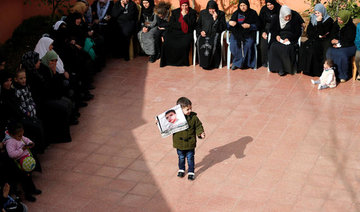
Arabs seek recognition for Palestine with East Jerusalem as its capital
Arabs seek recognition for Palestine with East Jerusalem as its capital


Latest updates


© 2026 SAUDI RESEARCH & PUBLISHING COMPANY, All Rights Reserved And subject to Terms of Use Agreement.