LOS ANGELES: With the American Film Institute’s annual luncheon Friday recognizing the best in film and television, Hollywood’s awards season is officially underway.
The schmooze-y celebration at the Four Seasons Hotel brought together the casts and creators of 2017’s most celebrated movies and TV shows, many of which are also in contention for the Golden Globe Awards on Sunday.
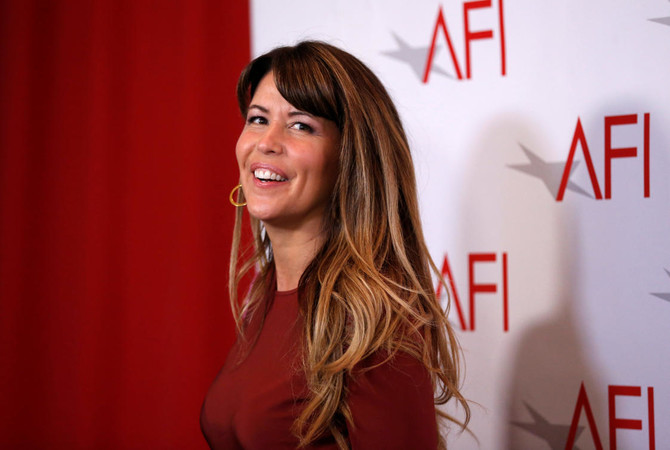
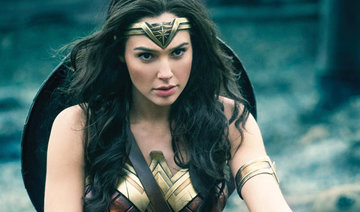
“Wonder Woman” director Patty Jenkins led the honorees in a toast, during which she quoted former Washington Post publisher Katharine Graham (who is played by Meryl Streep in Steven Spielberg’s “The Post,” an AFI honoree and best picture nominee at the Globes).
“To love what you do and feel that it matters, how could anything be more fun?” Jenkins said. “We love what we do. It doesn’t always matter — and often it doesn’t — but sometimes it does, so it’s always worth it to try.”
With winners announced in advance and no trophies to accept onstage, the AFI Awards are an opportunity for collegial confabulation.
“This is a place to be together as a community,” said AFI president Bob Gazzale, “to consider the compendium and feel proud.”
Actors, writers, directors and executives embraced the chance to chat, with superstar mashups spontaneously erupting throughout the room.
“Insecure” creator and star Issa Rae greeted Universal Pictures chief Donna Langley. Jenkins was part of a woman-power trio, chatting with Reese Witherspoon and “Lady Bird” writer-director Greta Gerwig. Witherspoon and “Wonder Woman” star Gal Gadot shared a mutual admiration moment, with Gadot telling Witherspoon, “I’m such a big fan.”
Guillermo del Toro made Spielberg laugh. Actress Saoirse Ronan met “Master of None” writer and actress Lena Waithe. Tom Hanks posed for a photo with “The Big Sick” screenwriters Kumail Nanjiani and Emily V. Gordon, who playfully gave him posing tips.
Sterling K. Brown rearranged place cards at the “This Is Us” table so he could sit next to costar Chrissy Metz. Sam Rockwell did the same thing at the table for “Three Billboards Outside Ebbing, Missouri,” moving himself closer to actress Sandy Martin, who plays his mother in the film.
“Call Me By Your Name” stars Armie Hammer and Timothee Chalamet, both awards-season newcomers, stood together as they took in the celebrity-filled room.
Besides “Wonder Woman,” “The Post,” “Lady Bird,” “Three Billboards Outside Ebbing, Missouri,” “The Big Sick” and “Call Me By Your Name,” AFI named “The Florida Project,” “Get Out,” “Dunkirk” and “The Shape of Water” as its top films of 2017. Most are also up for best picture at the Globes.
AFI’s TV picks also overlap with Globes nominees. Besides “Insecure,” “’This Is Us” and “Master of None,” AFI chose “Big Little Lies,” “The Crown,” “Feud: Bette and Joan,” “Game of Thrones,” “The Handmaid’s Tale,” “The Good Place,” and “Stranger Things 2.” A special award was given to “The Vietnam War” TV documentary series.
Many luncheon guests will see each other throughout the weekend at the various events leading up to the Globes. Some went straight from the AFI lunch to the HBO Luxury Lounge, also at the Four Seasons, where celebs could load up on freebies.
Among the takers were Ever Carradine of “The Handmaid’s Tale,” who snagged an $880 UPPAbaby luxury stroller, “Modern Family” star Julie Bowen, who investigated her family tree with an onsite Ancestry.com historian, and “Veep” star Matt Walsh, who picked up a timepiece from WatchGang to wear to Sunday’s ceremony.
Saturday’s pre-Globes events include a tea party held by the British Academy of Film and Television Arts and a fundraising gala to support Sean Penn’s J/P Haitian Relief Organization.

‘Wonder Woman’ director Patty Jenkins leads AFI Awards toast
Art and the deal: market slump pushes galleries to the Gulf
DOHA: With global sales mired in a slump, art dealers have turned to buyers in the oil-rich Gulf, where culture sector spending is on the rise.
Art Basel, which runs elite fairs in Miami, Hong Kong, Paris and Switzerland, held its Gulf debut in Qatar earlier this month.
“The second you land here, you see the ambition. It’s basically the future,” Andisheh Avini, a senior director at New York-based Gagosian Gallery, told AFP at the Doha fair.
“We see a lot of potential in this region and in Qatar,” Avini said, explaining it was “extremely important” for galleries to be exploring new consumer and collector bases.
“That’s why we’re here. And with patience and a long view, I think this is going to be a great hub,” he added.
A 2025 report on the global art market by Art Basel and the Swiss bank UBS showed sales fell across traditional centers in Europe and North America in the previous year.
Economic volatility and geopolitical tensions have weighed on demand, meaning global art market sales reached an estimated $57.5 billion in 2024 — a 12 percent year-on-year decline, the report said.
“The value of sales has ratcheted down for the past two years now, and I do think we’re at a bit of a turning point in terms of confidence and activity in the market,” Art Basel’s chief executive Noah Horowitz told AFP in Doha.
‘Time was right’
“Looking at developments in the global art world, we felt the time was right to enter the (Middle East, North Africa and South Asia) region,” he added.
Gulf states have poured billions into museums and cultural development to diversify their economies away from oil and gas and boost tourism.
In 2021, Abu Dhabi, home to the only foreign branch of the Louvre, announced a five-year plan for $6 billion in investments in its culture and creative industries.
Doha has established the National Museum of Qatar and the Museum of Islamic Art. The gas-rich country’s museums authority has in the past reported an annual budget of roughly $1 billion a year to spend on art.
Last year, Saudi Arabia announced that cultural investments in the Kingdom have exceeded $21.6 billion since 2016.
Gagosian had selected early works by Bulgarian artist Christo to feature at Art Basel Qatar.
Best known for large-scale works with his French partner Jeanne-Claude, like the wrapping of Paris’s Arc de Triomphe in 2021, Berlin’s Reichstag in 1995 and Pont Neuf in 1985, the Doha fair exhibited smaller wrapped sculptures.
Avini said the works had sparked curiosity from an “interesting mix” of individuals and potential buyers.
“Of course, you have the Qataris. You’re meeting other dealers, for instance, from Saudi and other parts of the region,” he said.
Among the Christo works were “Wrapped Oil Barrels,” created between 1958-61 shortly after the artist fled communist Bulgaria for Paris.
‘Turn of the cycle’
The barrels — bound tightly with rope, their fabric skins stiffened and darkened with lacquer — inevitably recall the Gulf’s vast hydrocarbon wealth.
But Vladimir Yavachev, Christo’s nephew and now director for the artists’ estate following their deaths, said the barrels were not developed with “any connotation to the oil industry or criticism.”
“He really liked the proportion of this very simple, everyday object,” Yavachev said. “It was really about the aesthetics of the piece,” he added.
Horowitz said there had been an “evolution that we’ve seen through the growth of the market in Asia and here now in the Middle East.”
“With each turn of the cycle in our industry... we’ve seen new audiences come to the table and new content,” he added.
Hazem Harb, a Palestinian artist living between the UAE and Italy, praised Art Basel Qatar for its range of “international artists, so many concepts, so many subjects.”
Among Harb’s works at the fair were piles of old keys reminiscent of those carried during the “Nakba” in 1948, when around 760,000 Palestinians fled or were forced from their homes.
Next to them was a pile of newer keys — 3D-printed replicas of the key to Harb’s own apartment in Gaza, destroyed in the recent war.
In the Gulf and beyond, Harb said he thought there was a “revolution” happening in Arab art “from Cairo to Beirut to Baghdad to Kuwait... there is a new era, about culture, about art.”